Share information:
Toyota 4Runner (1983-present)
Toyota 4Runner — a mid-size SUV with a load-bearing frame (J-segment), which is produced by the Japanese automobile corporation "Toyota Motor" from 1983 to the present. Until 1995, it belonged to the compact SUV class. In Japan, it is called "Toyota Hilux Surf". Based on a pickup truck that has been in production since 1968 "Toyota Hilux" (see description below) and has the same technical part. This car has a brother very similar in characteristics and dimensions, but cheaper and less durable "Highlander". The engine is located in the front longitudinally with all-wheel drive. There are simplified models with rear-wheel drive. The word "runner" is translated from English as "runner", and the number "4" indicates all-wheel drive. Since 2005, a similar car has been sold in Southeast Asia "Toyota Fortuner". All generations were produced only in Japan.
The closest classmates and competitors of the "4Runner" at the present time are Audi Q7, BMW X5, Ford Explorer, Kia Sorento, Honda Pilot, Jeep Cherokee, Hyundai Santa Fe, Land Rover Discovery, Lexus GX, Mitsubishi Outlander, Mercedes-Benz M-Class, Mazda CX-9, Porsche Cayenne, Nissan Pathfinder, Nissan Murano, Peugeot 4008, Renault Koleos, Skoda Kodiaq, Suzuki Grand Vitara, Toyota Land Cruiser Prado, And Volkswagen Touareg.
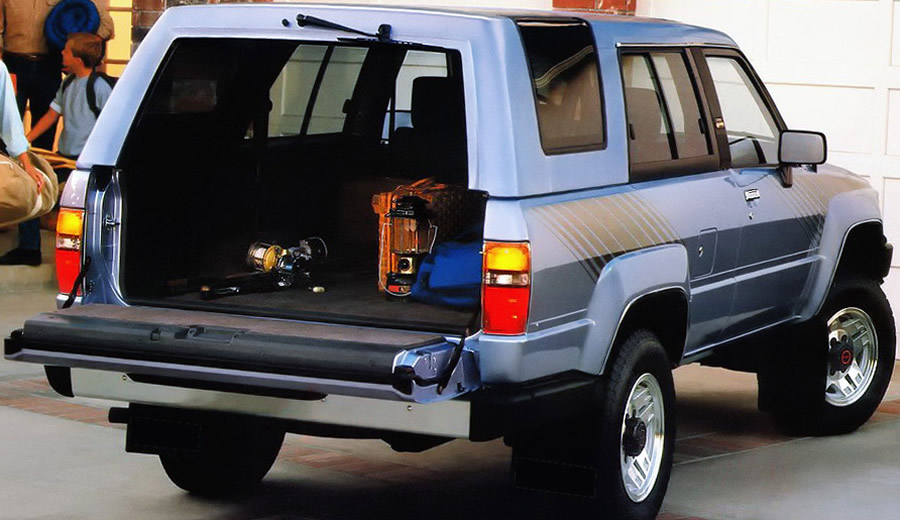
First generation (N60, 1984-1989)
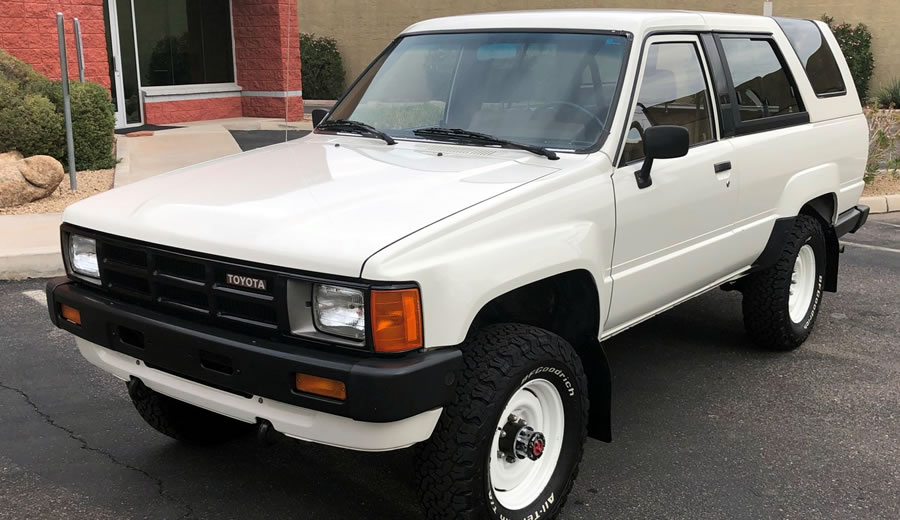
The production of the first generation of the "4 Runner" series "N60" began in October 1983 on the basis of the fourth generation Hilux pickup, slightly changing it. The changes affected only the rear of the cars - they removed the wall behind the front seats, installed rear seats and a removable fiberglass roof. The mechanical part remained unchanged. Some cars were sold without rear seats. The body was a three-door station wagon 4435 mm long, 1689 mm wide, 1679 mm high, with a wheelbase of 2616 mm and a curb weight of 1597-1706 kg. The front suspension was spring dependent with a solid axle, the rear was leaf spring with a torsion beam. The engine was located longitudinally in front, the drive was full with the connection of the front wheels.
The engines were petrol four-cylinder of the following models 2.0 liters (1998 cm³, 3Y, I4, OHV, 87 hp), 2.4 liters (2366 cm³, 22R/22R-E, I4, SOHC, 97 hp), 2.4 liters (2366 cm³, 22R-TE, I4, SOHC, turbocharged, 135 hp), as well as a 3.0-liter V-6 (2958 cm³, 3VZ-E, V6, DOHC, 150 hp). Diesel engines were presented in two modifications - 2.4 liters (2446 cm³, 2L, I4, SOHC, 83 hp) and 2.4 liters (2446 cm³, 2L-T, I4, SOHC, turbocharged, 90 hp). The transmission is a five-speed manual or a four-speed automatic.
In 1986, the front suspension underwent major improvements - instead of a solid axle, it became independent with a slightly increased track. This had a positive effect on the car's handling and comfort, but slightly reduced off-road cross-country ability. The radiator grille was also changed. In 1988, there were several more minor changes.
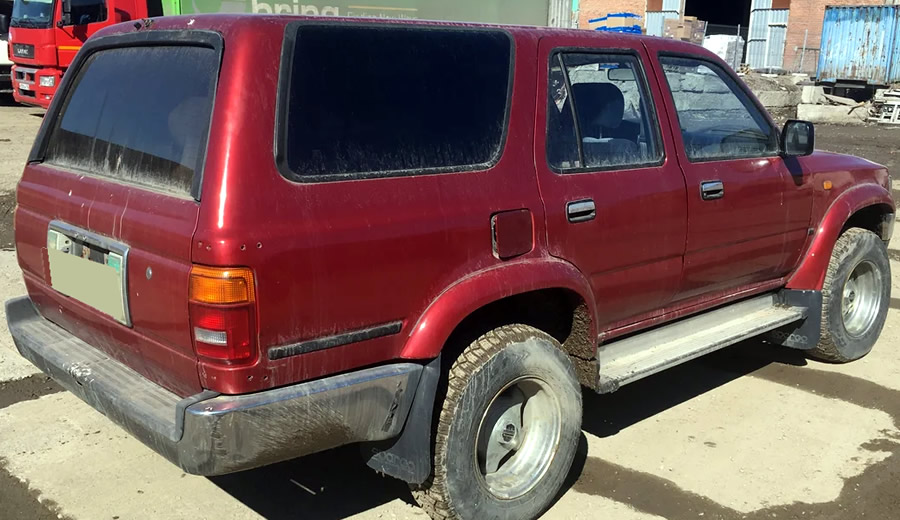
Second generation (N120/N130, 1989-1995)
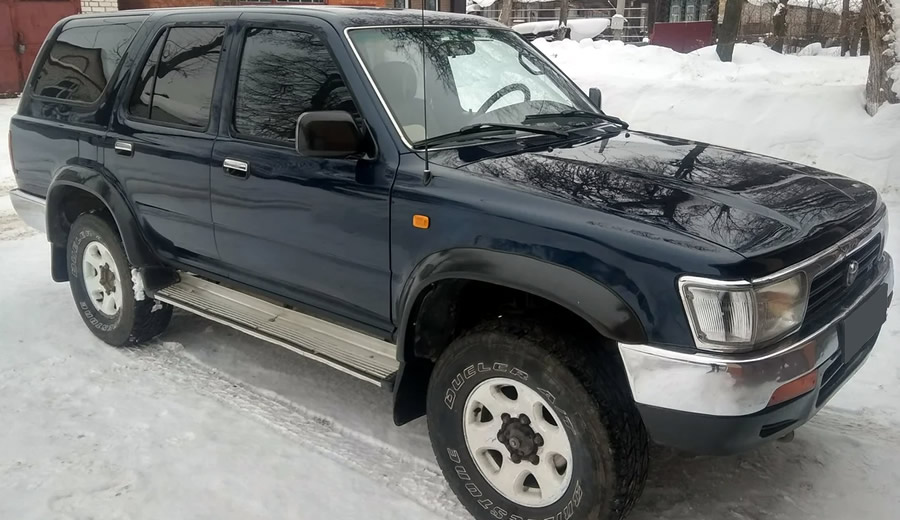
In August 1989, the second generation of the N120 and N130 series was launched for the 1990 model year. It was also based on the HiLux pickup, but with a completely new one-piece steel body instead of a fiberglass lid. Apart from the new body, all mechanical parts were from the pickup, except for the rear suspension, which became coil spring instead of leaf spring. The body was a three-door or five-door station wagon with the same external dimensions - wheelbase 2624 mm, length 4470-4490 mm, width 1690 mm, height 1680 mm, curb weight 1750 kg. The rear door opened downwards, like on a pickup, instead of opening upwards, like most other competitors of the time.
The petrol engines were four-cylinder, 2.0-litre (1998 cm³, 3Y, I4, OHV 87 hp), 2.2 liters (2237 cm³, 4Y, I4, OHV, 94 hp) and 2.4 liters (2366 cm³, 22R- E, I4, SOHC, 109 hp) or six-cylinder V-shaped 3.0 liters (2958 cm³, 3VZ-E, V6, DOHC, 150 hp) and 3.4 liters (3378 cm³, 5VZ-FE, V6, DOHC, 175 hp). There were four diesel engines, all four-cylinder in-line, of the following modifications: 2.4 liters (2446 cm³, 2L-TE, SOHC, turbocharged, 96 hp), 2.4 liters (2446 cm³, 2L-TII, SOHC, turbocharged, 93 hp), 2.8 liters (2779 cm³, 3L, SOHC, 90 hp) and 3.0 liters (2982 cm³, 1KZ-T/TE, SOHC, turbocharged, 125/130 hp). The transmission was a five-speed manual or a four-speed automatic "A340H".
In 1991, a cosmetic update was carried out, affecting the front bumper and modular headlights. The second update was in 1993.
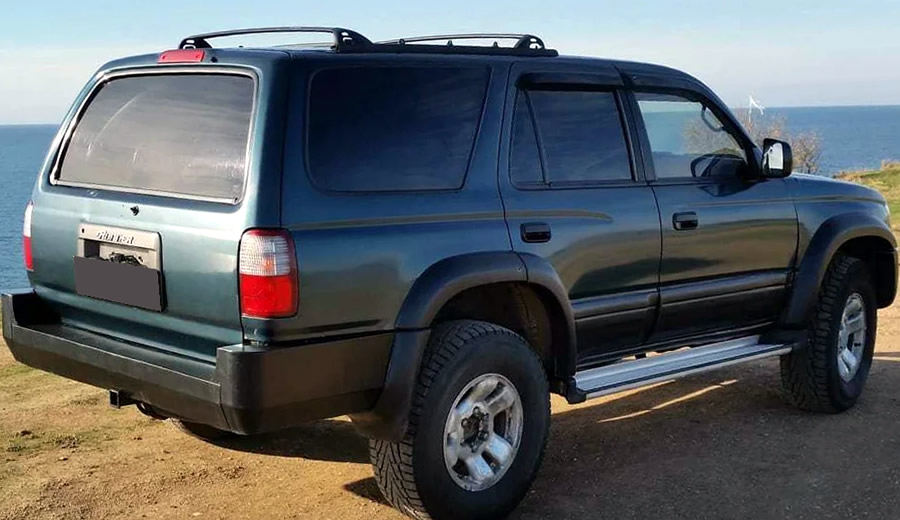
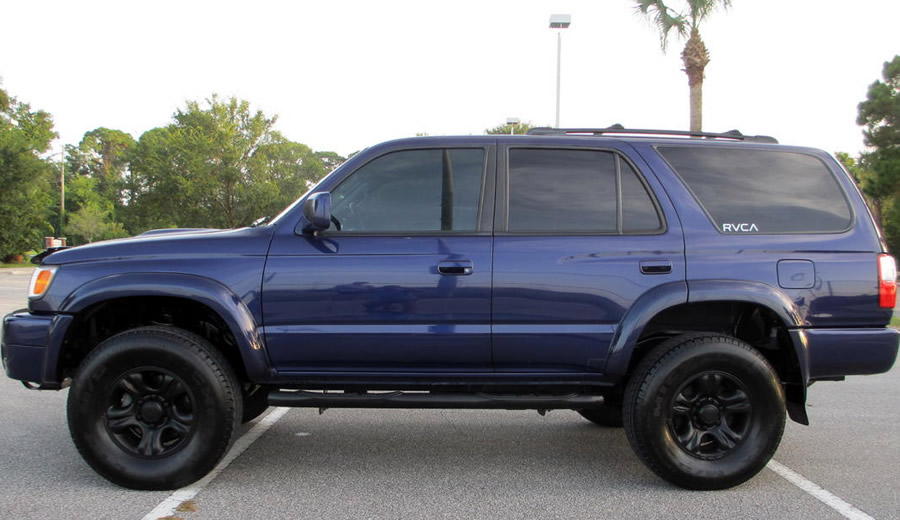
Third generation (N180, 1995-2002)
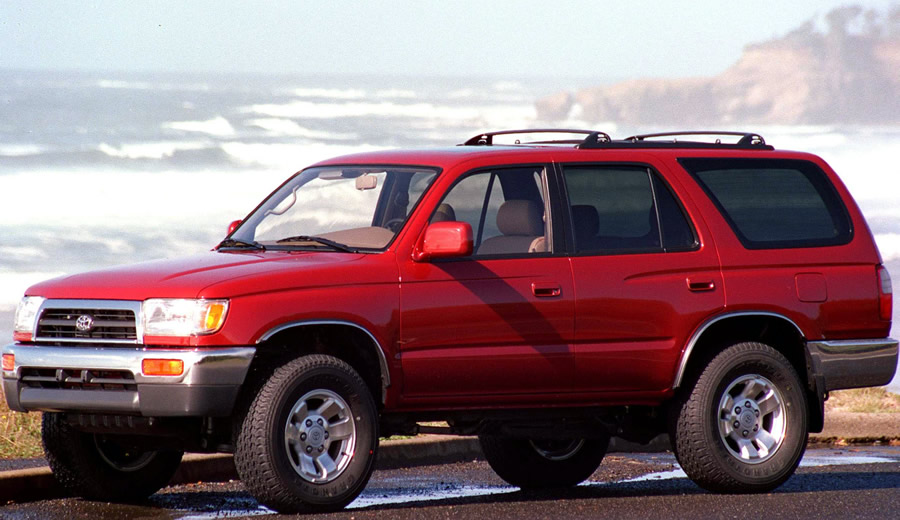
The production of the third generation of the "N180" series began in August 1995. The body and chassis were completely redesigned and had nothing in common with the "HiLux" pickup, from that time they were united with "Land Cruiser Prado". This move moved the car to another class of mid-size SUVs, more luxurious and expensive, but the appearance remained similar to the second generation. The body was only a five-door station wagon with a wheelbase of 2675 mm. The length of the car increased during the release of this generation from 4539 mm to 4656 mm, the width was 1689 mm, the height also increased from 1689 mm to 1714 mm. The curb weight was 1730 kg. The enlarged body brought increased space in the cabin and cargo compartment.
There were three engine models: a 2.7-liter four-cylinder gasoline engine (2693 cm³, 3RZ- FE, I4, DOHC, 150 hp), petrol six-cylinder V-shaped 3.4 liters (3378 cm³, 5VZ-FE, V6, DOHC, 190 hp) and a 3.0-liter four-cylinder diesel (2982 cm³, 1KZ-TE, I4, SOHC, turbocharged, 130 hp). The gearbox was either a five-speed manual or a four-speed automatic.
The basic package included dual airbags, an upward-opening rear door, anti-lock braking system (ABS), spring suspension on all wheels, and for the first time, a center differential.
In 1997 and 1998, minor updates to the interior, cabin, and equipment were made. In 1999, a major update to the exterior and interior improvements were made. The ergonomics of the cabin were completely changed, with all controls moved to the center of the dashboard, and the dashboard was equipped with a digital odometer. In 2001, the rear lights became transparent, the radiator grille, wheel rims, and climate control design were changed. Electronic stability control became a standard feature.
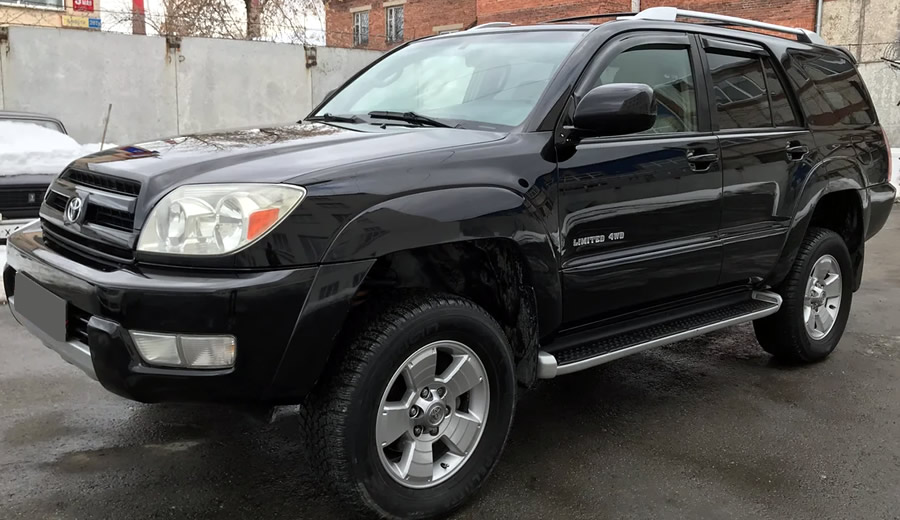
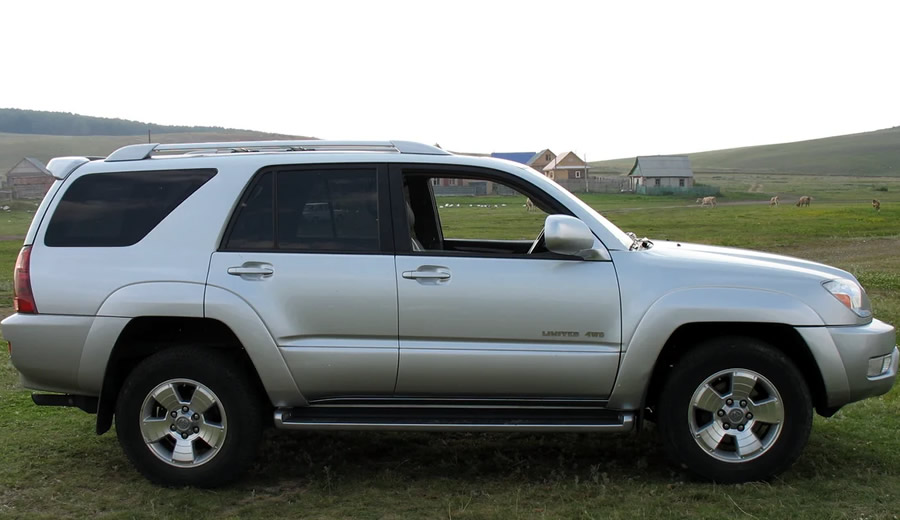
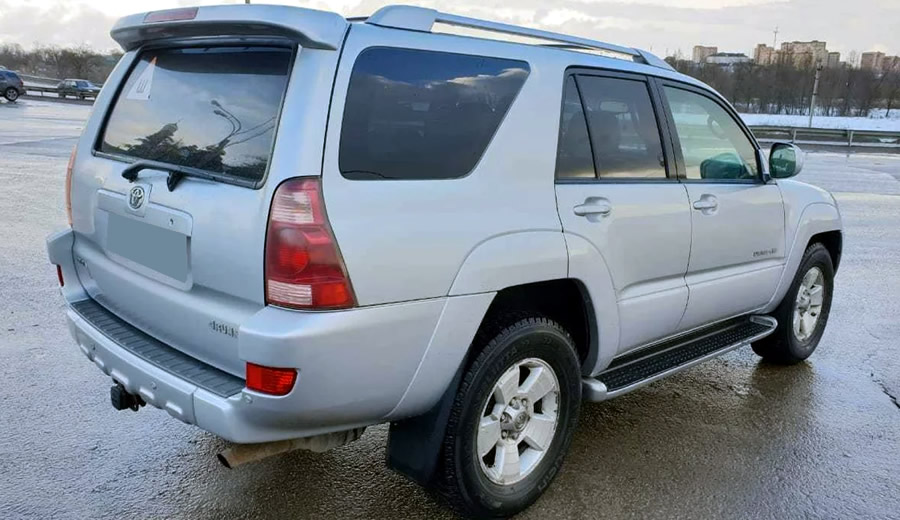
Fourth generation (N₂10, 2002-2009)
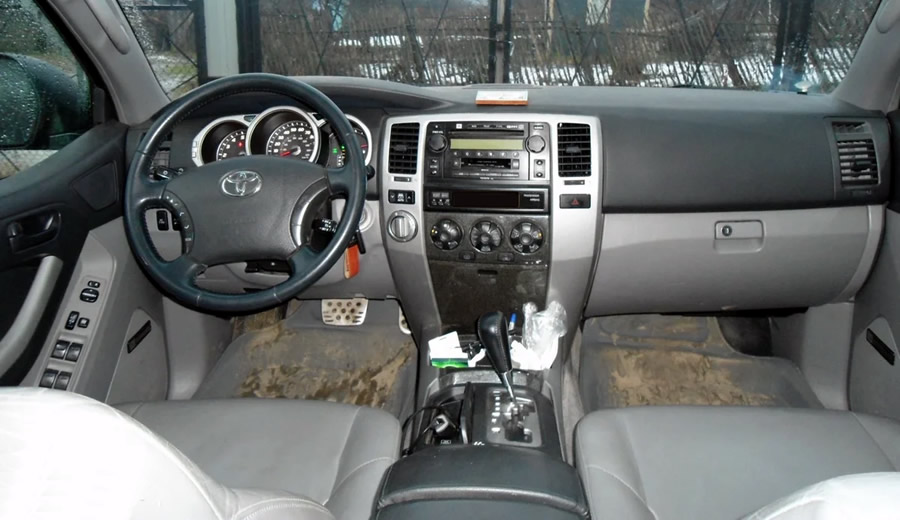
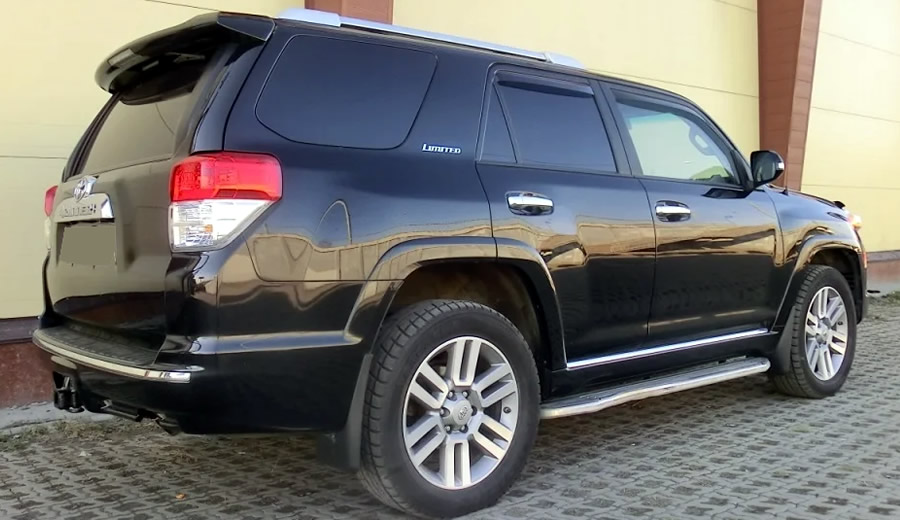
The fourth generation appeared in August 2002 and was based on the platform "Prado 120". The body and chassis were heavily redesigned, the exterior design changed little. The body was a five-door station wagon, the wheelbase increased and amounted to 2789 mm. The length of the car was 4806 mm, the width 1875-1910 mm, the height 1750-1811 mm and the curb weight 1941 kg. Available trims and configurations were called "SR5", "Sport Edition" and "Limited". In Japan it is still sold under the name "Hilux Surf", but in 2009 this name will be abolished.
There were no more petrol four-cylinder engines; V-shaped ones were installed - a six-cylinder with a volume of 4.0 liters (3956 cm³, 1GR-FE, V6, 236 hp) and two eight-cylinder 4.7-liter engines (4663 cm³, 2UZ-FE, V8, 232 hp) and 4.7 liters (4663 cm³, 2UZ-FE, V8, VVT-i, 271 hp). There were two four-cylinder 3.0-liter diesel engines (2982 cm³, 1KZ-TE, I4, SOHC, turbocharged, 130 hp) and 3.0 liters (2982 cm³, 1KD-FTV, I4, DOHC, 170 hp). The only gearboxes left are automatic four-speed "Aisin A3xx" or five-speed "Aisin A7xx".
The front suspension is a spring with two transverse levers, the rear is a spring with a solid rigid axle. Air suspension with automatic height adjustment was offered as an option. The "X-REAS" system connects the dampers diagonally with hydraulic hoses and fluid, using a mechanical central valve, which reduces body roll during sharp turns. Auxiliary control system "Hill-Start" prevents the car from rolling backwards on slopes when starting off, and there is also a system for assisting with descents from steep slopes at low speed.
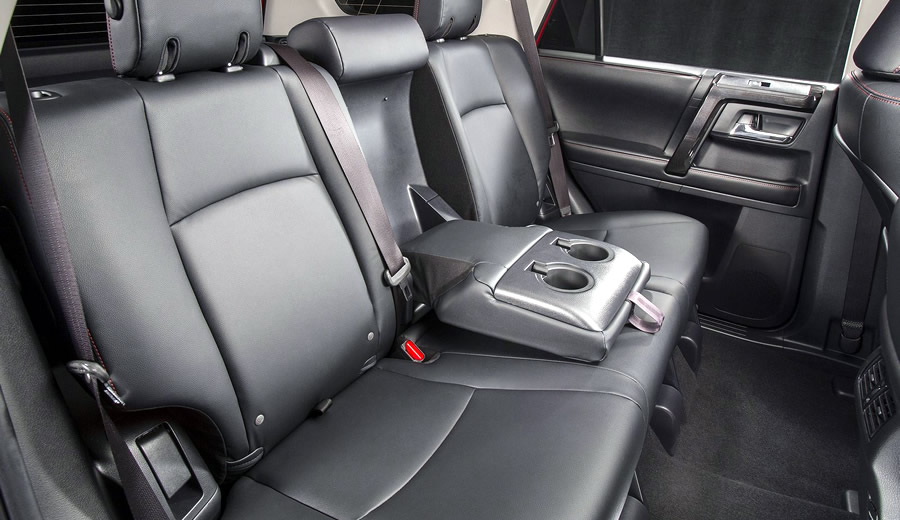
Standard features and equipment included a height-and tilt-adjustable steering wheel, keyless entry, automatic climate control in one zone, electric driver's lower back support, electric rear door window, and on V8 models, a trailer hitch. Additional options included "HomeLink" (remote control system), electrochromic auto-dimming rearview mirror, power sunroof, third row seat, DVD-based navigation system, stereo system "JBL Synthesis" with 10 speakers and rear seat audio system, additional backup camera.
Standard driver assistance and safety systems included an anti-lock braking system, electronic brake force distribution, emergency braking booster, anti-slip system, electronic vehicle stability control, side chest airbags for the front seats, and side safety curtains for the front and rear rows.
The American agency "National Highway Traffic Safety Administration" (NHTSA) conducted crash tests of the 2003 car, the results were as follows:
- Frontal Impact (Driver) - 4 out of 5 stars
- Frontal Impact (Passenger) - 4 out of 5 stars
- Side Impact (Driver) - 5 out of 5 stars
- Side kick (rear passenger) — 5 out of 5 stars
- Roof Strength - 3 out of 5 stars
Almost every year of production of this generation, the appearance and equipment of the model were updated.
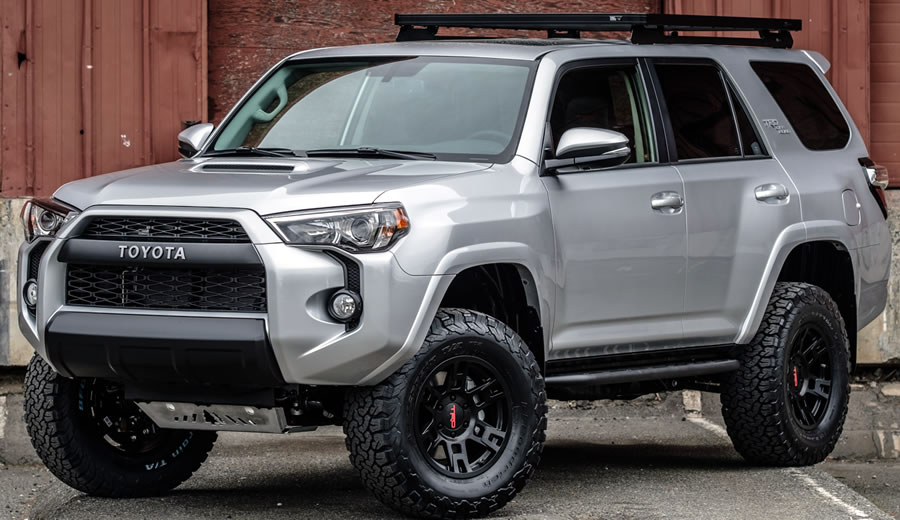
Fifth generation (N₂80, 2009-present)
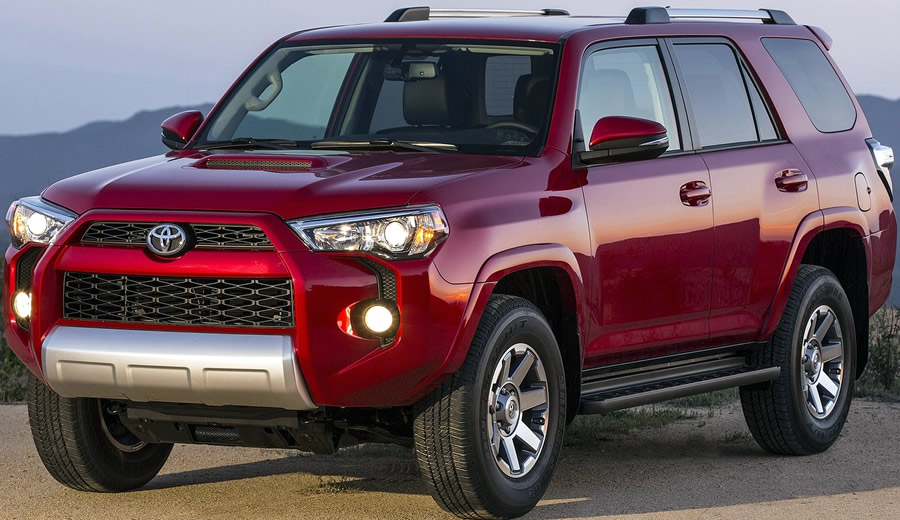
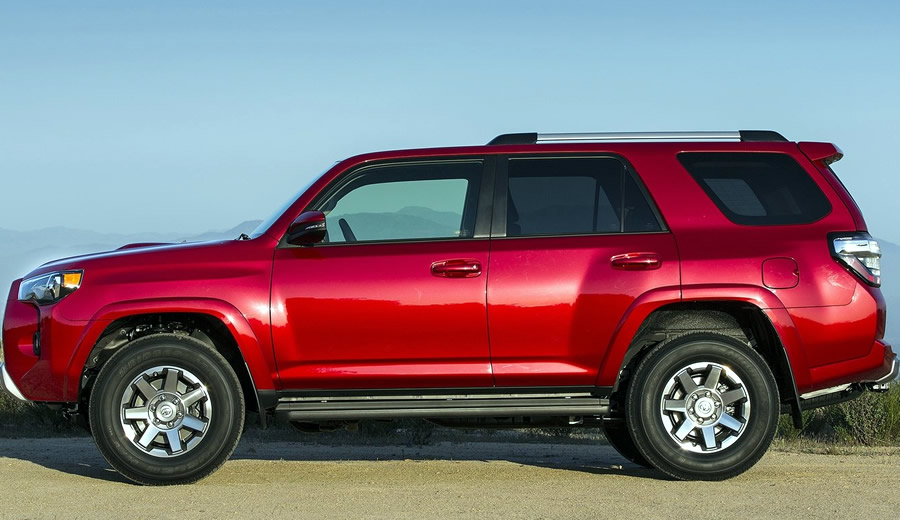
In September 2009, the fifth generation of the "4 Runner" series "N₂80" was presented. The body was a five-door station wagon, attached to a strong frame. Based on the platform of an SUV "FJ Cruiser". The length of the car was 4823 mm, width 1925 mm, height 1816-1885 mm, wheelbase 2789 mm and unladen weight 1996-2180 kg. Full drive on all wheels, there are models only with rear-wheel drive. Trim levels and equipment were "SRW", "Trail Edition" and "Limited". The following systems were installed to improve off-road capability: advanced anti-skid system "A-TRAC", dynamic suspension system "KDSS", system for driving at low speed on difficult off-road conditions "Crawl Control" and rear differential lock.
Only petrol engines were installed, one four-cylinder in-line engine with a volume of 2.7 liters (2693 cm³, 2TR-FE, DOHC, VVT- i, 158 hp) and the second six-cylinder V-shaped 4.0-liter (3956 cm³, 1GR-FE, DOHC, VVT-i, 236 hp). Gearboxes are only automatic, four- or five-speed.
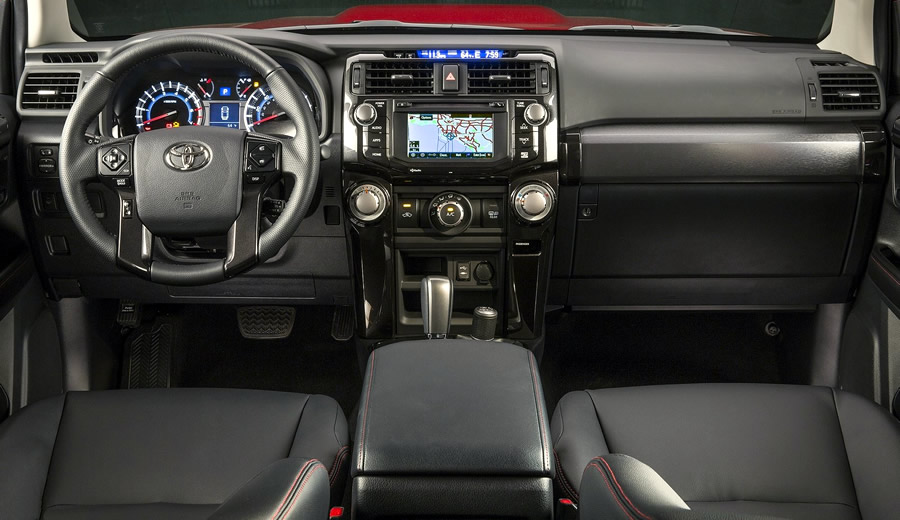
In 2013, the model was updated - the front and rear of the car were updated, projection headlights were installed in the front, transparent LED lights in the rear, the interior trim, dashboard and instrument cluster were changed.
In 2015, the American non-profit organization "Insurance Institute for Highway Safety" (IIHS) conducted crash tests of the "4Runner" car, the results were as follows:
- Frontal Impact with Partial Overlap - Good
- Low Overlap Frontal Impact - Extreme
- Side Kick - Good
- Roof Strength - Good
Toyota HiLux (1968-present)
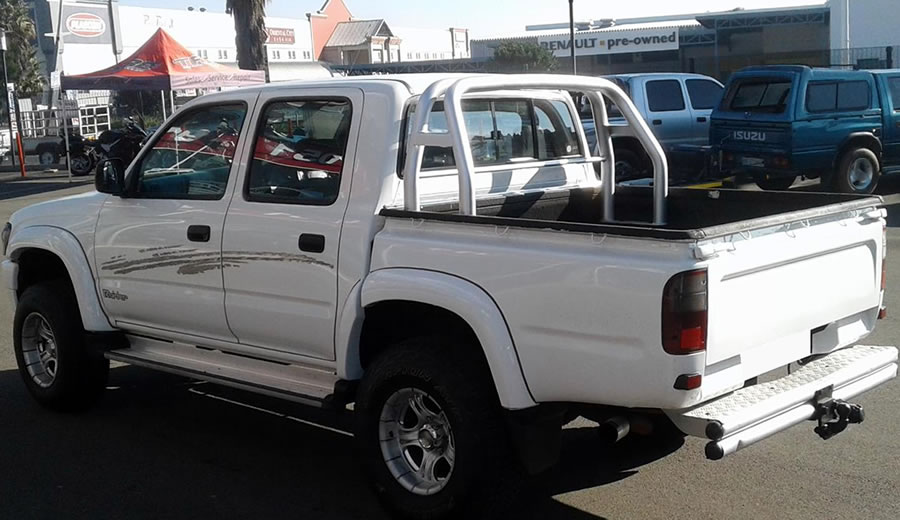
Toyota Hilux — a mid-size pickup truck with a load-bearing frame, produced from 1968 to the present by the Japanese company "Toyota Motor". Until 2004, it was classified as a compact pickup truck. The engine was located longitudinally in the front, the drive was initially on the rear wheels, and since 1978, an all-wheel drive version has appeared. The body was both a two-door and a four-door pickup with a full interior. There was also a body in the form of a cabin on a chassis, allowing the end user to install the equipment he needed himself. In the US, the car was called "Toyota Pickup" and "Toyota Truck", and since 1995 it has been replaced there by the Tacoma pickup truck. In 1984, the Hilux formed the basis of the 4Runner SUV (see description above), which was initially based entirely on the chassis and body of a pickup truck, and from the third generation began to be assembled on a chassis "Land Cruiser Prado".
The engine is located longitudinally in the front, the drive was initially rear, and from the third generation it became full with the front wheels connected. At the present time, the main classmates and competitors "Toyota Hilux" are the following pickups from other manufacturers - Fiat Fullback, Ford Ranger, Great Wall Wingle, Mazda BT-50, Mercedes-Benz X-Class, Mitsubishi L200, Nissan Navara, Renault Alaskan, SsangYong Actyon Sport, UAZ Patriot Pickup, Volkswagen Amarok.
First generation (N10, 1968-1972)
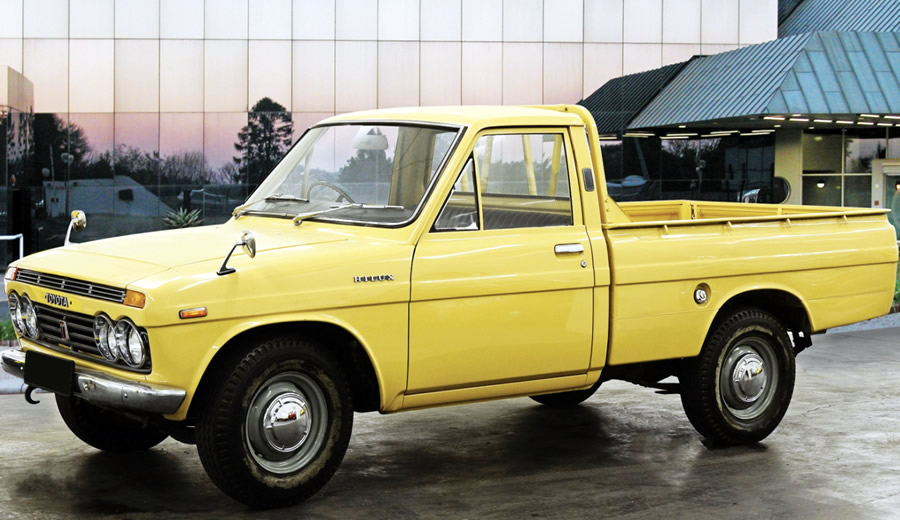
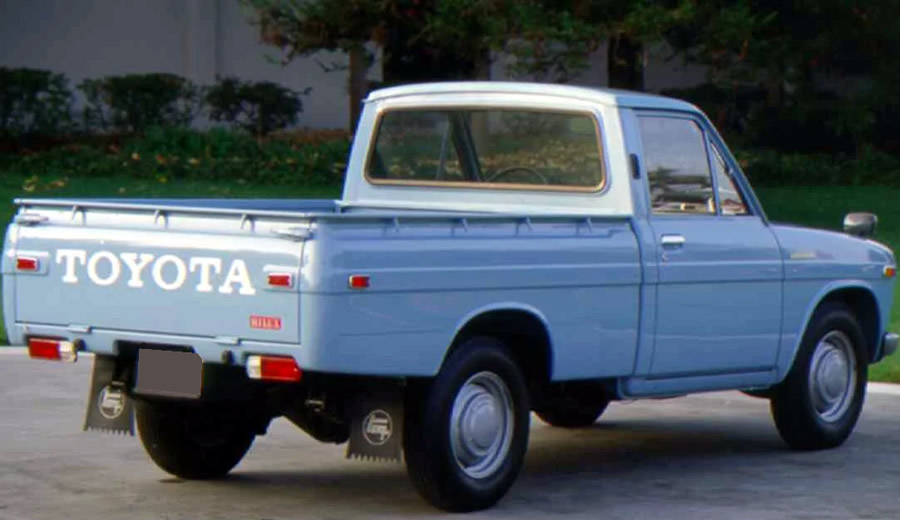
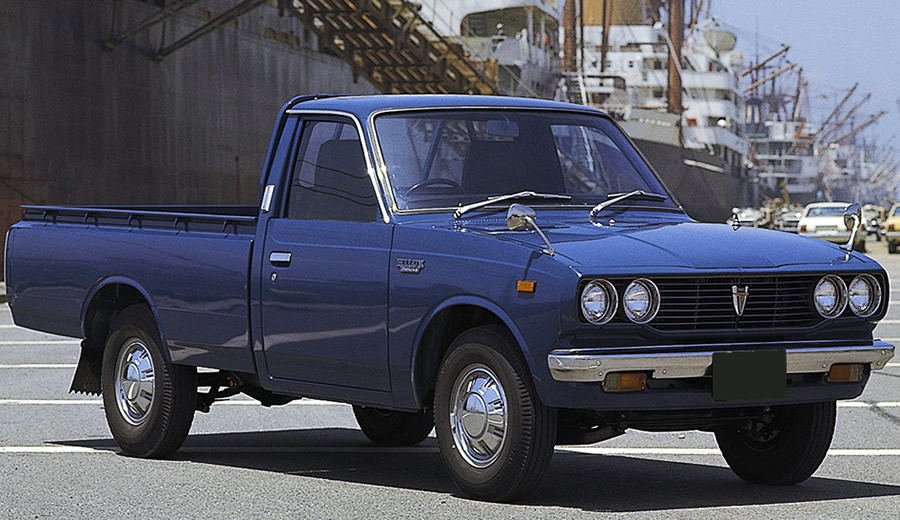
Production of the Hilux began in March 1968. Initially, it was a two-door, two-seater body, mounted on a frame, with a longitudinal engine at the front, with a drive to the rear wheels only. The wheelbase was long and short. With a long wheelbase, the car was 4690 mm long, with a short one - 4300 mm. The width was 1610 mm, the height 1560-1565 mm, the curb weight was 1050-1085 kg. The car was designed and assembled by "Hino Motors" to replace an outdated pickup truck "Hino Briska". The front suspension was spring, and the rear suspension was a solid drive axle on leaf springs.
Engines are only petrol four-cylinder with the following characteristics - 1.5 liters (1490 cm³, 2R, SOHC, 74 hp), 1.6 liters (1587 cm³, 12R, OHV, 89 hp), 1.9 liters (1858 cm³, 8R, SOHC, 109 hp), 1.9 liters (1897 cm³, 3R, SOHC, 79 hp) and 2.0 liters (1968 cm³, 18R, SOHC, 105 hp). A four-speed manual transmission was available on all trim levels.
Second generation (N₂0, 1972-1978)
The second generation appeared in May 1972 with the chassis code "N₂0". The body was the same two-door two-seater with a short (N₂0, 2580 mm) and long (N₂5, 2795 mm) wheelbase. The length of the car was 4275-4680 mm, width 1580 mm, height 1580 mm and the unladen weight was 1090 kg. The interior became much more comfortable. In the USA, some companies began to make mobile homes based on this pickup.
The engines were all petrol, four-cylinder, 1.6-litre capacity (1587 cm³, 12R, OHV, 83 hp), 2.0 liters (1968 cm³, 18R, SOHC, 109 hp) and 2.2 liters (2189 cm³, 20R, SOHC, 97 hp).. The gearbox was a four- or five-speed manual, and for the first time a three-speed automatic was installed.
Third generation (N30/N40, 1978-1983)
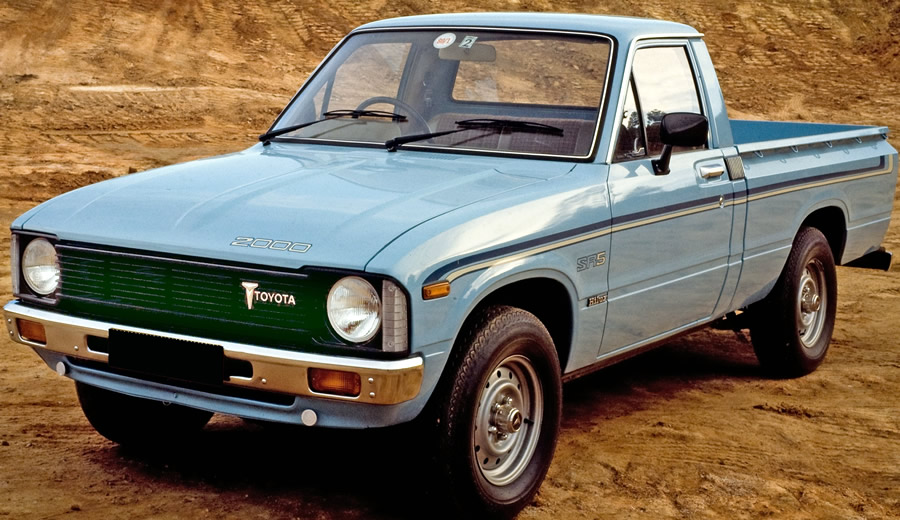
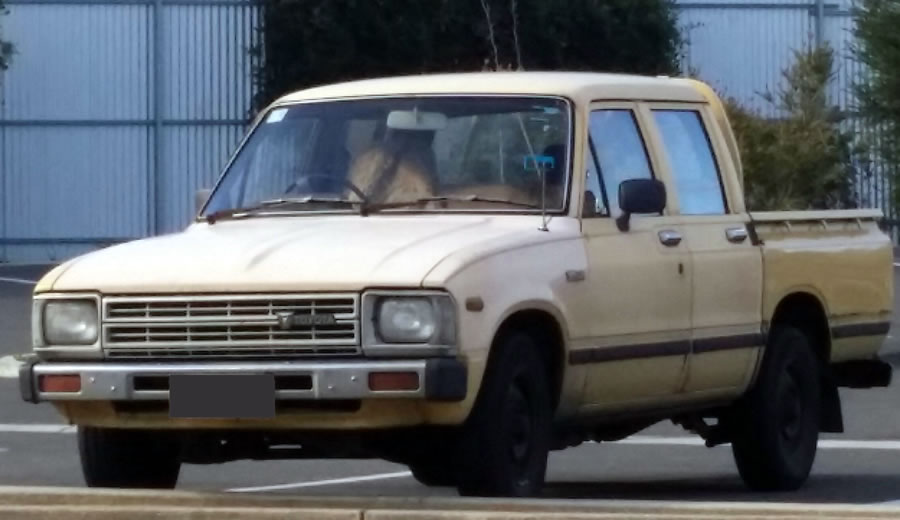
In August 1978, the third generation of the Hilux pickup was presented. The body was a two-door with a two-seater saloon (code N30) with a wheelbase of 2585 mm, a length of 4300 mm, a width of 1610 mm, a height of 1565 mm and a curb weight of 1055 kg. For the first time, they began to offer a four-door body with a four-seater saloon (code N40) with a wheelbase of 2800 mm, a length of 4690 mm, a width of 1610 mm, a height of 1565 mm and a curb weight of 1055 kg. The engine was located longitudinally in the front, the drive to the rear wheels. In January 1979, models with all-wheel drive began to be offered.
Petrol engines were still four-cylinder with the following parameters:
- 1.6 liters (1587 cm³, 12R, I4, SOHC) with a capacity of 79 hp.
- 2.0 liters (1968 cm³, 18R, I4, SOHC) with a capacity of 88 hp.
- 2.2 liters (2189 cm³, 20R, I4, SOHC) with a capacity of 90 hp.
- 2.4 liters (2366 cm³, 22R, I4, SOHC) with a capacity of 97 hp.
For the first time, a 2.2-liter diesel engine was installed (2188 cm³, L, I4, SOHC) with a capacity of 62 hp. The gearboxes were the same as those of the previous generation. The transfer case "RF1A" in all-wheel drive vehicles had a low gear.
In 1983, a luxury pickup truck called the "Mojave" was released for the US market, featuring chrome bumpers, bucket seats, cruise control, power steering and air conditioning.
Fourth generation (N50/N60/N70, 1983-1988)
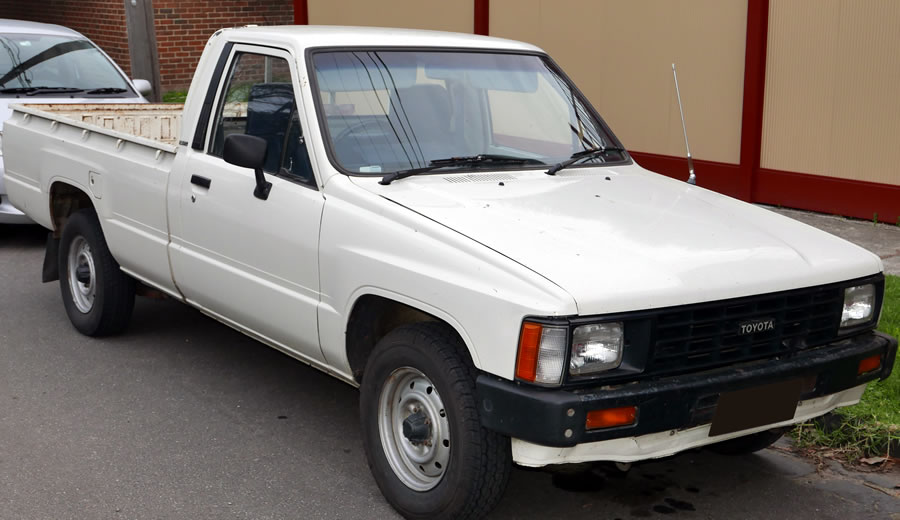
In August 1983, the fourth generation of Hilux went on sale. The body was a two-door two-seater or a four-door four-seater. There were three wheelbase options - the usual 2616 mm (the length of the car is 4435 mm, the width is 1621 mm, the height is 1544-1709 mm), extended 2845 mm (the length of the car is 4729 mm, the width is 1621 mm, the height is 1534-1709 mm), and also the extra-long "Xtracab" 3086 mm (the length of the car is 4966 mm, the width is 1689 mm, the height is 1532-1704 mm). The curb weight was 1270 kg. The SUV "4Runner" was created on the basis of this generation of the car (see description above). The front suspension became independent, torsion, on double wishbones with a stabilizer bar. The rear suspension did not change.
The petrol engines were mostly four-cylinder, but for the first time one six-cylinder V-shaped was added:
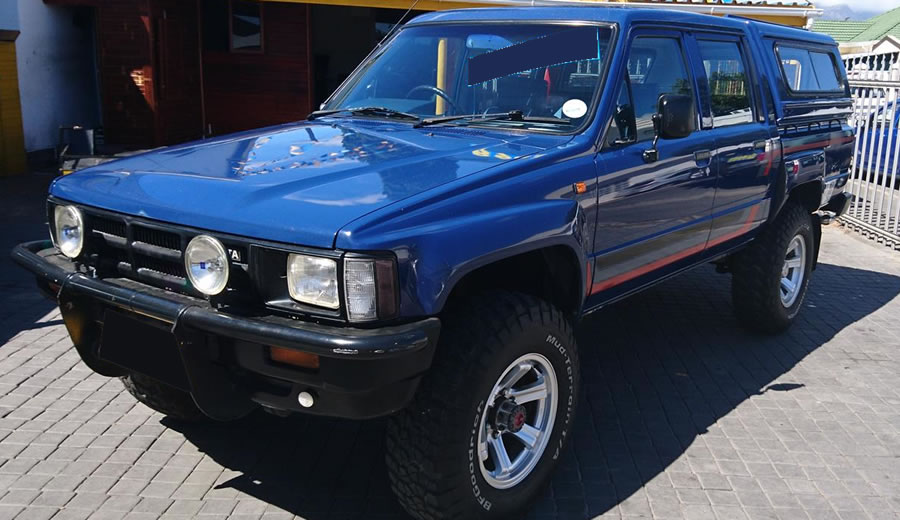
- 1.6 liters (1626 cm³, 1Y, I4, OHV) with a capacity of 83 hp.
- 2.0 liters (1998 cm³, 3Y I4, OHV) with a capacity of 89 hp.
- 2.4 liters (2366 cm³, 22R, I4, SOHC) with a capacity of 97 hp.
- 2.4 liters (2366 cm³, 22R-E, I4, SOHC, injection) with a capacity of 105 hp.
- 2.4 liters (2366 cm³, 22R-TE, I4, SOHC, turbocharged, injection) with a capacity of 135 hp.
- 3.0 liters (2958 cm³, 3VZ-E, V6, DOHC) with a capacity of 145 hp.
There were three models of 2.2-liter diesel engines (2188 cm³, L, I4, 71 hp), 2.4 liters (2446 cm³, 2L, I4, 76 hp) and 2.4 liters (2446 cm³, 2L-T, I4, turbocharged, 90 hp). The transmission was a four- or five-speed manual, as well as a three- or four-speed automatic.
At the end of 1986, the pickup truck underwent a minor interior and exterior upgrade, which affected the radiator grille and front bumper.
Fifth generation (N80/N90/N100/N110, 1988-1997)
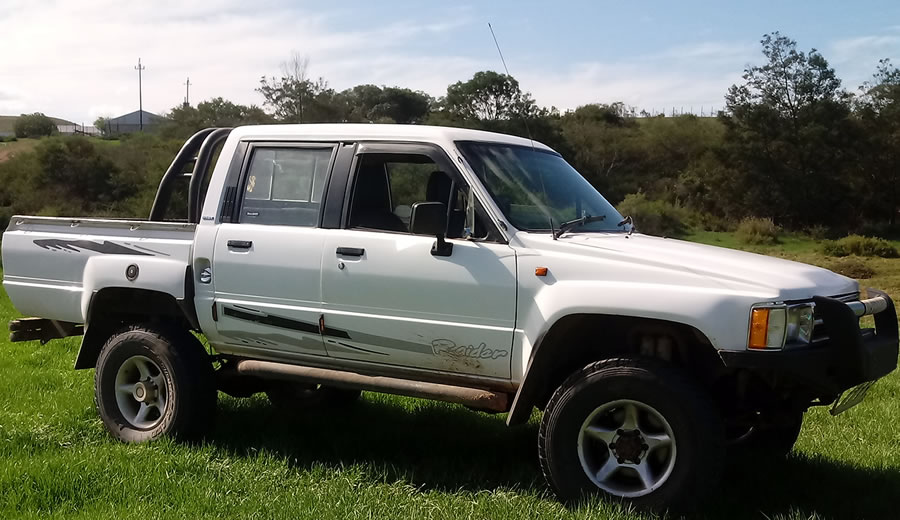
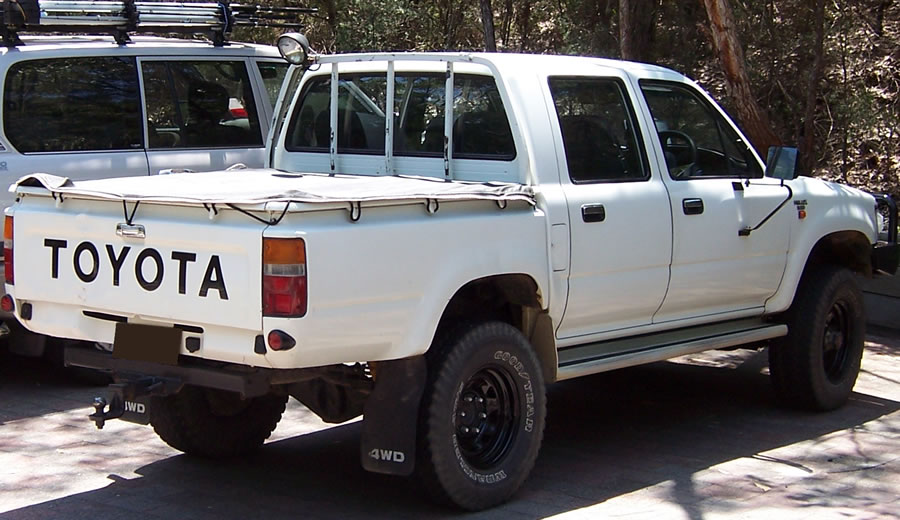
The fifth generation appeared in August 1988. There were also three different wheelbases - regular (2616 mm), extended (2850 mm) and extra-long "Xtracab" (3089 mm). The body is available in three versions - a two-door two-seater with a length of 4435 mm, a width of 1690 mm, and a height of 1544-1750 mm; two-door four-seater "Xtracab" 4905 mm long, 1690 mm wide, 1549-1755 mm high; four-door, four-seater, 4910 mm long, 1690 mm wide, 1539 mm high. The engine is located longitudinally in the front, rear or all-wheel drive. American Automobile Magazine "Motor Trend" gave the Xtracab pickup truck the title of "Car of the Year" in 1988. The car was assembled in Japan, Argentina, Germany, Colombia, New Zealand, the USA, Thailand and the Philippines. The German concern "Volkswagen" produced and sold "Hilux" under the name "Volkswagen Taro" from February 1989 to March 1997.
There were three models of petrol engines, two four-cylinder 1.8 litre (1812 cm³, 2Y/2Y-U, OHV, I4, 82/78 hp), 2.4 liters (2366 cm³, 22R-E, SOHC, I4, injection, 113 hp) and one V-shaped six-cylinder with a volume of 3.0 liters (2958 cm³, 3VZ-E, DOHC, V6, injection, 150 hp). There are two models of diesel engines, both four-cylinder and 2.4-liter (2446 cm³, 2L-II, SOHC I4, 89 hp) and 2.8 liters (2779 cm³, 3L, SOHC, I4, 90 hp). The gearbox was a four- or five-speed manual or a four-speed automatic.
In 1991, a minor facelift was carried out, changing the radiator grille and emblem. In 1995, in the USA, the Hilux was replaced by a new pickup truck, the Tacoma.
Sixth generation (N140/N150/N160/N170, 1997-2005)
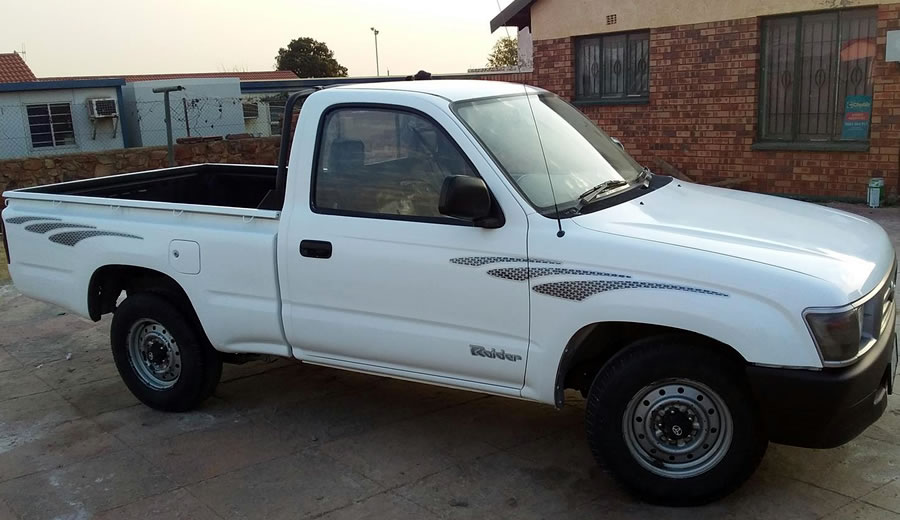
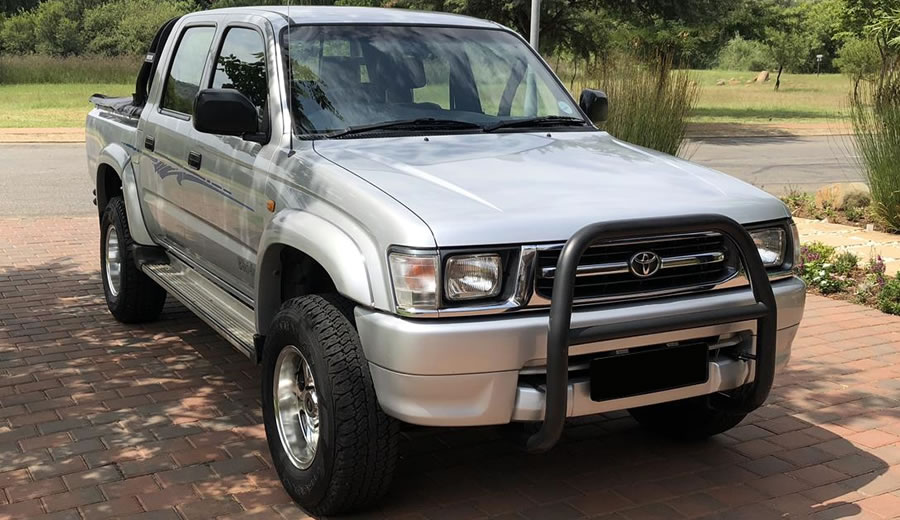
The sixth generation also has a body built on three different wheelbases - regular (2850 mm), extended (2855 mm) and extra-long "Xtracab" (3089 mm). There are also three cabin options - a two-door two-seater (length 4690 mm, width 1665 mm, height 1775 mm), two-door four-seater (length 4975 mm, width 1790 mm, height 1775 mm) and a four-door four-seater (length 1730 mm, width 1790 mm, height 1795 mm). The engine is still located longitudinally in the front, the drive is all-wheel drive or rear. Assembly was carried out in Venezuela, Colombia, Thailand, the Philippines and Japan. This is the last generation produced in Japan.
The petrol engines were mainly in-line four-cylinder, and also one six-cylinder, all with electronic injection systems with the following characteristics:
- 2.0 liters (1998 cm³, 1RZ-E, SOHC, I4) with a capacity of 108 hp.
- 2.4 liters (2438 cm³, 2RZ-FE, DOHC, I4) with a capacity of 142 hp.
- 2.7 liters (2693 cm³, 3RZ-FE, DOHC, I4) with a capacity of 150 hp.
- 3.4 liters (3378 cm³, 5VZ-FE, DOHC, V6) with a capacity of 190 hp.
There were two models of 2.4-liter diesel engines (2446 cm³, 2L-T, I4, turbocharged) with a capacity of 82 hp and 3.0 liters (2986 cm³, 5L, I4, turbocharged) with a capacity of 97 hp. The transmission was either a four-speed automatic or a five-speed manual.
In 1998, a small batch of SUVs was released on Asian markets "Hilux Sport Rider" with a station wagon body.
In 2001, the model underwent a minor update.
Seventh generation (AN10/AN₂0/AN30, 2004-2015)
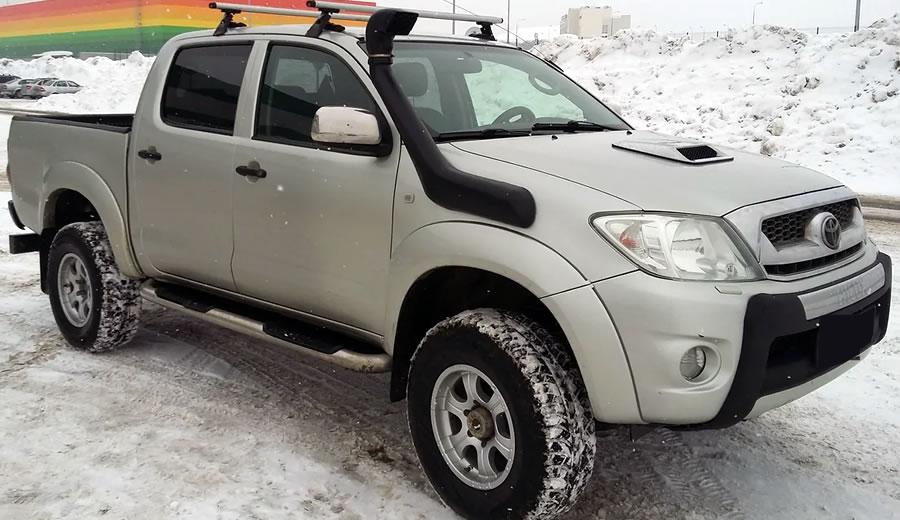
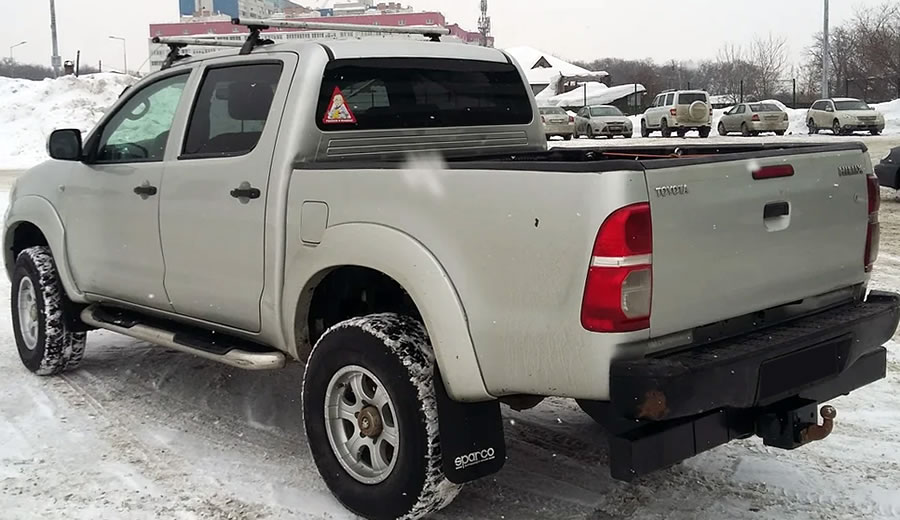
The seventh generation began production in August 2004. The car is based on a new platform "Toyota IMV" with a regular wheelbase of 2750 mm and an extended one of 3085 mm. The minivan "Innova" and the crossover "Fortuner" are also assembled on this platform. The body was a two-door two-seater (length 4980 mm, width 1760 mm, height 1795-1810 mm), two-door four-seater "Xtra" (length 5135-5260 mm, width 1885 mm, height 1695-1810 mm) and a four-door four-seater (length 4980-5260 mm, width 1885 mm, height 1695-1810 mm). The curb weight was 1555-1770 kg. The drive was still full or only rear. The car was assembled in Argentina, Venezuela, Malaysia, Pakistan, Thailand and South Africa.
Petrol engines were represented by the following models:
- 2.0 liters (1998 cm³, 1TR-FE, I4) with a capacity of 134 hp.
- 2.7 liters (2693 cm³, 2TR-FE, I4) with a capacity of 160 hp.
- 4.0 liters (3956 cm³, 1GR-FE, V6) with a capacity of 228 hp.
- 4.0 liters (3956 cm³, 1GR-FE, V6, turbocharged) with a capacity of 302 hp.
Diesel engines are all four-cylinder and are represented by three models with a volume of 2.5 liters (2494 cm³, 2KD-FTV, 102 hp), 2.5 liters (2494 cm³, 2KD-FTV, turbocharged, 143 hp) and 3.0 liters (2982 cm³, 1KD-FTV, turbocharged, 162 hp). The gearbox was a five-speed manual or a four- and five-speed automatic.
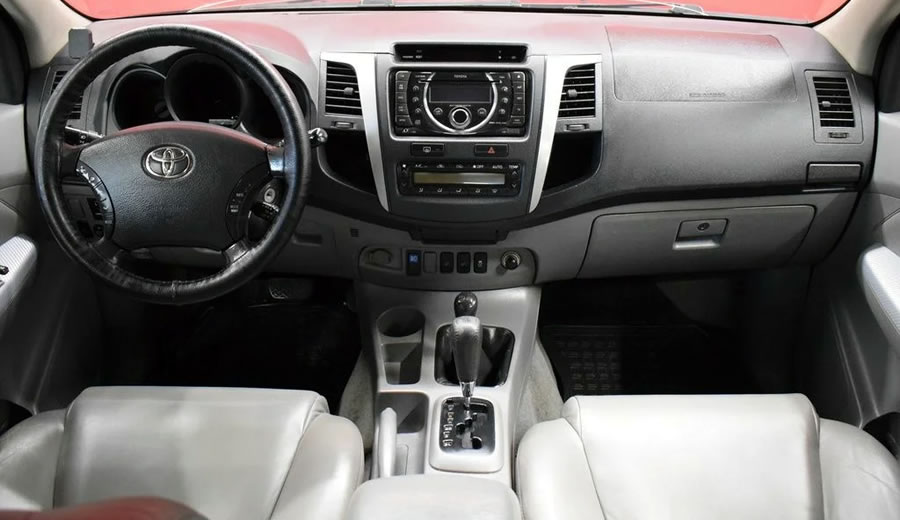
The first update was carried out in 2008. The second update of the exterior and interior was carried out in 2011.
Eighth generation (AN120/AN130/AN30, 2015-present)
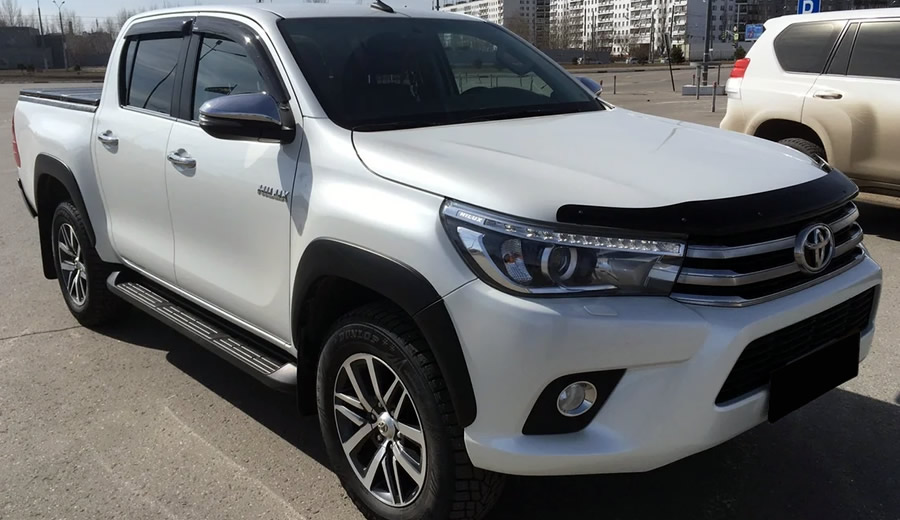
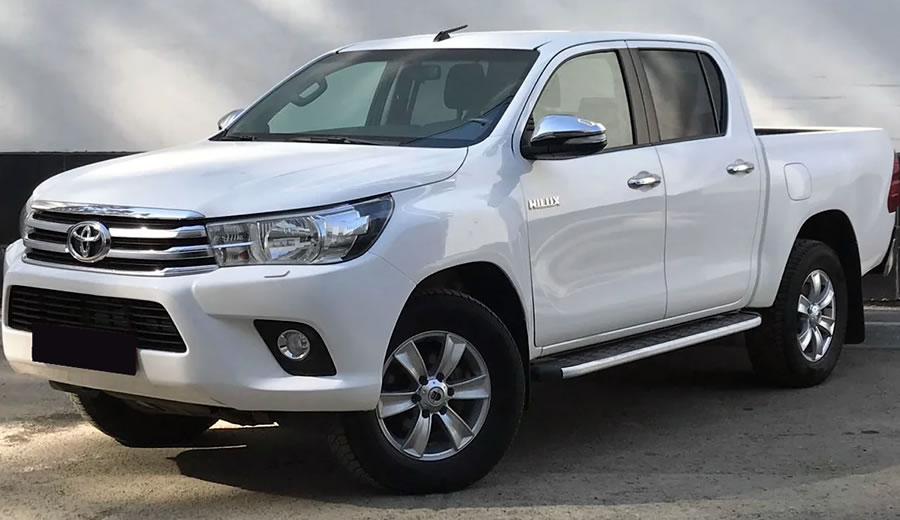
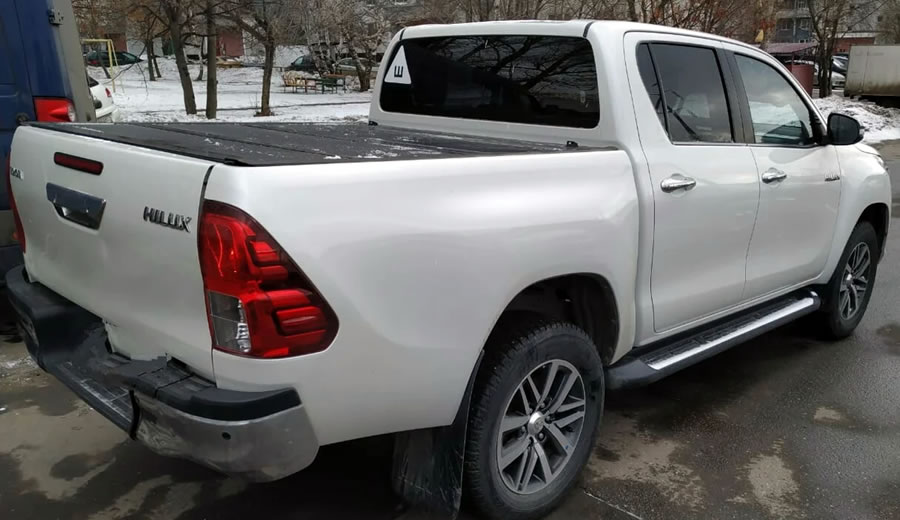
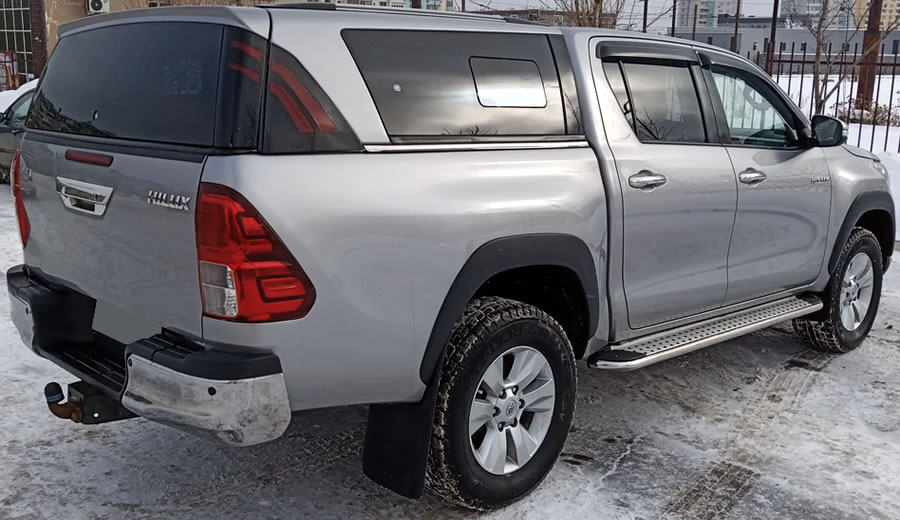
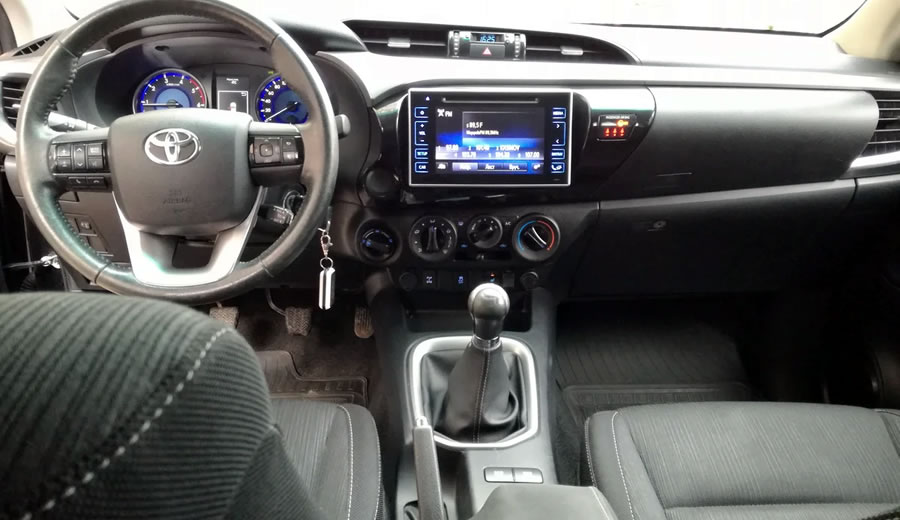
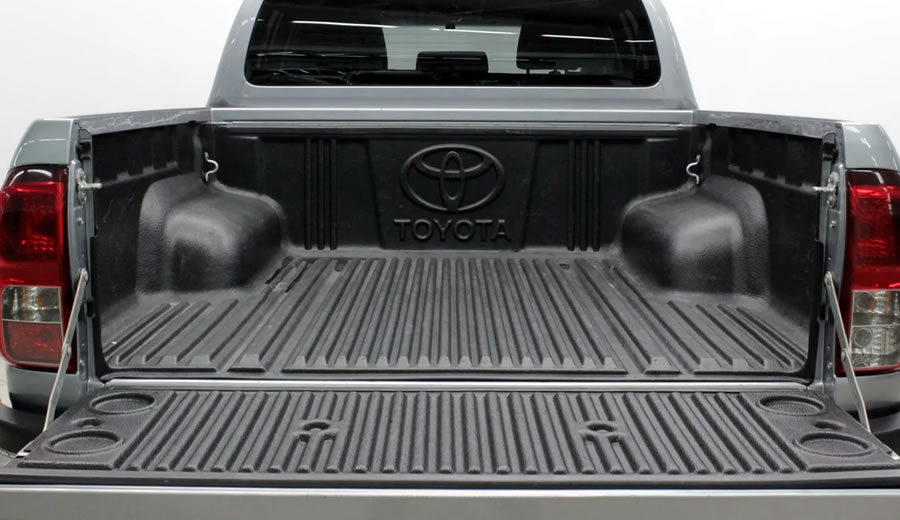
Sales of the eighth generation Hilux began in October 2015. Based on an already proven platform "Toyota IMV" with one wheelbase of 3085 mm. The body is presented only by a four-door four-seater double cabin with a length of 5335 mm, a width of 1855 mm, a height of 1815 mm and a curb weight of 2095 kg. The front suspension is independent spring, the rear is dependent leaf spring with a solid axle. The engine is located in the front longitudinally, rear-wheel drive or all-wheel drive. The car was assembled in Argentina, Pakistan, Thailand and South Africa.
Petrol engines are available in three models with a capacity of 2.0 liters (1998 cm³, 1TR-FE, I4, 139 hp), 2.7 liters (2693 cm³, 2TR-FE, I4, 158 hp) and 4.0 liters (3956 cm³, 1GR-FE, V6, 236 hp). The diesel engines were all turbocharged four-cylinder:
- 2.4 liters (2393 cm³, 2GD-FTV) with a capacity of 150 hp.
- 2.5 liters (2494 cm³, 2KD-FTV) with a capacity of 102 hp.
- 2.5 liters (2494 cm³, 2KD-FTV, intercooler) with a capacity of 144 hp.
- 2.8 liters (2755 cm³, 1GD-FTV) with a capacity of 177 hp.
- 3.0 liters (2982 cm³, 1KD-FTV) with a capacity of 163 hp.
- 3.0 liters (2986 cm³, 5L-E) with a capacity of 95 hp.

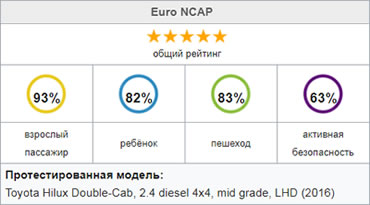
In 2016, the European committee "Euro NCAP" conducted crash tests to determine safety, see the results in the table on the right.
In November 2017, the updated car was shown at the 34th Thailand International Automobile Exhibition.