Share information:

Car engine overhaul Toyota 4Runner 2 (N120)
This subsection discusses in detail the procedure for performing such work as dismantling the power unit from the vehicle and overhauling the cylinder head, cylinder block/crankcase, and other engine parts.
Advice is given on the preparation and organization of work on overhaul and the purchase of spare parts, the procedures for removing, checking the technical condition, repairing and installing engine components and parts are described in detail.
Starting from the next section, the description is based on the assumption that the engine has been removed from the vehicle. A description of the types of repairs without removing the engine from the car is given in subsection 3.1.2 and subsection 3.2.2.
At the beginning of the subsection, all the regulatory data necessary for checking the technical condition and overhaul are given, the procedures for which are described below. See section 3.1.1 and subsection 3.2.1.

Engine overhaul technical data
4-cylinder engines 2.4 and 2.7 liters All dimensions and clearances are in mm. Compression (at 250 rpm): – standard 11.7 kgf/cm 2 - limiting 8.4 kgf/cm 2 - the greatest difference in compression in the cylinders 1.9...
4-cylinder engines 2.4 and 2.7 liters All dimensions and clearances are in mm. Compression (at 250 rpm): – standard 11.7 kgf/cm 2 - limiting 8.4 kgf/cm 2 - the greatest difference in compression in the cylinders 1.9...

Engine overhaul — general information
Control pressure gauge connection 4-cylinder engines 3.0L V6 engines 3.4L V6 engines It is not always easy to come to the conclusion about the feasibility of a complete overhaul of the engine, since it is necessary to...
Control pressure gauge connection 4-cylinder engines 3.0L V6 engines 3.4L V6 engines It is not always easy to come to the conclusion about the feasibility of a complete overhaul of the engine, since it is necessary to...
Engine Overhaul Alternatives
There are a number of options available for a major overhaul. The decision to replace the cylinder block, connecting rod and piston group and crankshaft depends on a number of factors, of which the condition of the...
There are a number of options available for a major overhaul. The decision to replace the cylinder block, connecting rod and piston group and crankshaft depends on a number of factors, of which the condition of the...
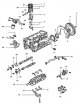
Engine disassembly procedure
Crank mechanism and piston group of 4-cylinder engines 1. Upper compression ring; 2. Oil ring discs; 3. Flywheel; 4. Bolt; 5. Connecting rod; 6. Connecting rod bearings; 7. Connecting rod cap; 8. Oil seal; 9....
Crank mechanism and piston group of 4-cylinder engines 1. Upper compression ring; 2. Oil ring discs; 3. Flywheel; 4. Bolt; 5. Connecting rod; 6. Connecting rod bearings; 7. Connecting rod cap; 8. Oil seal; 9....

Engine diagnostics with a vacuum gauge
Vacuum measurement is a reliable and relatively cheap way to diagnose an engine. According to the readings of the vacuum gauge, you can get an idea of the condition of the piston group, the tightness of the gaskets of...
Vacuum measurement is a reliable and relatively cheap way to diagnose an engine. According to the readings of the vacuum gauge, you can get an idea of the condition of the piston group, the tightness of the gaskets of...

Checking compression in the engine cylinders
The results of the compression test in the engine cylinders make it possible to judge the condition of a group of parts in the upper part of the engine (pistons, rings, valves and cylinder head gaskets). Namely, a...
The results of the compression test in the engine cylinders make it possible to judge the condition of a group of parts in the upper part of the engine (pistons, rings, valves and cylinder head gaskets). Namely, a...
Dismantling the power unit — preparatory measures
If it was decided to dismantle the engine for a major overhaul, or repair of the main components, then certain preparatory measures must be taken. It is extremely important to outline the place in which the work will be...
If it was decided to dismantle the engine for a major overhaul, or repair of the main components, then certain preparatory measures must be taken. It is extremely important to outline the place in which the work will be...
Engine Removal Methods and Safety
If it was decided to dismantle the engine for a major overhaul, or repair of the main components, then certain preparatory measures must be taken. It is extremely important to outline the place in which the work will be...
If it was decided to dismantle the engine for a major overhaul, or repair of the main components, then certain preparatory measures must be taken. It is extremely important to outline the place in which the work will be...

Dismantling and installation of the engine
Attention! Before performing work, read the contents of this subsection. The manufacturer recommends dismantling the engine assembly with the transmission by lifting the entire power unit up and removing it from the...
Attention! Before performing work, read the contents of this subsection. The manufacturer recommends dismantling the engine assembly with the transmission by lifting the entire power unit up and removing it from the...

Disassembly of the cylinder head
Attention! It seems more appropriate to purchase a new block head than to disassemble, check and repair a used head. Sorting of valve train parts Removed parts should be stored in the order in which they were installed....
Attention! It seems more appropriate to purchase a new block head than to disassemble, check and repair a used head. Sorting of valve train parts Removed parts should be stored in the order in which they were installed....

Cleaning and checking the cylinder head
Valve Wear Check Points 1. Butt; 2. Grooves for crackers; 3. Rod; 4. Chamfer; 5. Inlet valve; 6. Belt; 7. Exhaust valve Typical valve face wear Cleaning 1. Remove any gasket residue from the split surfaces of the head,...
Valve Wear Check Points 1. Butt; 2. Grooves for crackers; 3. Rod; 4. Chamfer; 5. Inlet valve; 6. Belt; 7. Exhaust valve Typical valve face wear Cleaning 1. Remove any gasket residue from the split surfaces of the head,...

Cylinder head assembly
Before starting the assembly, you must make sure that the head of the block is clean, regardless of whether this part was repaired in a car service or not. 1. If the head of the block was repaired in a car service, then...
Before starting the assembly, you must make sure that the head of the block is clean, regardless of whether this part was repaired in a car service or not. 1. If the head of the block was repaired in a car service, then...
Valves — check and repair
Due to the complexity of the work and the need to use special tools and equipment, it is recommended to repair valves, seats and guide bushings in a car service. It is advisable to independently carry out only...
Due to the complexity of the work and the need to use special tools and equipment, it is recommended to repair valves, seats and guide bushings in a car service. It is advisable to independently carry out only...

Connecting rod and piston group — dismantling
Attention! Before removing the pistons and connecting rods, remove the cylinder head, oil pan and oil pump. Dismantling 1. On 2.7L engines, remove the balancer shaft (see subsection 3.3.14 ). 2. Using a reamer, remove...
Attention! Before removing the pistons and connecting rods, remove the cylinder head, oil pan and oil pump. Dismantling 1. On 2.7L engines, remove the balancer shaft (see subsection 3.3.14 ). 2. Using a reamer, remove...

Dismantling the crankshaft
Attention! The crankshaft can only be removed after the engine has been removed from the vehicle. Remove the flywheel first (or master disk), idler pulley, belt (chain), sump, oil receiver, oil pump, front cover and...
Attention! The crankshaft can only be removed after the engine has been removed from the vehicle. Remove the flywheel first (or master disk), idler pulley, belt (chain), sump, oil receiver, oil pump, front cover and...

Checking the condition of the crankshaft
1. Wash the crankshaft with solvent and dry, clean the oil passages, clean the journals and remove burrs. 2. Check the condition of the shaft journals, the presence of cracks, potholes, burrs. Check the roughness of the...
1. Wash the crankshaft with solvent and dry, clean the oil passages, clean the journals and remove burrs. 2. Check the condition of the shaft journals, the presence of cracks, potholes, burrs. Check the roughness of the...

Mounting and checking the clearances in the main bearings of the crankshaft
Bolt tightening sequence for main bearing caps on 4-cylinder engines Bolt tightening sequence for main bearing caps on V6 engines 1. Position the block so that the bottom is facing up. Turn out bolts of covers, get...
Bolt tightening sequence for main bearing caps on 4-cylinder engines Bolt tightening sequence for main bearing caps on V6 engines 1. Position the block so that the bottom is facing up. Turn out bolts of covers, get...

Cylinder block — cleaning and checking
Cleaning Attention! The plugs of the channels of the cooling system are tightly pressed into the cylinder block. 1. Turn the plugs by blows on the blunt part of the core (photo on the left) and take it out with pliers...
Cleaning Attention! The plugs of the channels of the cooling system are tightly pressed into the cylinder block. 1. Turn the plugs by blows on the blunt part of the core (photo on the left) and take it out with pliers...

Cylinder honing
For honing, it is recommended to use a tool "brush". 1. Clamp the fixture into an electric drill. 2. Lubricate the surface of the cylinder well with oil, turn on the electric drill and periodically move up and down in...
For honing, it is recommended to use a tool "brush". 1. Clamp the fixture into an electric drill. 2. Lubricate the surface of the cylinder well with oil, turn on the electric drill and periodically move up and down in...

Checking the condition of connecting rods and pistons
1. Carefully clean the pistons from carbon deposits and carefully remove the rings. 2. Remove carbon deposits from the piston ring grooves using the tool (photo on the left) or old piston ring (photo on the right). 3....
1. Carefully clean the pistons from carbon deposits and carefully remove the rings. 2. Remove carbon deposits from the piston ring grooves using the tool (photo on the left) or old piston ring (photo on the right). 3....

Installing and checking clearances in connecting rod bearings
Arrangement of joints of piston rings 1. Top compression ring; 2. Oil scraper ring expander; 3. Bottom compression ring; 4. The upper disk of the oil scraper ring; 5. Notches (facing the front of the engine); 6. Lower...
Arrangement of joints of piston rings 1. Top compression ring; 2. Oil scraper ring expander; 3. Bottom compression ring; 4. The upper disk of the oil scraper ring; 5. Notches (facing the front of the engine); 6. Lower...

Main and connecting rod bearings — check and selection
Types of wear of main and connecting rod bearings Examination Main and connecting rod bearings must be replaced during engine overhauls, but used bearings should be carefully checked to restore the general condition of...
Types of wear of main and connecting rod bearings Examination Main and connecting rod bearings must be replaced during engine overhauls, but used bearings should be carefully checked to restore the general condition of...

Balance shafts — removal, inspection and installation
balance shafts (on 2.7 l engines) mounted on both sides of the cylinder block and driven by a separate chain (see fig. Details of the front of the engine ). Removing 1. Remove the N1 chain tensioner, guide, N1 sprocket...
balance shafts (on 2.7 l engines) mounted on both sides of the cylinder block and driven by a separate chain (see fig. Details of the front of the engine ). Removing 1. Remove the N1 chain tensioner, guide, N1 sprocket...
Engine assembly procedure
On 4-cylinder engines: piston rings; crankshaft and main bearings; pistons with connecting rods; rear crankshaft oil seal; cylinder head; camshafts; balance shafts; chain; oil pump; oil receiver; pallet; collectors;...
On 4-cylinder engines: piston rings; crankshaft and main bearings; pistons with connecting rods; rear crankshaft oil seal; cylinder head; camshafts; balance shafts; chain; oil pump; oil receiver; pallet; collectors;...

Installation of piston rings
Installation of compression rings Rings are marked (1 (2) T or 1 (2) N for 4-cylinder engines and 1 (2) R or T1 (t2) for V6). Installation 1. Before installing new piston rings, sort the rings and check the gap in the...
Installation of compression rings Rings are marked (1 (2) T or 1 (2) N for 4-cylinder engines and 1 (2) R or T1 (t2) for V6). Installation 1. Before installing new piston rings, sort the rings and check the gap in the...
Starting the engine after repair and running in
1. After assembly is complete, double check the oil and coolant levels. 2. With the candles turned out and the ignition system and fuel pump turned off, turn the crankshaft until the oil pressure is registered by the...
1. After assembly is complete, double check the oil and coolant levels. 2. With the candles turned out and the ignition system and fuel pump turned off, turn the crankshaft until the oil pressure is registered by the...
This section is available on: russian, bulgarian, belarusian, ukrainian, serbian, croatian, romanian, polish, slovak, hungarian
Similar sections for other Toyota models
➥ Power unit: Engine overhaul (V6) Toyota Camry XV30 (2001-2006)
➥ Power unit: Engine overhaul Toyota Corona T190 (1992-1997)
➥ Power unit: Engine repair Toyota Carina T190 (1992-1996)
➥ Power unit: Engine overhaul Toyota Cruiser 60/80 (1980-1997, petrol)
➥ Power unit: Overhaul of engines Toyota Highlander 1 (2000-2007, petrol)
➥ Power unit: Engine overhaul Toyota RAV 4 XA10 (1994-2000)
➥ Power unit: Engine overhaul Toyota Duet (1998-2004)
Link in different formats to this article
TEXTHTMLBB Code
- General information
- User manual
- Maintenance
- Power unit
- 4-cylinder engines
- 6-cylinder engines
- Engine overhaul
- Cooling and heating
- Fuel system
- Transmission
- Mechanical gearbox
- Automatic gearbox
- Transfer case
- Clutch
- Transmission line
- Chassis, running gear
- Brake system
- Car suspension
- Steering
- Body and interior
- Exterior (external elements)
- Interior (internal elements)
- Doors, locks and windows
- Electrical equipment
- Equipment and devices
- Ignition system
- Power devices
- Electrical circuits