Share information:
Toyota Kaldina (1992-2007)
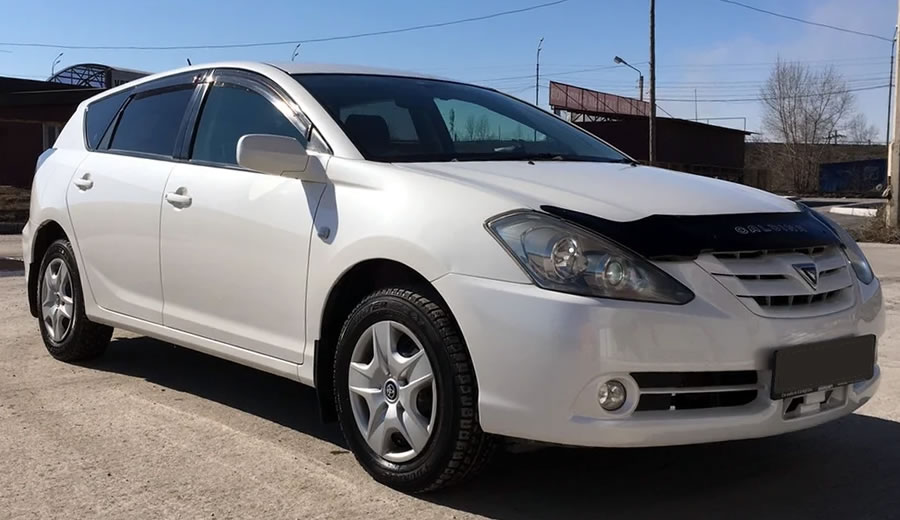
Toyota Caldina — a mid-size car (D-segment) produced from 1992 to 2007 by the Japanese automaker "Toyota Motor". Designed only for the Japanese market and replaced the sedans "Carina" and "Corona" and was only produced as a five-door station wagon. The engine is located transversely in the front with front-wheel drive or with the symmetrical all-wheel drive system "All-Trac". Thanks to the large interior space and all-wheel drive, the car became popular outside Japan. In 2007, it was replaced by "Avensis".
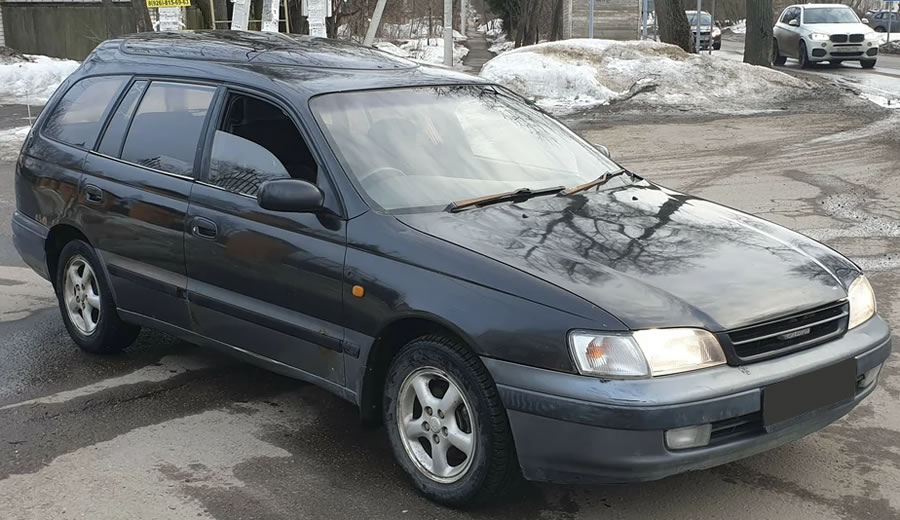
First generation (T190, 1992-1997)
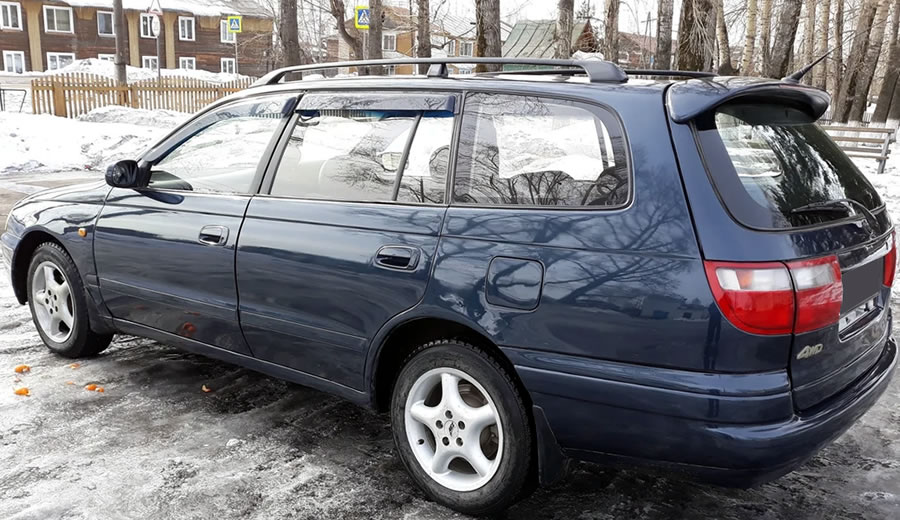
After the appearance of the ninth generation "Corona" the car with a five-door station wagon or commercial van body was separated into a separate model with the same chassis code "T190". The wheelbase was 2580 mm, length 4545 mm, width 1695 mm, height 1450 mm and the unladen weight was 1220 kg. The station wagon had an independent spring rear suspension, while the van had leaf springs. The front wheels had ventilated disc brakes, while the rear wheels had drum brakes.
Petrol engines were only four-cylinder with a fuel injection system of the following characteristics:
- 1.5 liters (1497 cm³, 5E-FE) with a capacity of 110 hp.
- 1.8 liters (1838 cm³, 4S-FE) with a capacity of 113 hp.
- 1.8 liters (1762 cm³, 7A-FE) with a capacity of 118 hp.
- 2.0 liters (1998 cm³, 3S-FE) with a capacity of 135 hp.
- 2.0 liters (1998 cm³, 3S-GE) with a capacity of 175 hp.
There were also three models of 2.0-liter diesel engines (1974 cm³, 2C, I4, SOHC, 73 hp), 2.0 liters (1974 cm³, 2C -T, I4, SOHC, turbocharged, 88 hp) and 2.2 liters (2184 cm³, 3C-E, I4, SOHC, 79 hp). The transmission was a four-speed automatic or a five-speed manual.
In 1995, the model underwent a minor update.
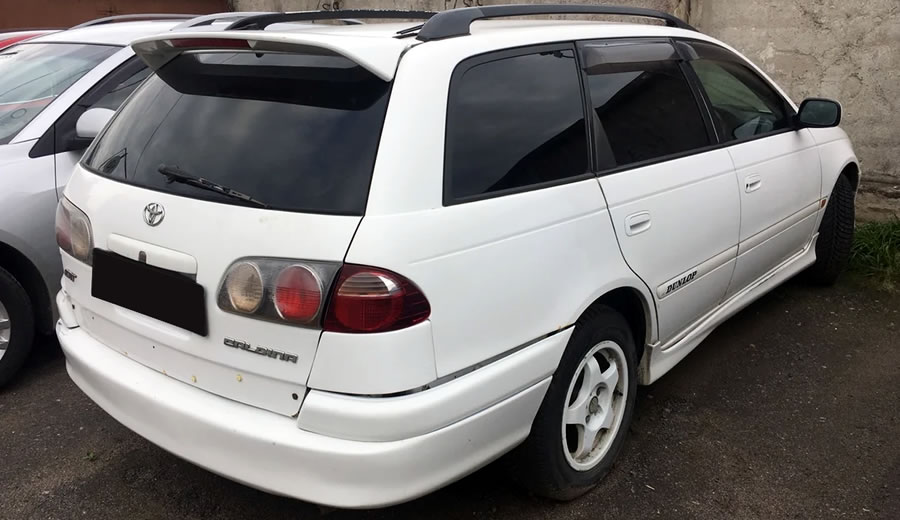
Second generation (T210, 1997-2002)
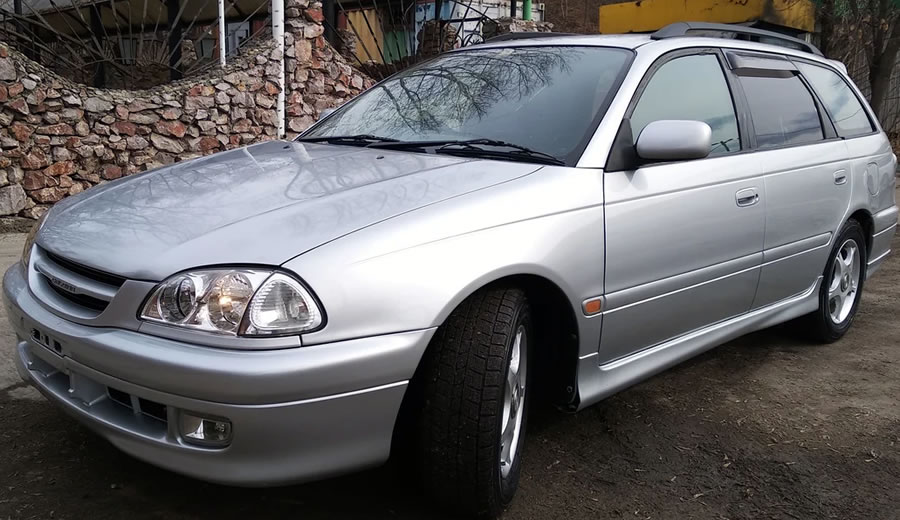
In mid-1997, the second generation was released in Japan with the chassis code "T210". All-wheel drive cars are designated "ST215". Based on the same platform as the sedans "Allion and Premio". The exterior design has changed quite a lot, as has the interior. The body is only a five-door station wagon with a wheelbase of 2580 mm, a length of 4520 mm, a width of 1695 mm, a height of 1495 mm and a curb weight of 1410 kg. All-wheel drive has become automatically connected on all-wheel drive vehicles.
All engines were four-cylinder in-line engines. There were four petrol models with a capacity of 1.8 liters (1762 cm³, 7A -FE, 120 hp), 2.0 liters (1998 cm³, 3S- FE, 135 hp), 2.0 liters (1998 cm³, 3S-GE, 175 hp) and 2.0 liters (1998 cm³, 3S-GTE, turbocharged, 256 hp), all with electronic fuel injection. There were two models of 2.0-liter gasoline engines (1974 cm³, 2C-T, 88 hp) and 2.2 liters (2184 cm³, 3C-TE, 126 hp), all turbocharged. The gearbox was a five-speed manual "E150F" or a four-speed automatic "U140F".
In 2000, the model was updated. The bumpers, headlights and interior were changed.
Third generation (T240, 2002-2007)
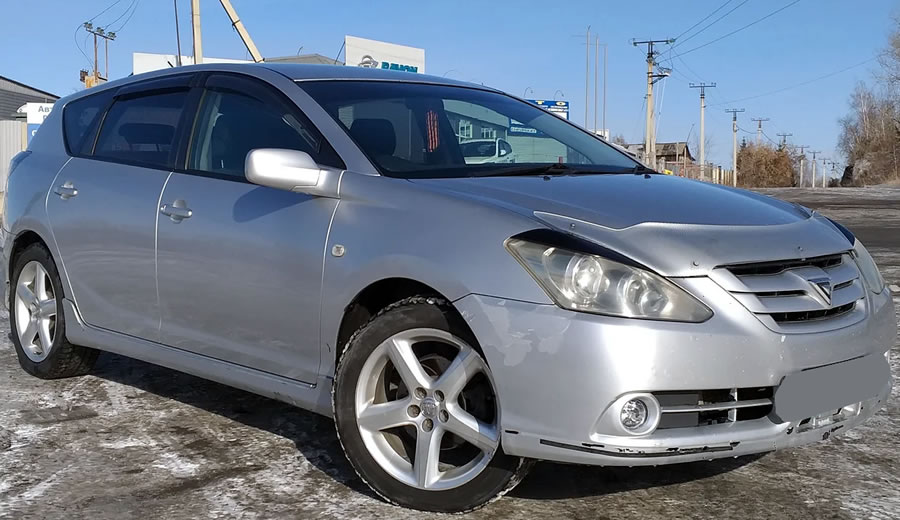
In September 2002, the third and final generation of Caldina appeared with the code "T240". The five-door station wagon body is absolutely new and has nothing in common with European analogues. The wheelbase was 2700 mm, length 4510 mm, width 1740 mm, height 1445 mm and the curb weight was 1240-1490 kg.
Only four-cylinder petrol engines were presented with the following parameters: 1.8 liters (1794 cm³, 1ZZ-FE, 140 hp), 2.0 liters (1998 cm³, 1AZ-FSE, 147 hp) and 2.0 liters (1998 cm³, 3S-GTE, turbocharged, 256 hp). The gearbox is only a four-speed automatic, including "Tiptronic".
In 2005, the model was restyled. Production of the third generation ended in mid-2007 without a real successor.
Toyota Duet (1998-2004)
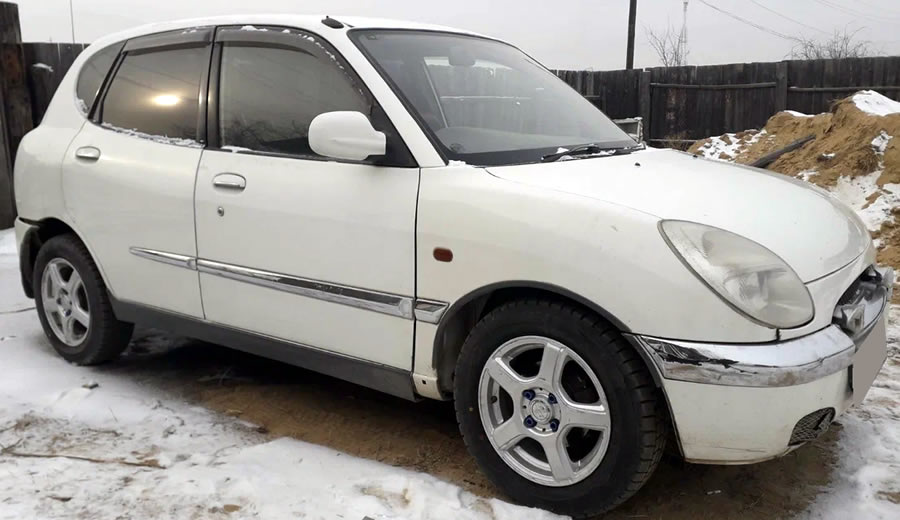
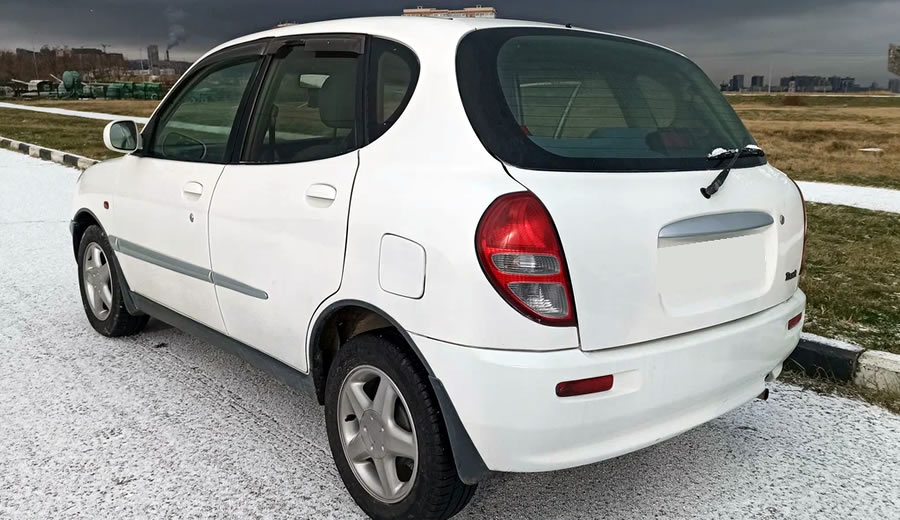
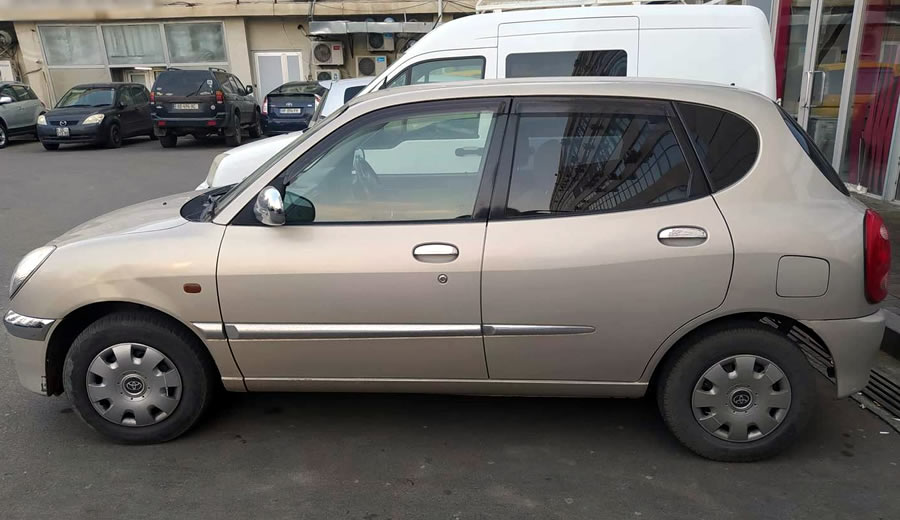
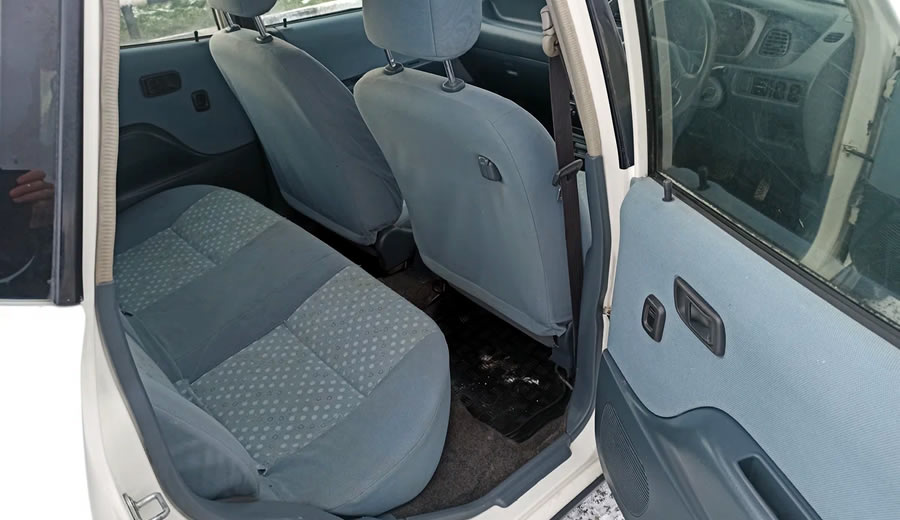
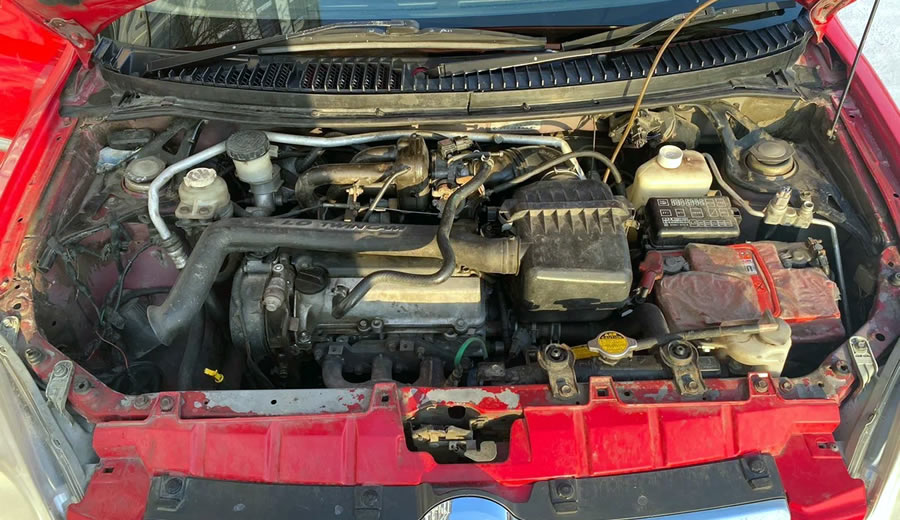
Toyota Duet is a Japanese city subcompact car that was produced from 1998 to 2004. A similar car was also produced by Daihatsu, which is owned by Toyota - Daihatsu Storia with right-hand drive and Daihatsu Sirion with left-hand drive. Factory code M100. The engine is located in the front with front-wheel drive, there were also models with all-wheel drive. The body is made in the form of a five-door hatchback and despite the small size of the car, it is quite spacious inside for its class. The length of the body was 3660 mm, width 1600 mm, height 1450 mm, wheelbase 2370 mm, curb weight 820 kg.
The equipment of this small car is quite rich. There are front airbags, rearview mirrors with electrical adjustment and automatic folding, electric windows on all doors, air conditioning, height adjustment of the driver's seat and other functions available in cars of a higher class. In 2000, the Storia/Duet was restyled, with most of the changes made to the front of the car, primarily to the design of the radiator grille, and the dashboard was significantly redesigned.
The car was equipped only with petrol engines - three-cylinder, 1.0 liter (989 cm³, 54/60/64 hp) and a 1.3-liter in-line four-cylinder (1297 cm³, 90/110 hp). The transmission was a five-speed manual and a four-speed automatic.
Sales were discontinued in early 2005, as the car was replaced by the subcompact Toyota Passo.
Toyota Dune (1959-present)
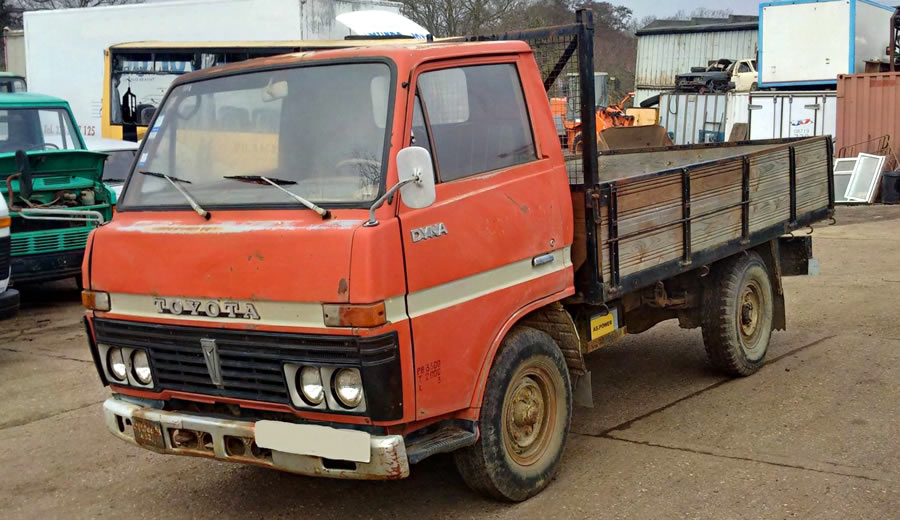
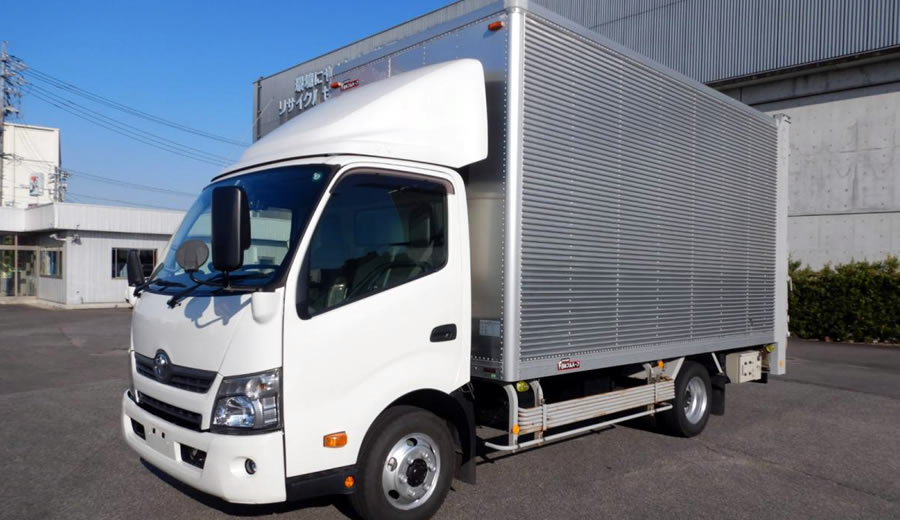
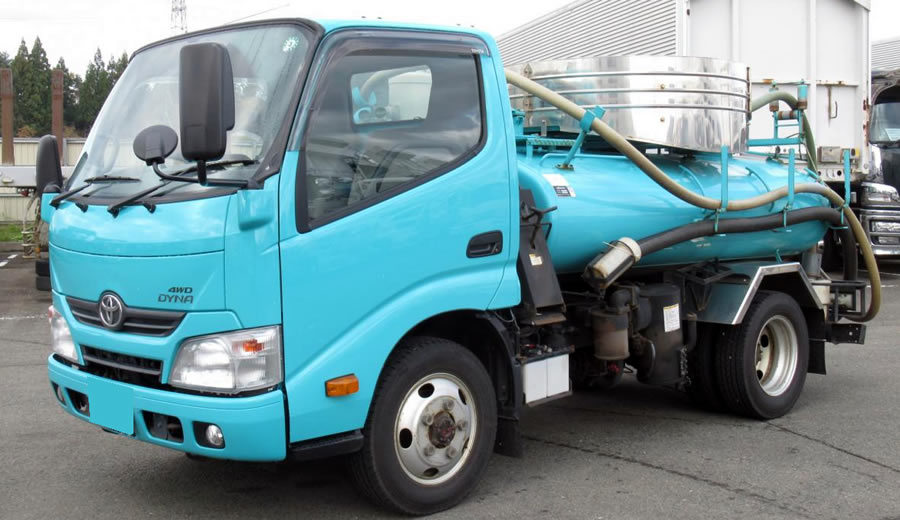
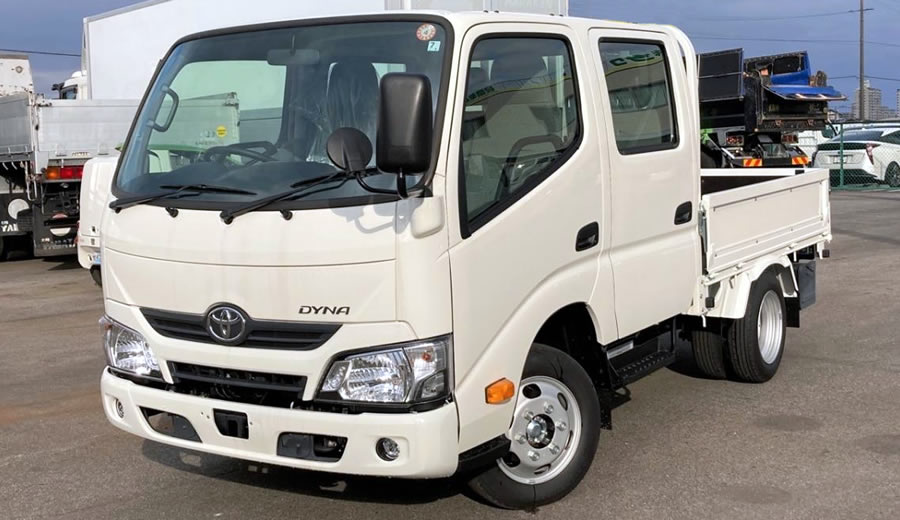
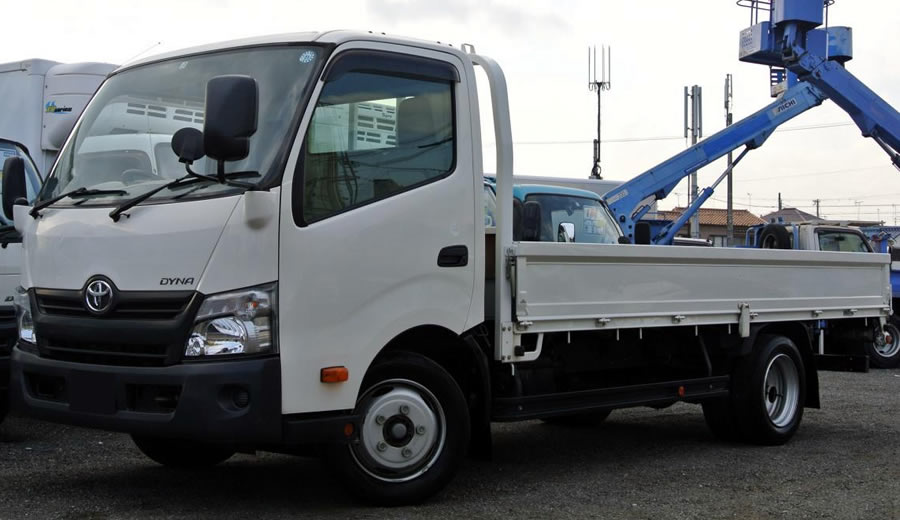
Toyota Dyna — a range of medium-duty trucks produced since 1959 by the Japanese company Toyota. A lighter version, offered in Europe as the Dyna 100, is sold in Japan under the name ToyoAce. Following the merger of Daihatsu with Toyota in 1967, the Dyna was also sold as the Daihatsu Delta from 1970 to 2003, and since 1999 it has also been available as the Hino Dutro. Hino is part of the Toyota Group. Model variants available include single- and double-cab flatbed trucks, chassis cabs, panel vans and minibuses. Four-wheel drive is optional. Its traditional competitors include the Isuzu Elf, Mitsubishi Fuso Canter and Nissan Atlas.
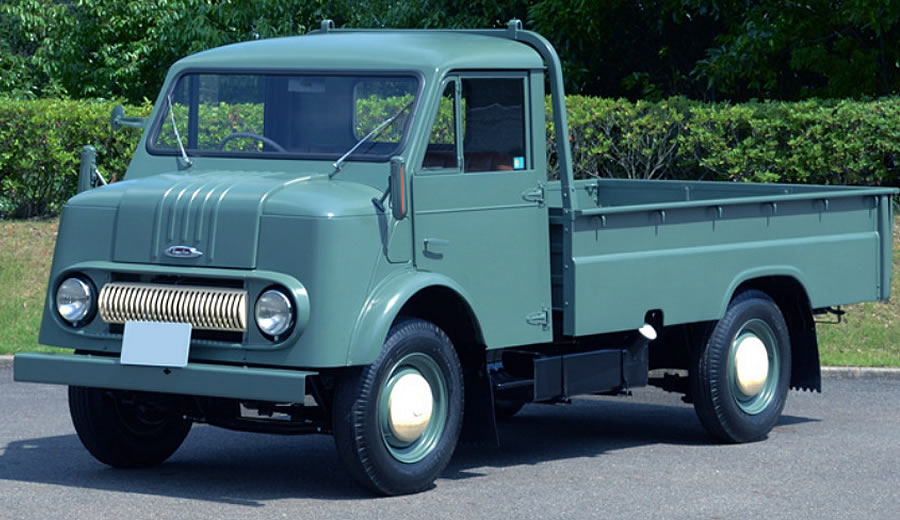
Toyopet Route Truck Platform RK52 appeared in 1956 and Toyopet Toyoace SKB cars began to be produced on it. The second generation with codes RK60-RK80 was developed by Kanto Auto Works. In April 1959, the car was renamed Toyota Dyna. In 1963, the K170 series with a 1.9-liter gasoline engine appeared. In addition to the truck, the Toyota RK170B bus was created on its basis. In 1964, a 2.3-liter diesel engine and an RK175 truck with an extended base and dual rear wheels and a route van appeared.
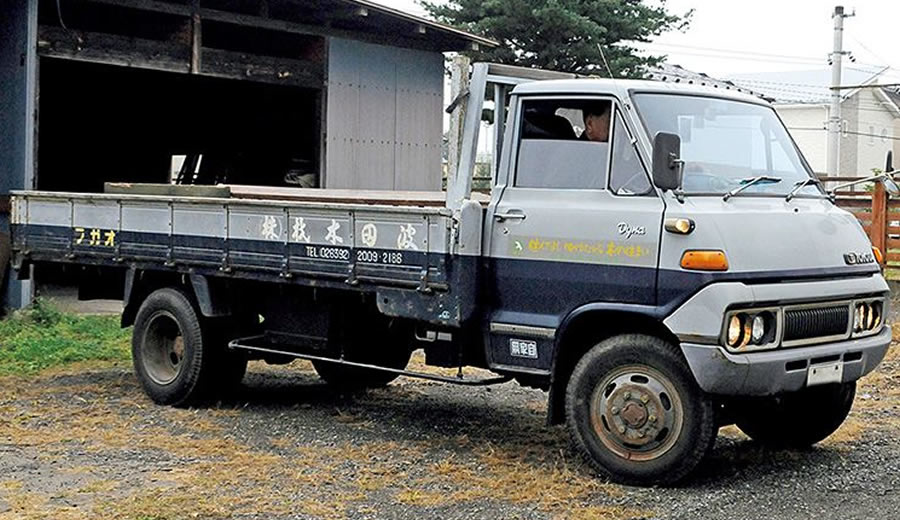
After the merger with Hino Motors in 1966, the new Toyota "U" platform and the Toyota Dyna series of trucks appeared U10. The heart of this series was a 2.0-liter four-cylinder gasoline engine (5R), as well as a 3.0-liter in-line four-cylinder diesel engine (B) and a 3.6-liter six-cylinder engine (H). There were versions with a regular (U10) and extended (U15) wheelbase with single or dual rear wheels. Also on this platform in 1969, a minibus called the Toyota Coaster and a heavy truck Massy Dyna (QC10) with a carrying capacity of 3.5 tons appeared. A modified version of the Dyna U10 was also sold as the first-generation Daihatsu Delta 1500 or 2000. The smaller Toyota ToyoAce series Y10 with a lifting capacity of 1 to 1.5 tons was introduced in 1971. In Europe, later versions of this model are called Dyna 100.
In 1977, the series appeared U20 - This is a four-wheeled truck (with a lifting capacity of 2-3 tons) and passenger MPV, the U30 being a longer wheelbase version, while the U40 and U50 were heavier and had a wider cabin. These vehicles were powered by four-cylinder in-line engines - a 3.0-litre diesel (B) and a 2.0-litre petrol (5R). This model was also sold as the Daihatsu Delta in 1.5- to 2.5-tonne capacities, but was also sold for the first time with a Hino badge - as the Ranger 2 or Ranger 3. The new smaller ToyoAce with chassis Y20 was released in 1979, while the Dyna was still using the "U" platform. In 1984, Toyota introduced the Dyna Rino. A lightweight version with a single rear wheel was built on the platform Y30, and the version with dual rear wheels received the code Y40. At first they had diesel engines with a volume of 3.4 liters (3B/13B), later it was increased to 3.7 liters (14B).
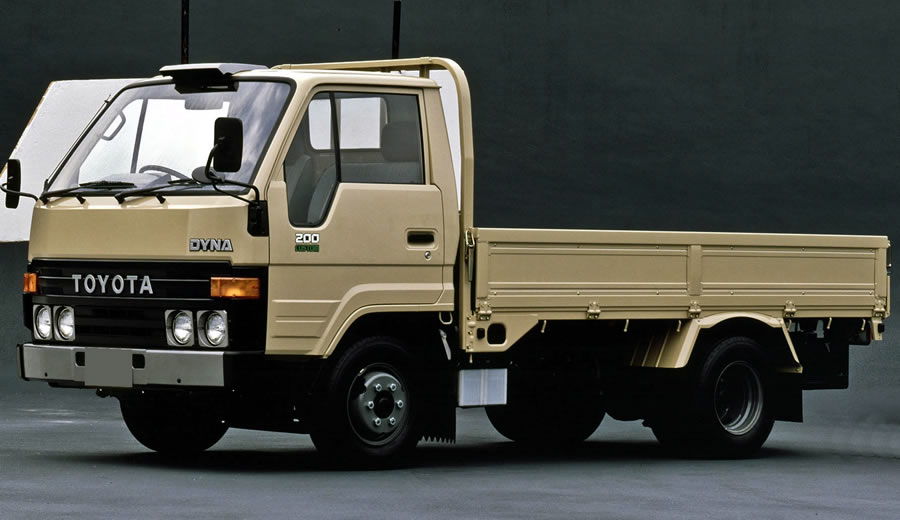
Series U60-U90 with a lifting capacity of 2-3.5 tons appeared in 1984 (Dyna 200/300/400). All-wheel drive was now available in Europe. At first there were four round headlights at the front, in 1989 the headlights were made square. Diesel engines remained from the previous series - 3.4 liters (3B/13B) and 3.7 liters (14B). The gearbox was a 5-speed manual and for the first time a 4-speed automatic was installed. Series Y50 and Y60 with a lifting capacity of 1-1.5 tons appeared in 1985 (Dyna 100/150). These cars used 2.4-liter (2L) four-cylinder diesel engines and 2.0-liter (3Y) gasoline engines.
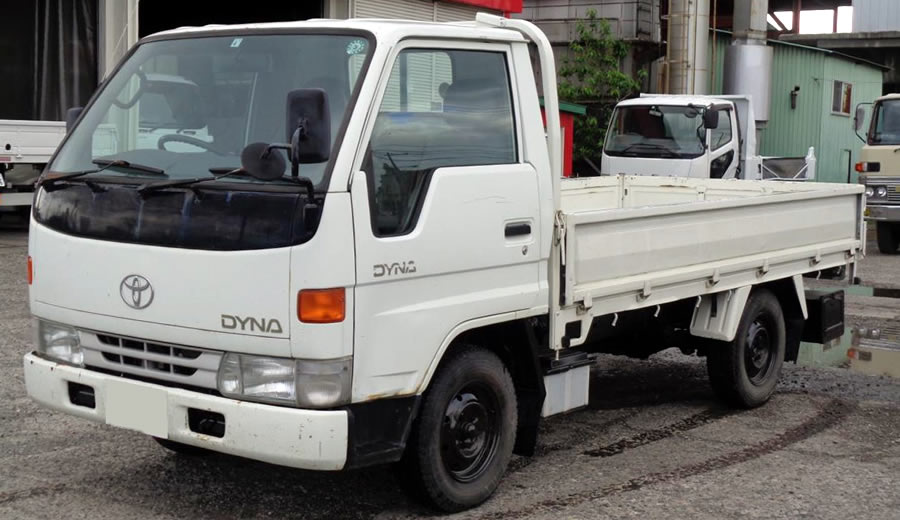
6th generation Dyna with codes U100, U200 and Y100 was introduced in 1995. ABS became standard on all versions, and a driver's airbag became an option. The diesel engine became a 5.3 liter (J05C) with direct fuel injection, the petrol engines were 16-valve 4.1 liter (15B-F,) and 2.7 liter (3RZ-FE). The exterior and interior design of the cabin was greatly updated. In 1997, a new type of cabin called the Super Low Cab was added, which was moved forward by 690 mm, and the floor was lowered by 81 mm.
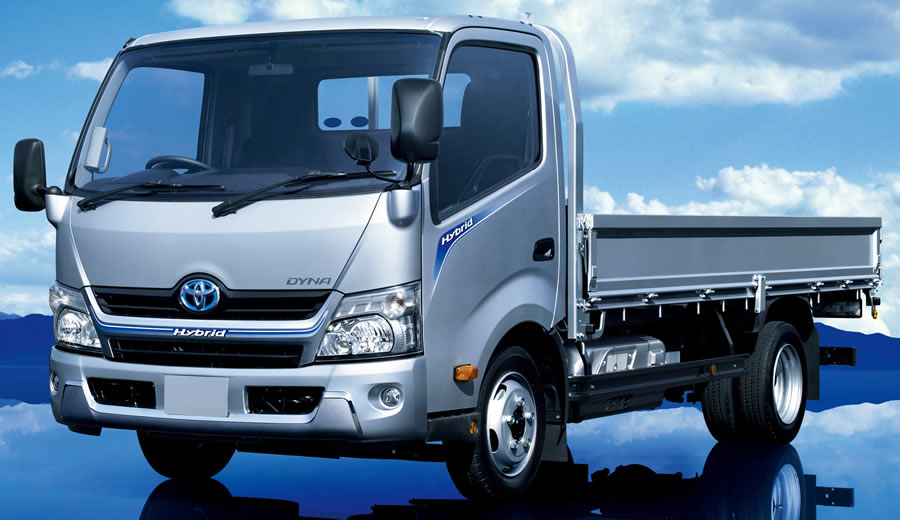
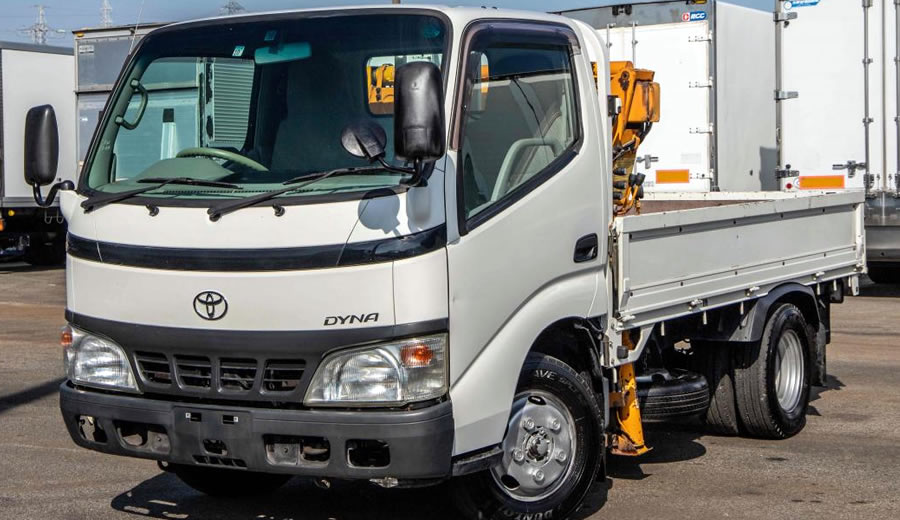
In 1999, the seventh generation Dyna was introduced with codes U300 and U400, which is also sold under the Hino Dutro brand (U300 for standard cab and U400 for wide cab). These models continued to use the Dyna 100, 150, 200, 250, 300 and 350 names, denoting their payload capacity. The exterior was heavily modified, the quality of the interior and the dashboard were improved and made more ergonomic. Dual airbags became standard. The engines remained the same, only a turbocharger was added to the diesel. In 2000, a 2.0-litre petrol engine was added. In 2002, noise insulation was improved and exhaust gas recirculation was introduced. A natural gas (LPG) version of the petrol engine was also introduced. In 2003, a 4.0-litre (N04C) common rail diesel engine was added and a hybrid model was introduced. In 2006, the engines of the 2 and 4 tonne models were upgraded to comply with low emission regulations. In 2007, a 2.7-liter diesel engine was added.
In 2011, the eighth generation of the series was introduced U600 (standard cabin) and U800 (wide cabin). The exterior has been significantly changed, the quality of the interior has improved. In hybrid models, a 4.0-liter diesel engine (N04C) with a capacity of 150 hp was coupled with an electric motor with a capacity of 49 hp, which also serves as a starter. All diesels have a common rail injection system. Petrol engines are presented with a volume of 2.7 liters (2TR-FE), and on liquefied natural gas with a volume of 4.1 liters (BZ-FPE). A new 5-speed automatic transmission was introduced.