Share information:
The engine has always been located transversely at the front. Until 1984, the drive was only to the rear wheels, and in October 1984, a platform with front-wheel drive appeared. Later in 1995, a version of the Corolla with all-wheel drive appeared.
At first, the main competitors were Nissan Sunny (released the same year, now replaced Nissan Almera), and later appeared Mitsubishi Lancer and Honda Civic (still in production). Currently, my closest classmates are Ford Focus, Chevrolet Cruze, Hyundai Elantra, Kia Ceed, Opel Astra, Peugeot 301, Skoda Octavia, Seat Leon, Subaru Impreza, Suzuki SX4, Mazda 3, Renault Fluence and Volkswagen Golf.
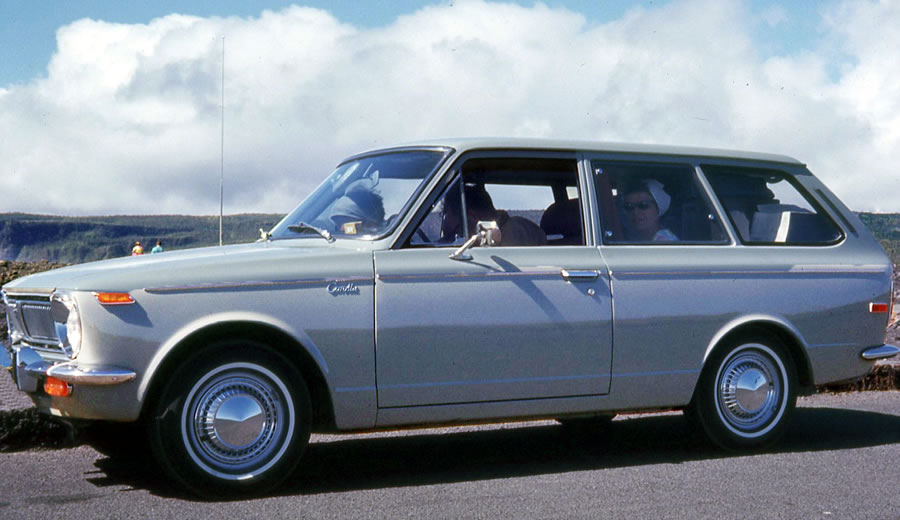
First generation (E10, 1966-1970)
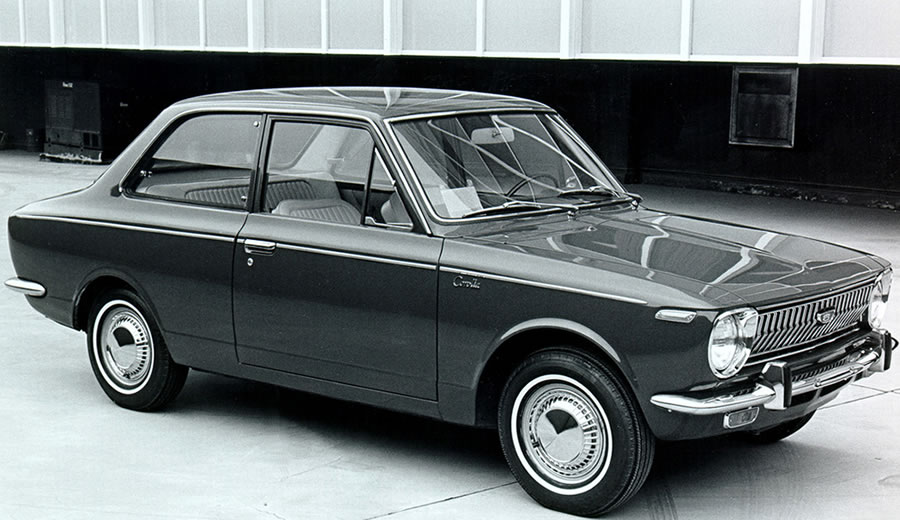
In November 1966, the first generation of Corolla appeared with the chassis code "E10". This car was a continuation of the small family car "Toyota Publica" with a two-cylinder air-cooled engine, produced from 1961 to 1978. The front suspension was struts "MacPherson", supported by a transverse leaf spring under the engine, rear suspension with leaf springs and a solid axle. The engine was located in the front, the drive was only on the rear wheels. The body was produced as a 2- and 4-door sedan, 2-door coupe and 2-door station wagon. In 1968, a hatchback appeared, sold under the name "Sprinter". The overall length of the car was 3848 mm, width 1491 mm and height 1379 mm. Production took place in Japan and Australia.
The engines on the first generation were only petrol carburetor four-cylinder eight-valve "K series" with a volume of 1.1 liters (1077 cm³, 60 hp) and in August 1969 the volume was increased to 1.2 liters (1166 cm³, 65 hp). There were special engines with dual "KB" carburetors with 13 hp more power than the standard one. The gearbox was a four-speed manual with a shift lever on the floor or a two-speed manual with a shift lever on the floor or on the steering column.
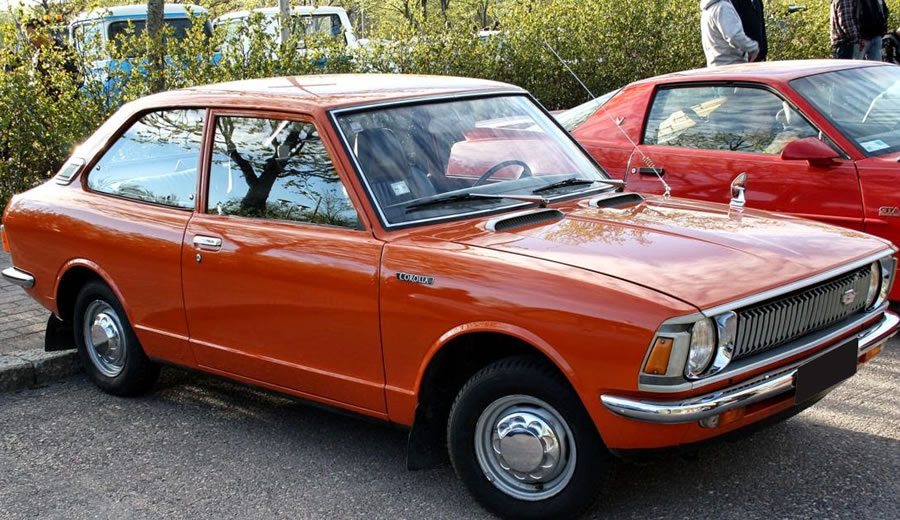
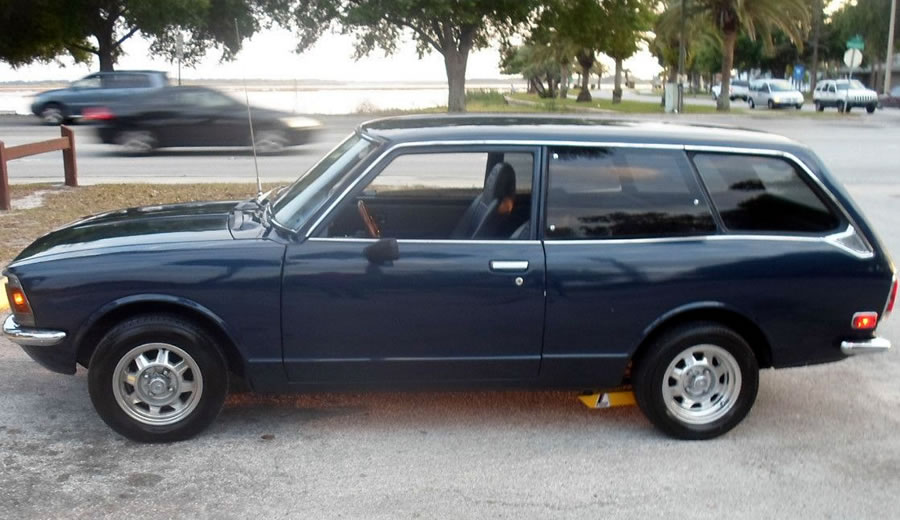
Second generation (E20, 1970-1978)
The second generation appeared in May 1970. The body design used the popular "Coke bottle style" at the time, reminiscent of the classic profile shapes of a glass bottle of the drink "Coca-Cola". The design of the front suspension was significantly improved with the use of a stabilizer, and the rear part remained almost unchanged. The body shapes were very diverse - two- and four-door saloon, two-door coupe, as well as three- and five-door station wagon and van. The length of the car was 3945-3990 mm, width 1506 mm, height 1346 mm and the curb weight of 730-910 kg. Assembly was carried out in Japan, Australia and Indonesia.
The engines installed were four-cylinder carburetor engines with the following characteristics: 1.2 liters (1166 cm³): "3K" - 68 hp, "3K-D" - 73 hp, "3K-B" - 77 hp.; 1.4 liters (1407 cm³): "T" - 86 hp, "TD" - 90 hp, "TB" - 95 hp.; 1.6 liters (1588 cm³): "2T-B" - 105 hp, "2T-G" - 115 hp, "2T-GR" - 110 hp. Manual four- or five-speed gearbox, as well as automatic three-speed.
Minor design changes were made in September 1971. The grille, taillights and direction indicators were changed. A minor update was also made in August 1972.
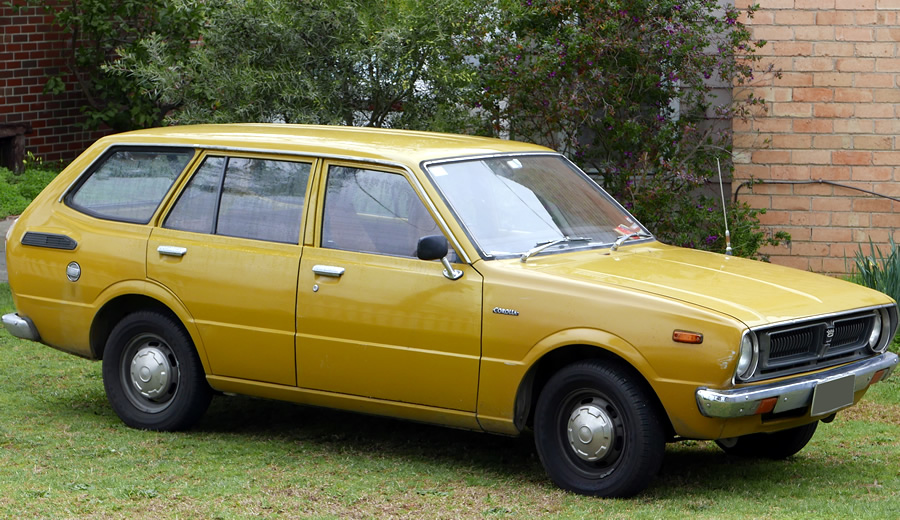
Third generation (E30-E60, 1974-1981)
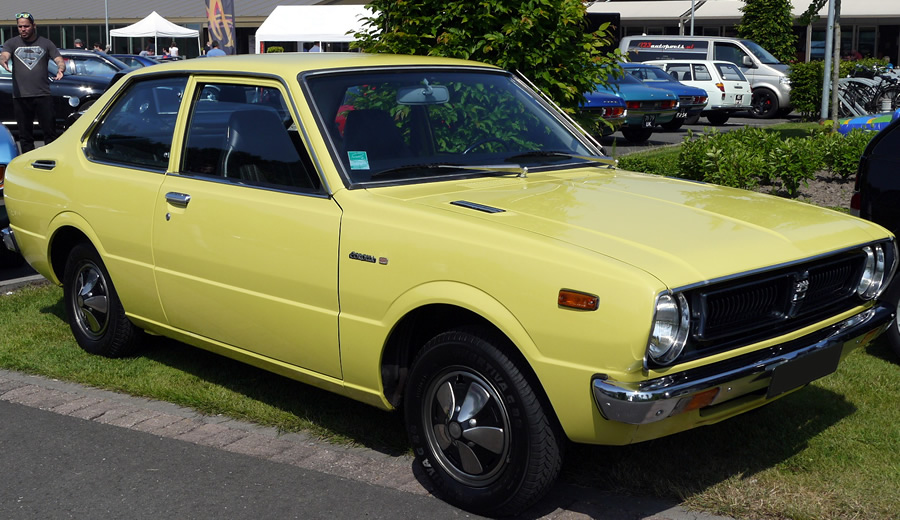
The third generation of the Corolla appeared in August 1974. The oil crisis that began in 1973 made this economical car the most popular in sales worldwide. A large number of cars were built on the same chassis, including "Sprinters", "Daihatsu Charmant" and the sports models "Levin" and "Trueno" with more powerful DOHC engines. The body styles were very diverse - a two-door coupe, a two- and four-door sedan, a three-door hatchback, a three- and five-door station wagon, a three-door van and a two-door coupe with a folding hardtop. The length of the car was 3995 mm, the width 1570 mm, the height 1375 mm and the curb weight 880 kg. In addition to Japan, the car was assembled in Australia, New Zealand, Indonesia and Thailand.
The Japanese market had the following four-cylinder, eight-valve carbureted petrol engines:
- 1.2 liters (1166 cm³, 3K-C, OHV) with a capacity of 55 hp.
- 1.2 liters (1166 cm³, 3K-U, OHV) with a capacity of 63 hp.
- 1.2 liters (1166 cm³, 3K-H, OHV) with a capacity of 71 hp.
- 1.4 liters (1407 cm³, T, OHV) with a capacity of 86 hp.
- 1.6 liters (1588 cm³, 2T-C, OHV) with a capacity of 75 hp.
- 1.6 liters (1588 cm³, 12T-U, OHV) with a capacity of 88 hp.
- 1.6 liters (1588 cm³, 2T-G, DOHC) with a capacity of 124 hp.
In other markets, engine power may differ slightly from those listed. The gearbox was a four- and five-speed manual or a two- and three-speed automatic "Toyoglide".
The model was updated in the 1977 and 1979 model years.
Fourth generation (E70, 1979-1987)
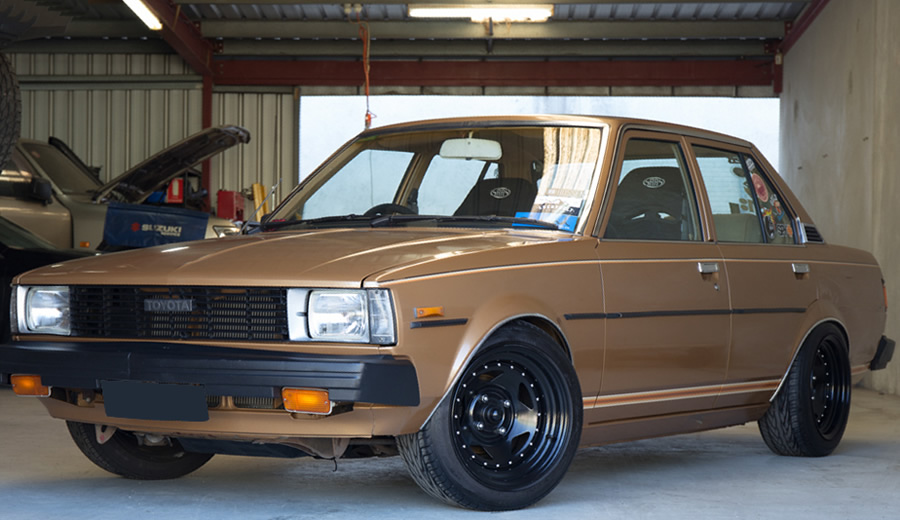
In March 1979, the fourth generation with chassis code "E70" was launched. In 1983, the millionth copy was produced and a limited series of cars was released on this occasion "One Million Edition". This is the last generation with rear-wheel drive and the first to be equipped with power steering. The body shapes were as varied as those of the third generation. The overall length of the car was 4050-4105 mm, width 1610 mm, height 1385 mm and the curb weight was 957 kg, i.e. all dimensions increased slightly. In addition to Japan, production was carried out in Australia, Indonesia, New Zealand and Thailand.
The petrol engines were also four-cylinder, eight-valve, with the following characteristics:
- 1.3 liters (1290 cm³, 4K-U, carburetor) with a capacity of 74 hp.
- 1.3 liters (1290 cm³, 4K-J, carburetor) with a capacity of 69 hp.
- 1.5 liters (1496 cm³, 5K-J, carburetor) with a capacity of 82 hp.
- 1.5 liters (1496 cm³, 3A-U, SOHC, carburetor) with a capacity of 80 hp.
- 1.5 liters (1496 cm³, 12T-J, carburetor) with a capacity of 86 hp.
- 1.6 liters (1587 cm³, 2T-GEU, DOHC, EFI fuel injection) with a capacity of 115 hp.
- 1.8 liters (1770 cm³, 13T-U, carburetor) with a capacity of 95 hp.
- 1.8 liters (1770 cm³, 3T-C, carburetor) with a capacity of 75 hp.
For the first time, a four-cylinder diesel engine with a capacity of 1.8 liters was installed (1839 cm³, 1C) with a capacity of 65 hp. In 1982 and 1985, the model was redesigned, and in 1983, the gasoline engines were improved. The gearbox was four- or five-speed manual.
Fifth generation (E80, 1983-1990)
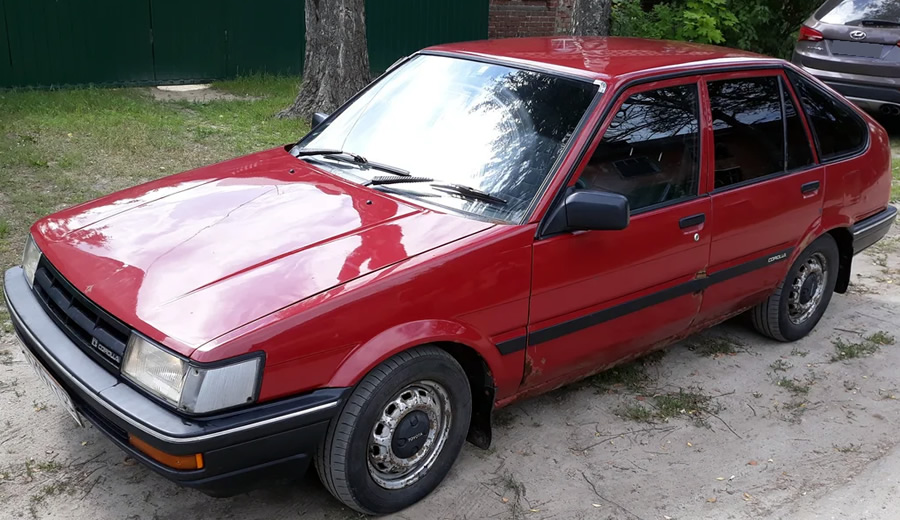
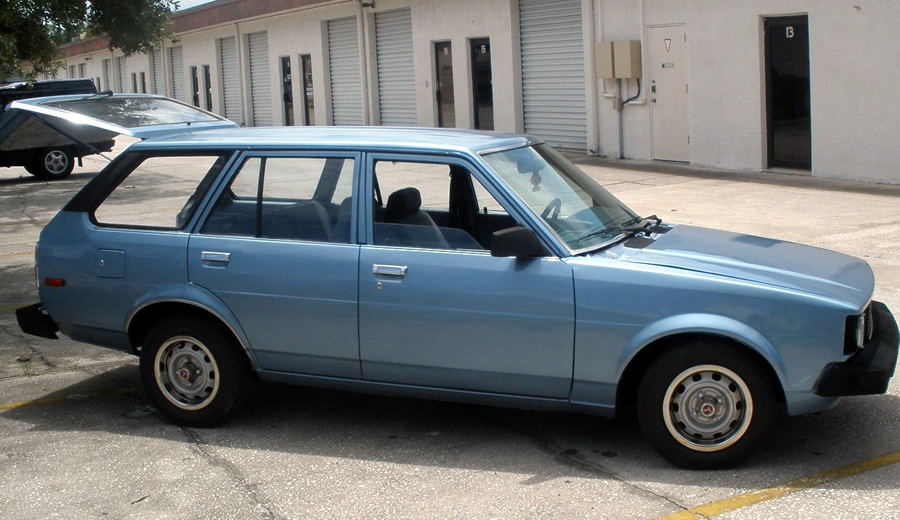
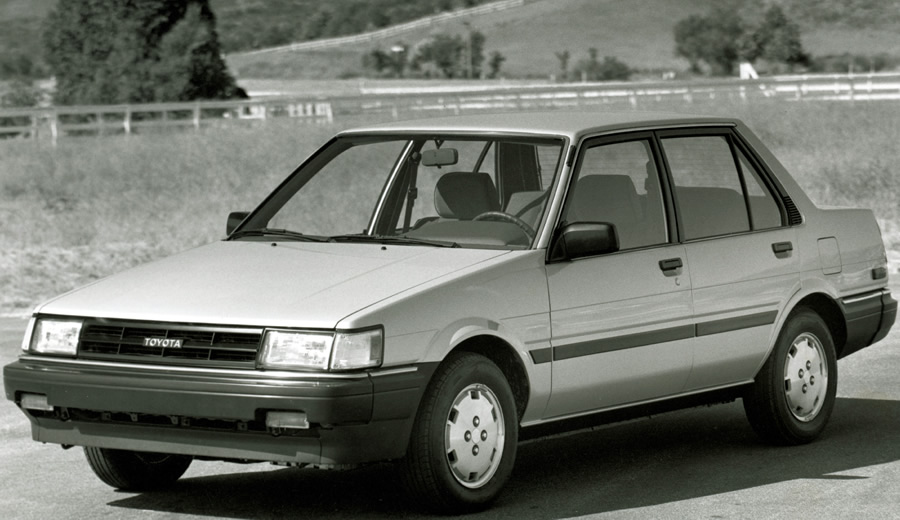
In May 1983, the fifth generation was introduced with the chassis code "E80", which started in parallel with the release of the fourth. The front part and the radiator grille became slanted, which gave the car a modern look at that time. But the most important innovation was the use of front-wheel drive. On some models (mostly with a coupe body) left the rear-wheel drive. The body styles were as follows: three- and five-door hatchback, four-door sedan (with four or six windows), five-door liftback, as well as two- and three-door coupe. The length of the car was 4135 mm (in the USA 4254 mm), width 1635 mm, height 1328 mm and unladen weight 840-940 kg. There was also a shorter hatchback version "Corolla FX" length 3970 mm. The car was assembled in Japan, Venezuela, Indonesia, New Zealand, the USA and South Africa.
The range of four-cylinder petrol engines was significantly updated and consisted of the following models:
- 1.3 liters (1295 cm³, 2A-LU, 8 valves, SOHC, carburetor) with a capacity of 75 hp.
- 1.3 liters (1295 cm³, 2E-LU, 12 valves, SOHC, carburetor) with a capacity of 75 hp.
- 1.5 liters (1452 cm³, 3A-LU, 8 valves, SOHC, carburetor) with a capacity of 83 hp.
- 1.5 liters (1452 cm³, 3A-U, 8 valves, SOHC, carburetor) with a capacity of 83 hp.
- 1.6 liters (1587 cm³, 4A-C, 8 valves, SOHC, carburetor) with a capacity of 90 hp.
- 1.6 liters (1587 cm³, 4A-ELU, 8 valves, SOHC, EFI injection) with a capacity of 100 hp.
- 1.6 liters (1587 cm³, 4A-GE, 16 valves, DOHC, EFI injection) with a capacity of 112 hp.
- 1.6 liters (1587 cm³, 4A-GEU, 16 valves, DOHC, EFI injection) with a capacity of 130 hp.
- 1.6 liters (1587 cm³, 4A-GELU, 16 valves, DOHC, EFI injection) with a capacity of 130 hp.
The diesel engine is represented by one model with a volume of 1.8 liters (1839 cm³, 1C-L, mechanical injection) with a capacity of 58 hp. The gearbox was a five-speed manual, as well as a three- or four-speed automatic.
Sixth generation (E90, 1987-1992)
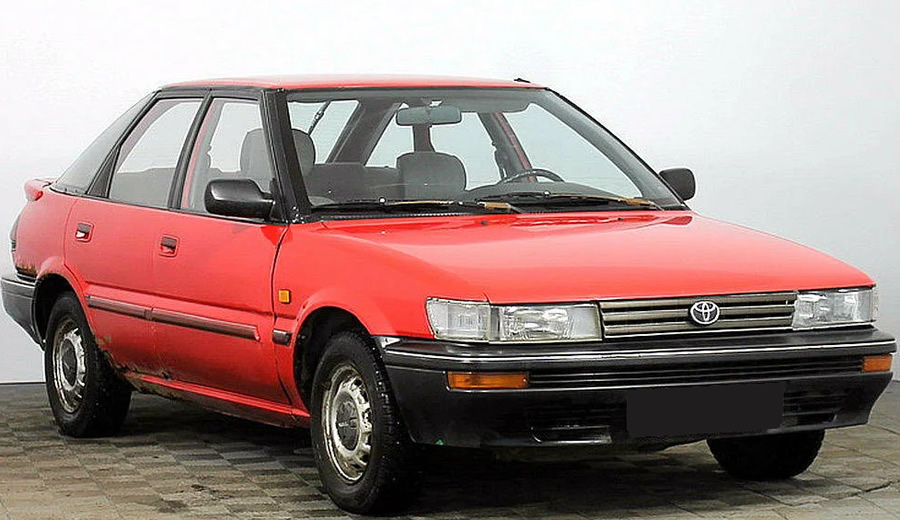
In May 1987, the sixth generation was introduced with the chassis code "E90". The exterior design changed significantly, becoming more rounded, streamlined and modern. Basically, all cars switched to front-wheel drive, but there were models with the "All-Trac" all-wheel drive system. Trim levels and equipment were called "Base", "XL", "GL", "SE" and "SE Limited". The body styles were as follows: a four-door sedan, a two-door coupe, a three- or five-door hatchback, as well as a five-door liftback, station wagon, and van. The full length of the sedan was 4326 mm, the width was 1656 mm, the height was 1331 mm, and the curb weight was 1086 kg. The dimensions were slightly larger than the previous generation. Assembly facilities were located in Japan, Australia, Indonesia, Canada, New Zealand, the USA, Thailand, and the Philippines. In South Africa, the car was produced until 2006.
As usual, four-cylinder petrol engines with the following characteristics were installed:
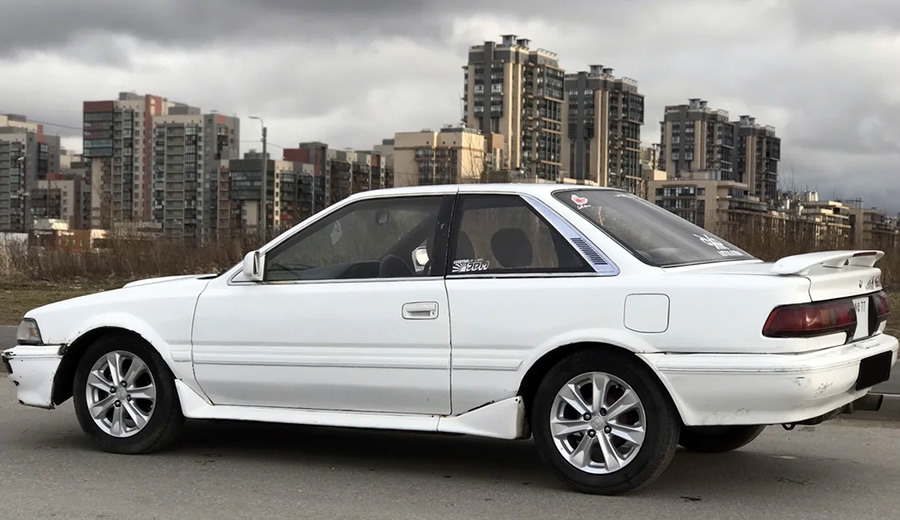
- 1.3 liters (1295 cm³, 2E, 12 valves, SOHC, carburetor) with a capacity of 71 hp.
- 1.4 liters (1397 cm³, 6A-FC, 16 valves, DOHC, carburetor) with a capacity of 81 hp.
- 1.45 liters (1456 cm³, 3E, 12 valves, SOHC, carburetor) with a capacity of 80 hp.
- 1.5 liters (1498 cm³, 5A-F, 16 valves, DOHC, carburetor) with a capacity of 85 hp.
- 1.5 liters (1498 cm³, 5A-FE, 16 valves, DOHC, EFI injection) with a capacity of 95 hp.
- 1.5 liters (1498 cm³, 5A-FHE, 16 valves, DOHC, EFI injection) with a capacity of 105 hp.
- 1.6 liters (1587 cm³, 4A-F, 16 valves, DOHC, carburetor) with a capacity of 93 hp.
- 1.6 liters (1587 cm³, 4A-FE, 16 valves, DOHC, EFI injection) with a capacity of 102 hp.
- 1.6 liters (1587 cm³, 4A-GE, 16 valves, DOHC, EFI injection) with a capacity of 140 hp.
- 1.6 liters (1587 cm³, 4A-GZE, 16 valves, DOHC, EFI injection) with a capacity of 165 hp.
- 1.8 liters (1762 cm³, 7A-FE, 16 valves, DOHC, EFI injection) with a capacity of 115 hp.
In addition, there was one four-cylinder diesel engine with a capacity of 1.8 liters (1839 cm³, 1C-III) with a capacity of 63 hp. The gearbox was a three- or four-speed automatic, as well as a four- or five-speed manual.
Seventh generation (E100, 1991-2002)
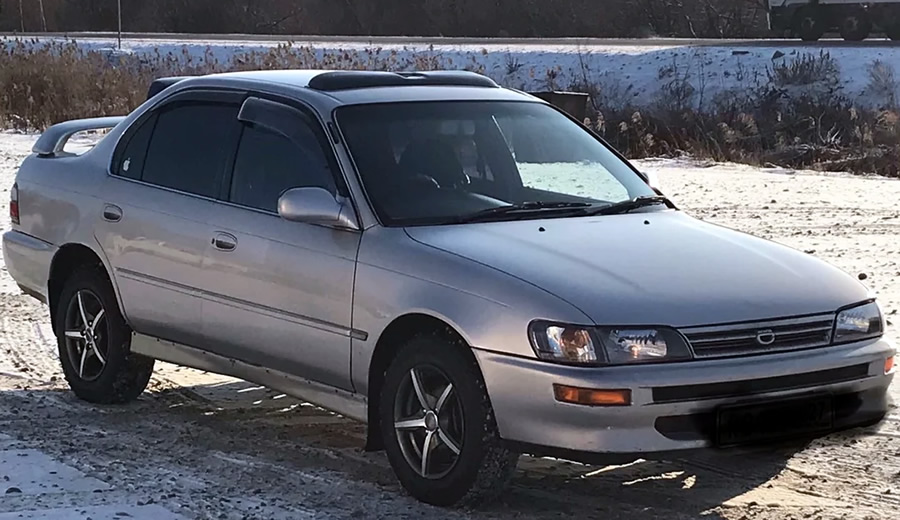
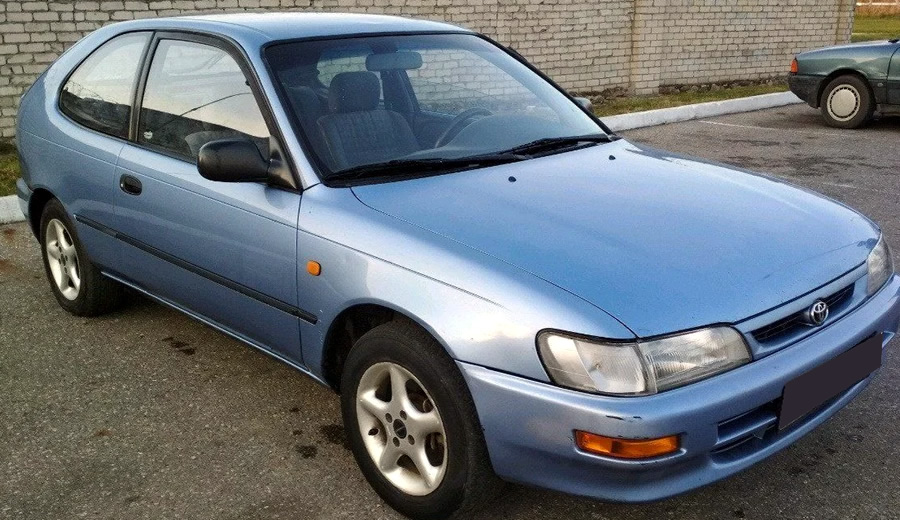
In June 1991, the seventh generation was released. The body design became even more rounded, modern and aerodynamic with a drag coefficient of 0.33 for the sedan. The body structure became more durable, the gaps became smaller. The dimensions of the car again slightly increased and were 4369 mm long, 1684 mm wide, 1359 mm high and 1052 kg unladen weight. These dimensions transferred the car from the subcompact (B-segment) to the compact class (C-segment). The body was presented in the following forms - a four-door sedan, three- and five-door hatchback or liftback, two-door coupe and five-door station wagon. Instead of glass on the headlights, they began to use more durable polycarbonate. The drive remained only on the front wheels. The car was assembled in Australia, Indonesia, Canada, New Zealand, Pakistan, USA, Thailand, Turkey, the Philippines and Japan.
Petrol engines were only four-cylinder with the following characteristics:
- 1.3 liters (1295 cm³, 2E, 12 valves, SOHC, carburetor) with a capacity of 72 hp.
- 1.3 liters (1331 cm³, 4E-FE, 16 valves, DOHC, injection) with a capacity of 99 hp.
- 1.5 liters (1497 cm³, 5E-FE, 16 valves, DOHC, injection) with a capacity of 104 hp.
- 1.5 liters (1497 cm³, 5A-FE, 16 valves, DOHC, injection) with a capacity of 104 hp.
- 1.6 liters (1587 cm³, 4A-FE, 16 valves, DOHC, injection) with a capacity of 113 hp.
- 1.6 liters (1587 cm³, 4A-GE, 20 valves, DOHC, injection) with a capacity of 158 hp.
- 1.6 liters (1587 cm³, 4A-GZE, 16 valves, DOHC, injection, turbocharging) with a capacity of 168 hp.
- 1.8 liters (1762 cm³, 7A-FE, 16 valves, DOHC, injection) with a capacity of 115 hp.
There were two models of diesel engines, both four-cylinder, 2.0-liter capacity (1974 cm³, 2C-III) with a capacity of 72 hp and 2.2 liters (2184 cm³, 3C-E) 78 hp. Engine power may vary in different countries. The gearbox was four-, five- and six-speed manual or three- and four-speed automatic.
A minor exterior design update was made in May 1993, with a revised grille, taillights and other changes.
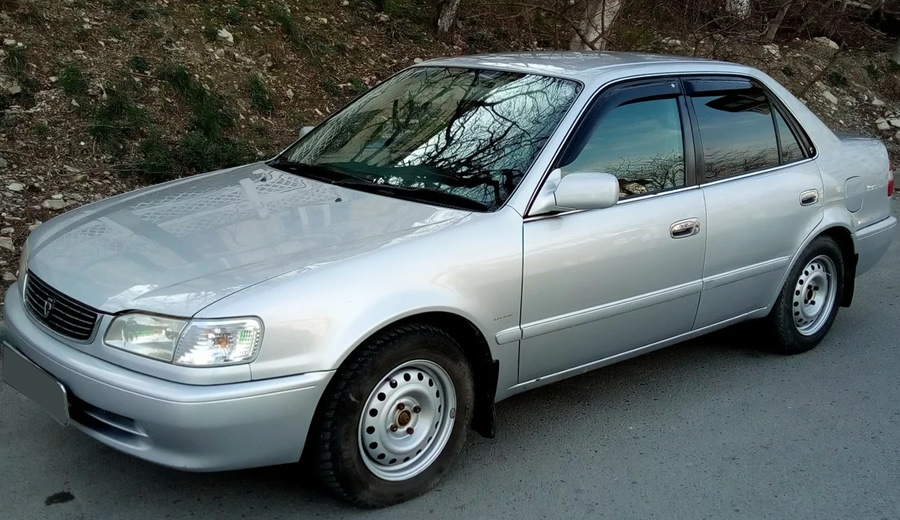
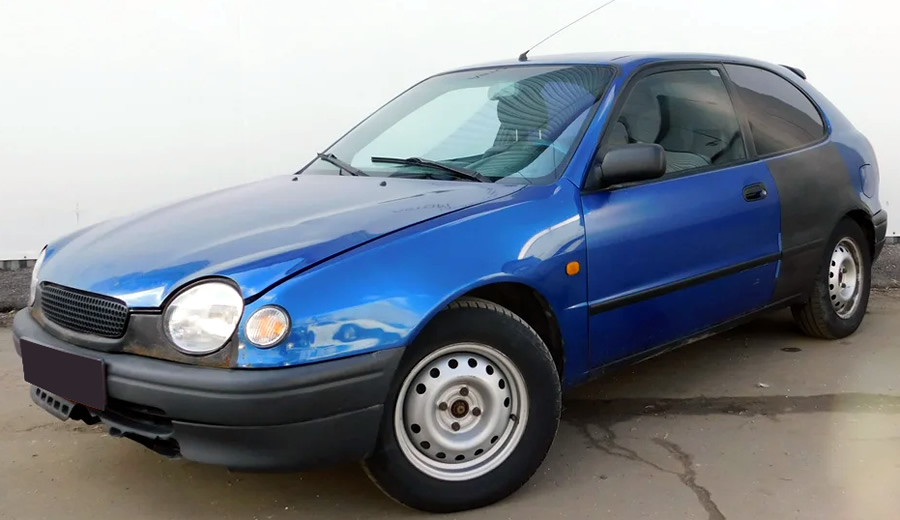
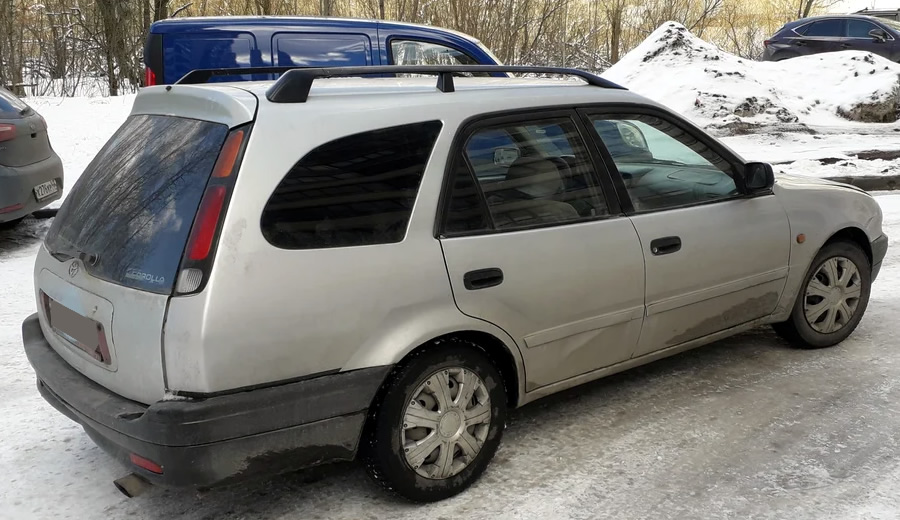
Eighth generation (E110, 1995-2002)
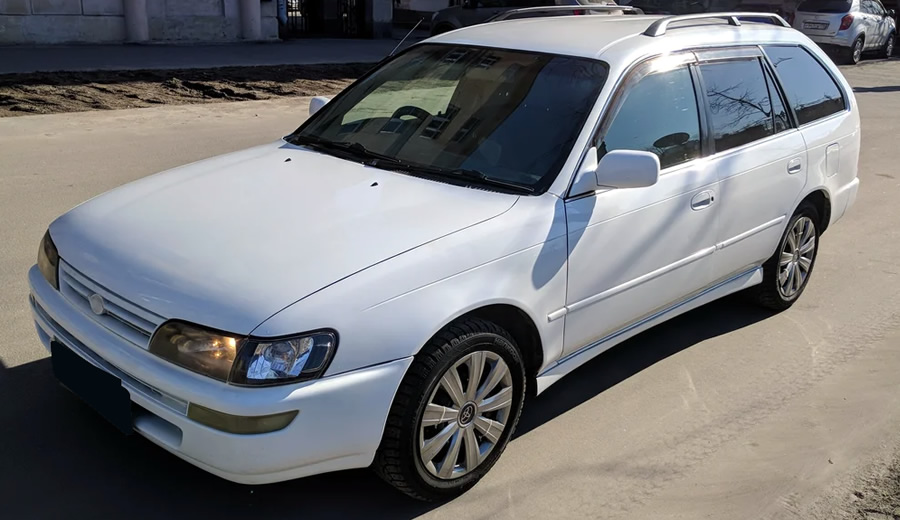
The eighth generation with the code "E110" was introduced in May 1995 for Japan. The car arrived in other countries a little later. The platform remained the same from the seventh generation due to cost reductions in design. The body was offered in the form of a four-door sedan (length 4315 mm), two-door coupe, three-door hatchback (length 4120 mm), five-door station wagon (length 4340 mm) and liftback (length 4270 mm). The width of the car was 1690 mm, the height was 1380-1445 mm and the unladen weight was 1095 kg. The trim levels and trim levels had names "Base", "XLi", "GLi" and "SE-G". Assembly was carried out in Brazil, Indonesia, Canada, New Zealand, USA, Thailand, Turkey, Philippines, South Africa and Japan.
The entire engine line was four-cylinder. All petrol engines were 16-valve DOHC with fuel injection and had the following characteristics:
- 1.3 liters (1331 cm³, 4E-FE) with a capacity of 88 hp.
- 1.4 liters (1398 cm³, 4ZZ-FE) with a capacity of 97 hp.
- 1.5 liters (1498 cm³, 5A-FE) with a capacity of 100 hp.
- 1.6 liters (1598 cm³, 3ZZ-FE) with a capacity of 110 hp.
- 1.6 liters (1587 cm³, 4A-FE) with a capacity of 115 hp.
- 1.6 liters (1587 cm³, 4A-GE, 16 valves) with a capacity of 165 hp.
- 1.8 liters (1762 cm³, 7A-FE) with a capacity of 110 hp.
- 1.8 liters (1794 cm³, 1ZZ-FE) with a capacity of 125 hp.
Diesel engines were installed in two models with a capacity of 2.0 liters (1974 cm³, 2C-III) with a capacity of 73 hp and 2.2 liters (2184 cm³, 3C-E) 79 hp, both engines with electronic fuel injection. The gearbox was installed three- and four-speed automatic or five- and six-speed manual.
In 1997, the front, rear and interior of the car were updated.
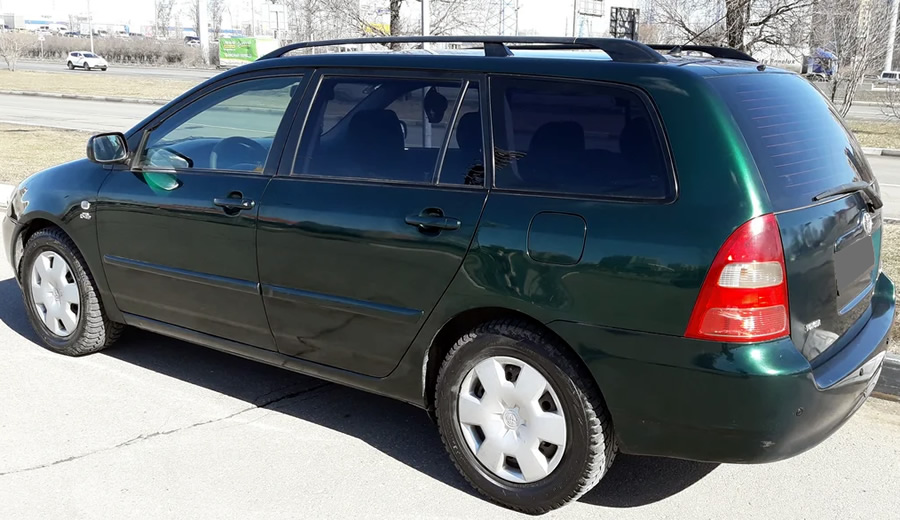
Ninth generation (E120, E130, 2000-2017)
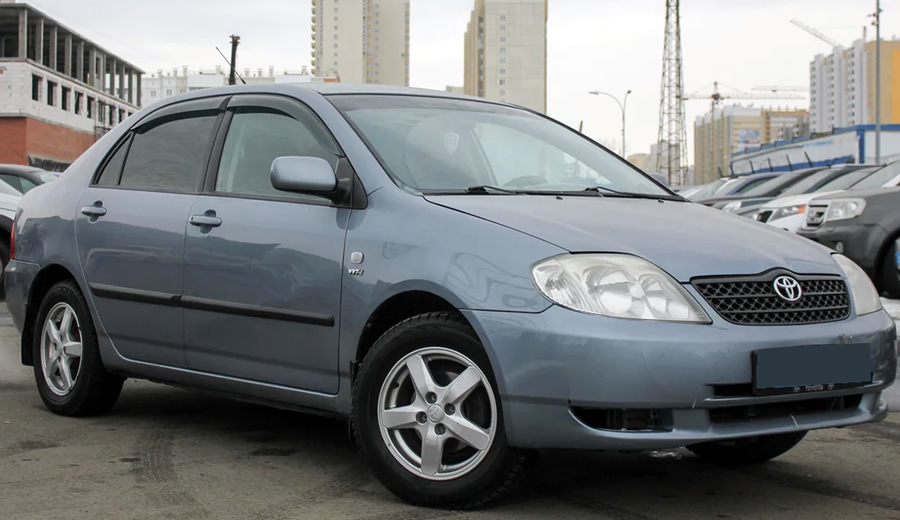
In August 2000, the ninth generation cars went on sale. Exports to other countries began in 2001-2002. In Japan, production ended in 2007, and in China, production continued until 2017 inclusive. There were fewer body styles, leaving the most popular ones - a four-door sedan (length 4390 until 2003; 4529 mm since 2004), three- and five-door hatchback (length 4180 mm), and a five-door station wagon. The width of the car was 1695-1705 mm, the height was 1460-1486 mm and the unladen weight was 1280-1330 kg. Assembly was carried out in Bangladesh, Brazil, Great Britain, Venezuela, Vietnam, India, Indonesia, China, Colombia, Malaysia, Pakistan, USA, Thailand, Taiwan, Turkey, the Philippines, South Africa and Japan.
All petrol engines were four-cylinder with fuel injection and DOHC valve timing system:
- 1.3 liters (1298 cm³, 2NZ-FE) with a capacity of 84 hp.
- 1.4 liters (1398 cm³, 4ZZ-FE) with a capacity of 97 hp.
- 1.5 liters (1497 cm³, 1NZ-FE) with a capacity of 109 hp.
- 1.6 liters (1598 cm³, 1ZR-FE) with a capacity of 122 hp.
- 1.6 liters (1598 cm³, 3ZZ-FE) with a capacity of 109 hp.
- 1.8 liters (1794 cm³, 1ZZ-FE) with a capacity of 120 hp.
- 1.8 liters (1796 cm³, 2ZZ-GE, turbocharged) with a capacity of 189 hp.
There were two models of diesel engines with fuel injection "Common rail", four-cylinder, DOHC, 1.4 liter (1364 cm³, 1ND-TV) with a capacity of 87 hp and 2.0 liters (1995 cc, 1CD-FTV) with a power of 116 hp. The transmission was a four-speed automatic, five- and six-speed manual, as well as a six-speed manual sequential gearbox, which allows only sequential shifting.

Tenth generation (E140, E150, 2006-present)
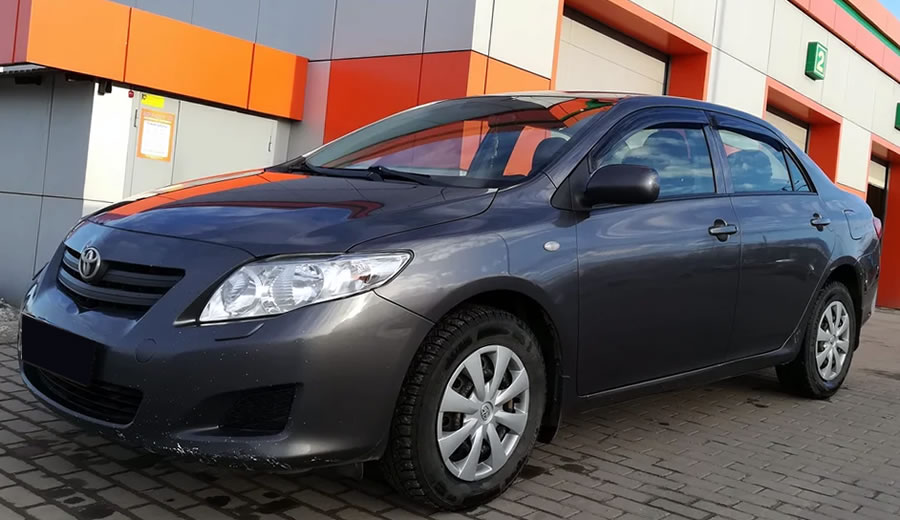
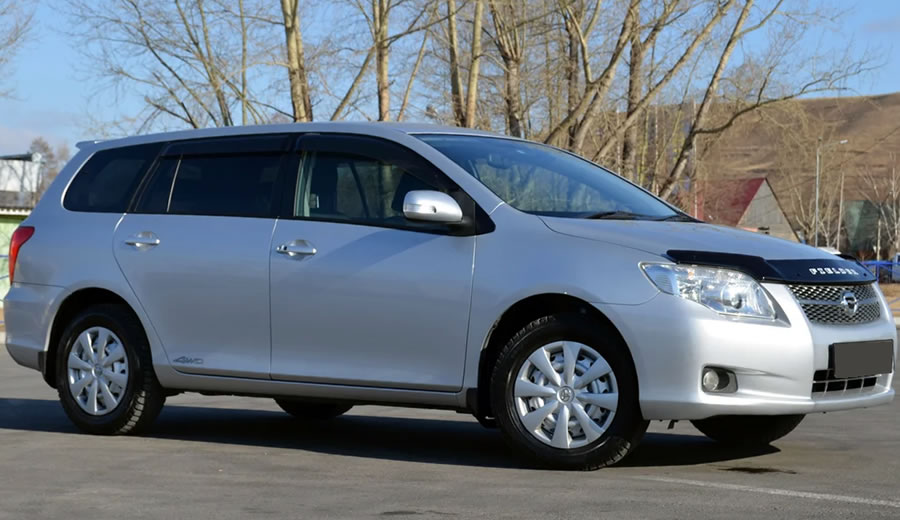
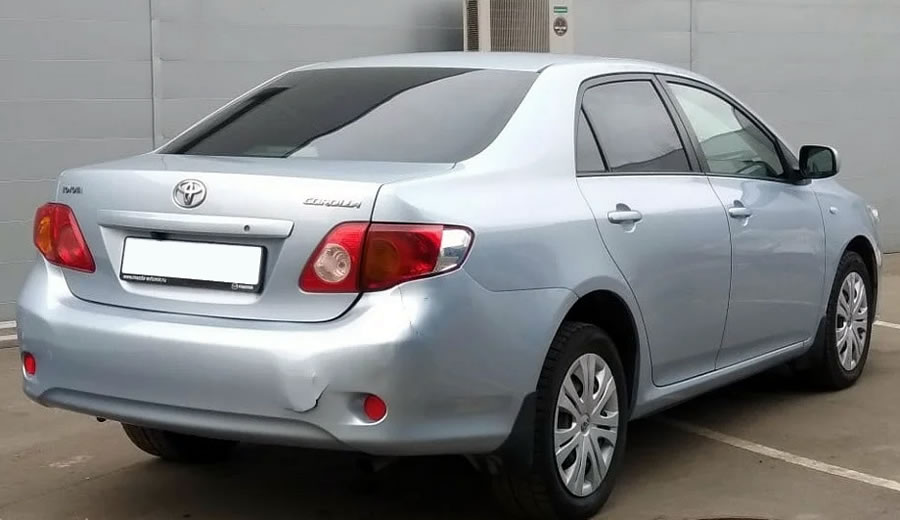
The tenth generation of Toyota Corolla was introduced in October 2006 on the Japanese market (E140, "Toyota MC" platform), and in November it was exported (E150, platform "Toyota New MC"). In Japan, production stopped in May 2012, and currently assembly is carried out in South Africa. The body was presented only as a four-door sedan with the name "Corolla Axio" and a five-door station wagon "Corolla Fielder". The hatchback was turned into a separate model with the name "Toyota Auris". The dimensions of the car for Japan were smaller than those of the export versions in order not to increase the tax rate, which depended, among other things, on the external dimensions. For the Japanese market, the length was 4390 mm, the width 1695 mm and the height 1465-1515 mm, and for export the length was 4540-4572 mm, the width 1760 mm, the height was the same. Assembly was carried out in the same countries as the previous generation, with some exceptions.
Gasoline engines are still only four-cylinder, 16-valve DOHC with fuel injection of the following volumes and parameters:
- 1.3 liters (1298 cm³, 2NZ-FE) with a capacity of 84 hp.
- 1.4 liters (1398 cm³, 4ZZ-FE) with a capacity of 97 hp.
- 1.5 liters (1497 cm³, 1NZ-FE) with a capacity of 109 hp.
- 1.6 liters (1598 cm³, 3ZZ-FE) with a capacity of 110 hp.
- 1.6 liters (1598 cm³, 1ZR-FE) with a capacity of 122 hp.
- 1.8 liters (1794 cm³, 1ZZ-FE) with a capacity of 120 hp.
- 1.8 liters (1798 cm³, 2ZR-FE) with a capacity of 132 hp.
- 2.0 liters (1987 cm³, 3ZR-FE) with a capacity of 141 hp.
- 2.4 liters (2362 cm³, 2AZ-FE) with a capacity of 160 hp.
Diesel engines are also four-cylinder with direct fuel injection "Common rail" 1.4 liter volume (1364 cm³, 1ND-TV, SOHC) with a capacity of 88 hp and 2.0 liters (1995 cc, 1CD-FTV, DOHC) with a capacity of 116 hp. The gearbox was installed with a five- or six-speed manual, four- or five-speed automatic, and for the first time a continuously variable transmission was used "Super CVT-i".
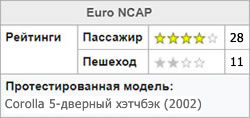
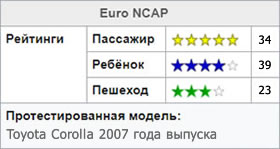
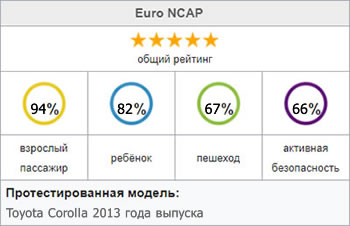
The 2007 model year car passed crash tests by the European committee "Euro NCAP", the results of which are shown in the table below. The 2009 model was tested by the American agency "National Highway Traffic Safety Administration" (NHTSA), the crash test results were as follows:

- Frontal Impact (Driver) - 4 out of 5 stars
- Frontal Impact (Passenger) - 4 out of 5 stars
- Side Impact (Driver) - 5 out of 5 stars
- Side kick (rear passenger) — 4 out of 5 stars
- Roof Strength - 4 out of 5 stars
Safety systems include a collision avoidance radar, a brake assist system that reduces speed if a collision is imminent, a cruise control system that helps monitor the vehicle in front and keep the car in its lane, and more (airbags, seat belts).
They also installed a variety of driver assistance systems such as a rear view camera, intelligent parking assistance, Bluetooth for connecting a phone and other devices, and many other automotive options available at the time.
Eleventh generation (E160, Japan, 2012-present)
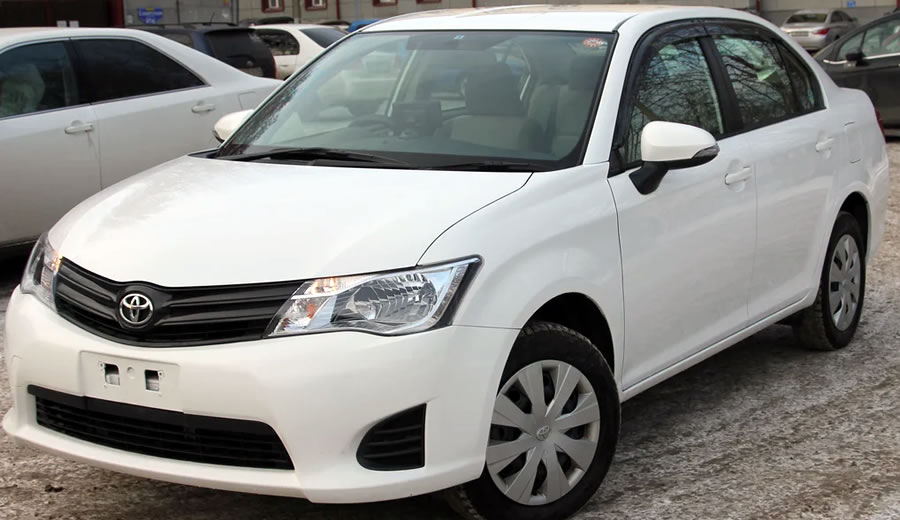
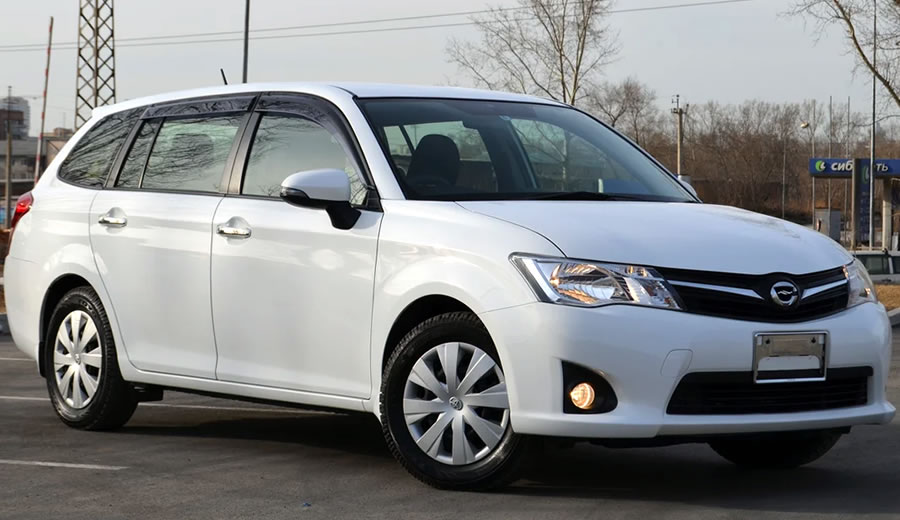
The car with the code "E160" was introduced in May 2012 in Japan and is sold only on the domestic Japanese market due to taxation peculiarities, and for export, the "E170" with larger dimensions was released in 2013. It is based on the "Toyota B" platform, which is also used for "Vitz", "Belta", "Vios", "Porte", "Ractis", "Sienta", "Prius c", "Yaris" etc. The body was presented in two forms - a four-door sedan "Corolla Axio" and a five-door station wagon "Corolla Fielder". The length of the car was 4360-4400 mm, width 1695 mm, height 1460-1485 mm and the unladen weight was 1050-1200 kg. The engine is located transversely in front, the drive is mainly front, there are modifications with all-wheel drive.
The engines were only petrol four-cylinder 1.3 liters (1329 cm³, 1NR-FE, 95 hp), 1.5 liters (1496 cm³, 1NZ-FE, 110 hp) and 1.8 liters (1797 cm³, 2ZR-FE, 140 hp). Also in 2013, a hybrid version of the car with a 1.5-liter engine was released (1496 cm³, 1NZ-FXE) with a capacity of 74 hp. Japanese models were not equipped with diesel engines. A five-speed manual or continuously variable transmission was installed "Super CVT-i".
In April 2015, the model was updated, which affected the front bumper, radiator grille, front fenders, rear lights, began to install projection-type headlights, and also equipped with a collision avoidance system "Toyota Safety Sense". In 2017, another update was carried out.
Eleventh generation (E170, export, 2013-present)
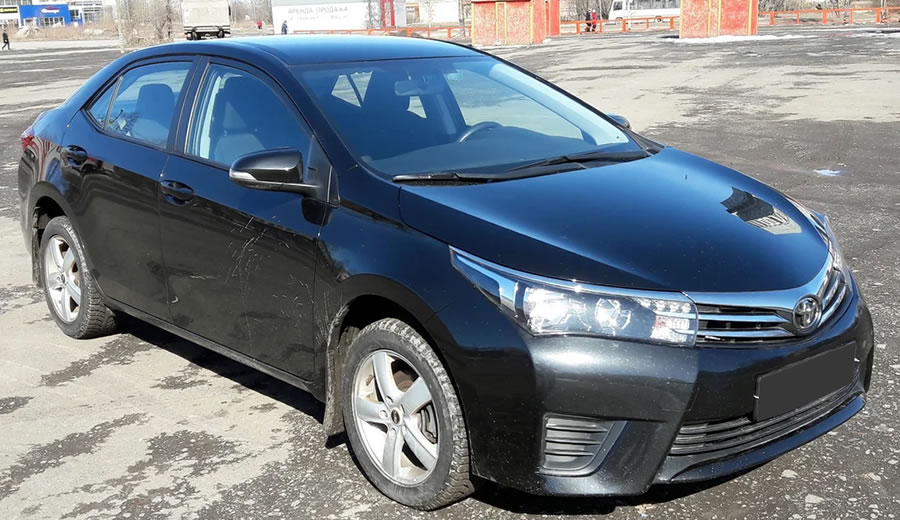
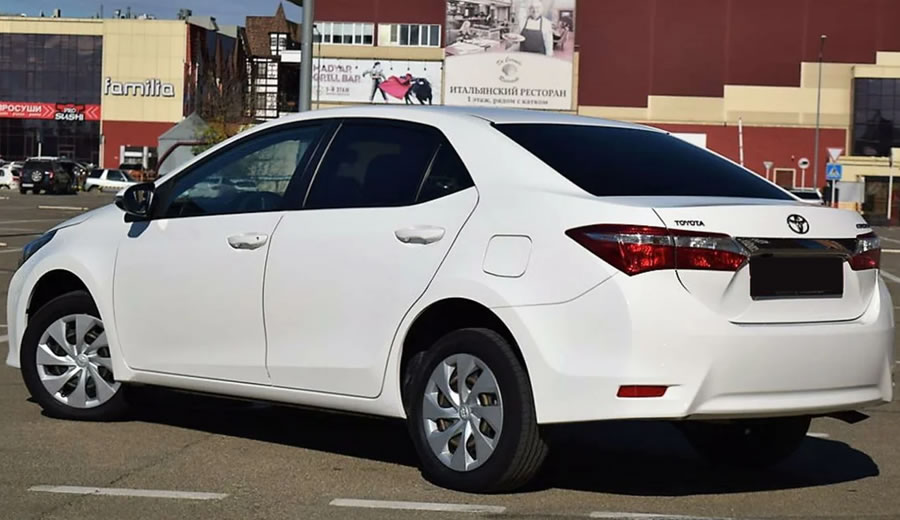
In June 2013, the entire world became able to purchase the eleventh generation of Corolla with the chassis code "E170". The car is based on the platform "Toyota New MC" and has significantly larger dimensions than the Japanese version. The body was presented only as a four-door sedan with a length of 4620-4650 mm, a width of 1775 mm, a height of 1455-1460 mm and a curb weight of 1245-1300 kg. The hatchback had previously branched off into a separate model called "Auris". The equipment and trim levels were in the USA and other countries with the name "L", "LE", "LE", "Eco" and "S". This export model was assembled in Brazil, Venezuela, India, Canada, China, Pakistan, USA, Thailand, Taiwan, Turkey, Japan and South Africa.
The range of petrol engines for export consists only of four-cylinder in-line engines with fuel injection of the following volumes and parameters:
- 1.2 liters (1197 cm³, 8NR-FTS, turbocharged) with a capacity of 114 hp.
- 1.3 liters (1298 cm³, 2NZ-FE) with a capacity of 84 hp.
- 1.6 liters (1598 cm³, 1ZR-FE) with a capacity of 122 hp.
- 1.6 liters (1598 cm³, 1ZR-FBE) with a capacity of 125 hp.
- 1.8 liters (1798 cm³, 2ZR-FE) with a capacity of 132 hp.
- 1.8 liters (1798 cc, 2ZR-FXE, hybrid) with a total power of 134 hp.
- 1.8 liters (1798 cm³, 2ZR-FBE) with a capacity of 141 hp.
- 2.0 liters (1987 cm³, 3ZR-FE) with a capacity of 140-151 hp.
There were two models of diesel engines, both four-cylinder in-line units with fuel injection "Common Rail" 1.4 liter volume (1364 cm³, 1ND-TV, turbocharged) with a capacity of 89 hp and 2.0 liters (1998 cc, 1AD-FTV) with a capacity of 126 hp. The gearbox was a five- or six-speed manual, a four-speed automatic, and also a seven- or eight-speed CVT "Super CVT-i".

In March 2016, the export version of the Corolla was updated. Elegant LED headlights, a new chrome grille were installed, and the rear lights also became fully LED. For the North American markets, their own update was carried out in 2016, affecting the design of the front end and the interior.
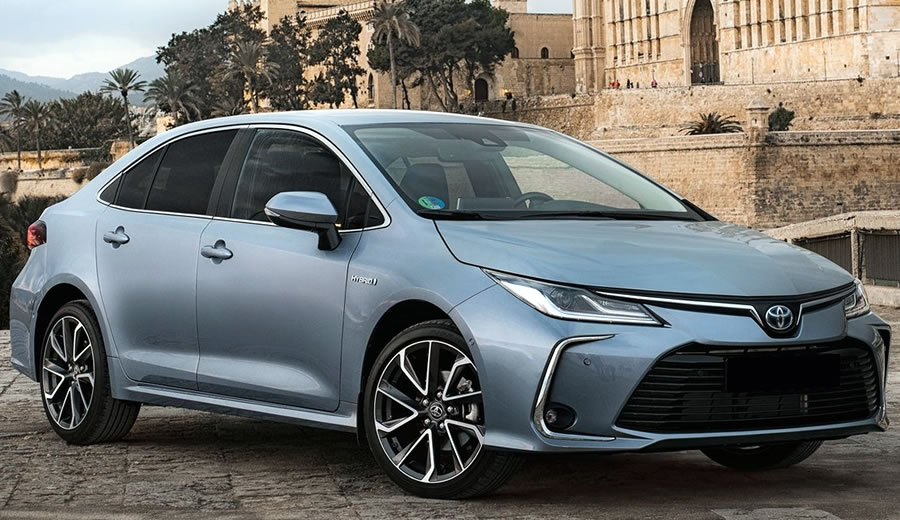
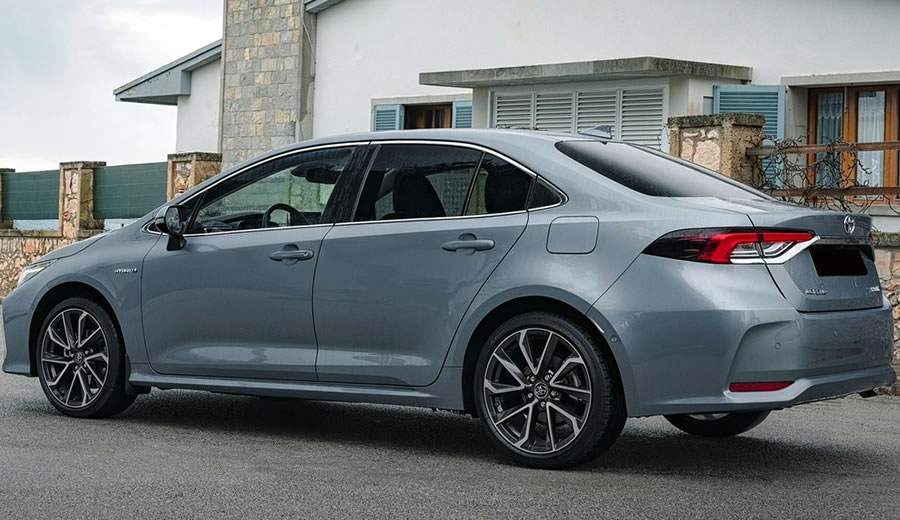
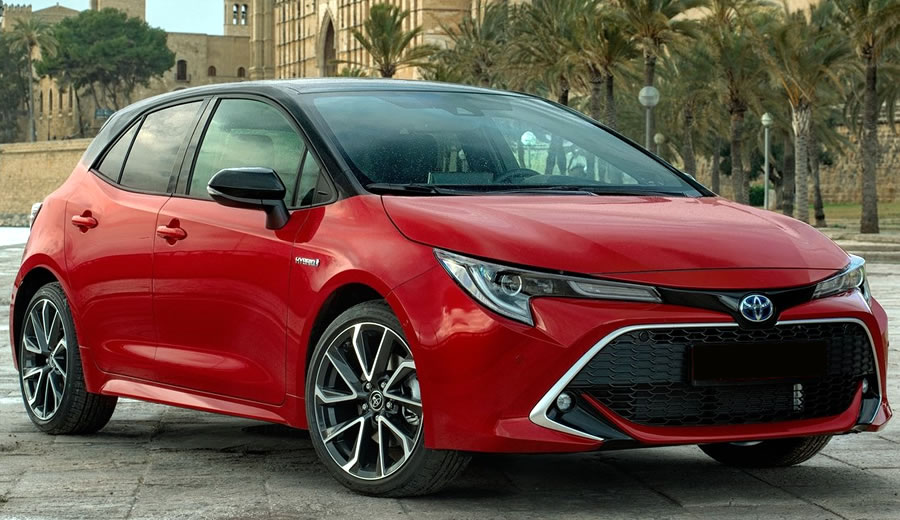
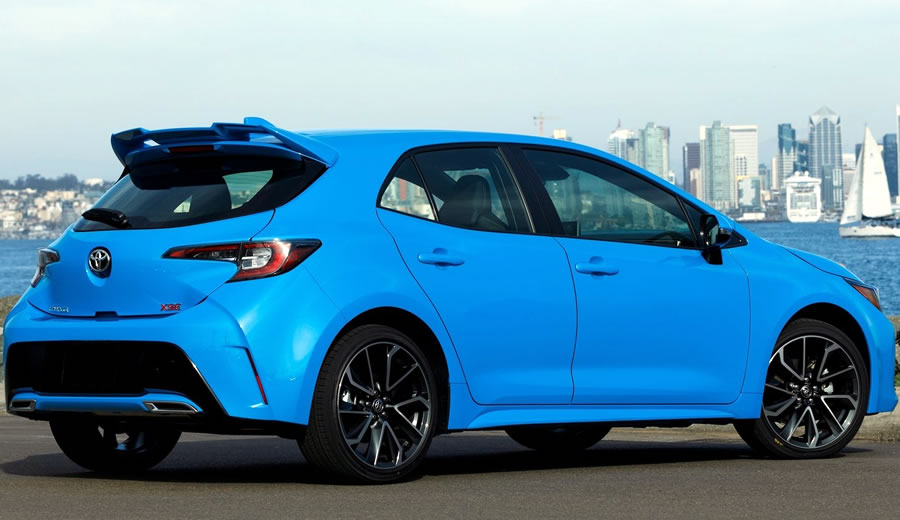
The twelfth generation (E210, 2018-present)
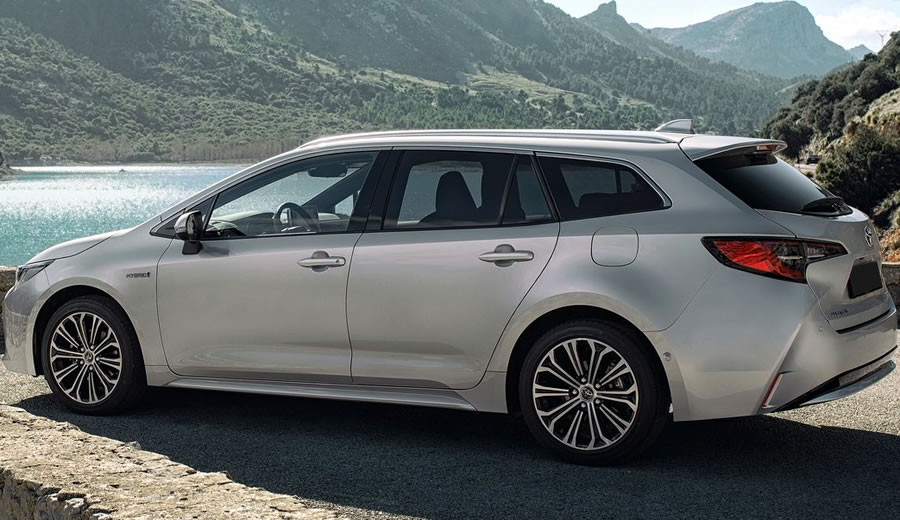
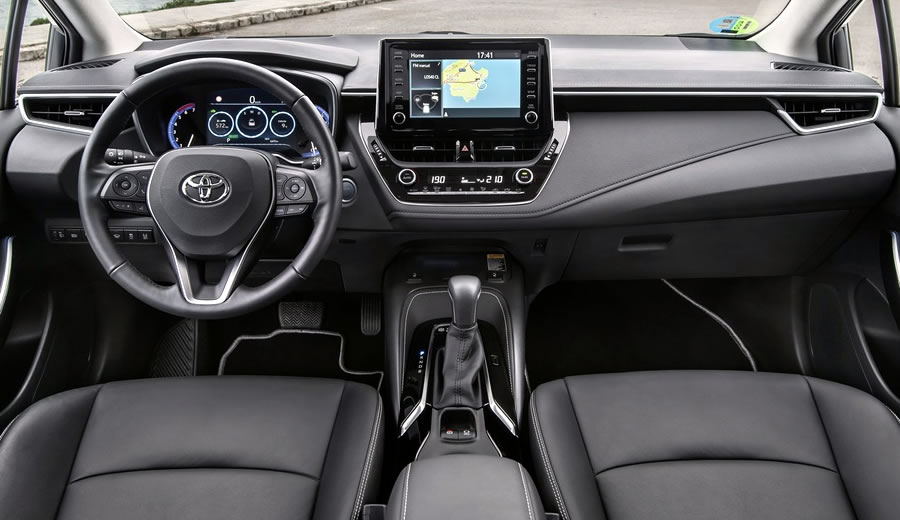
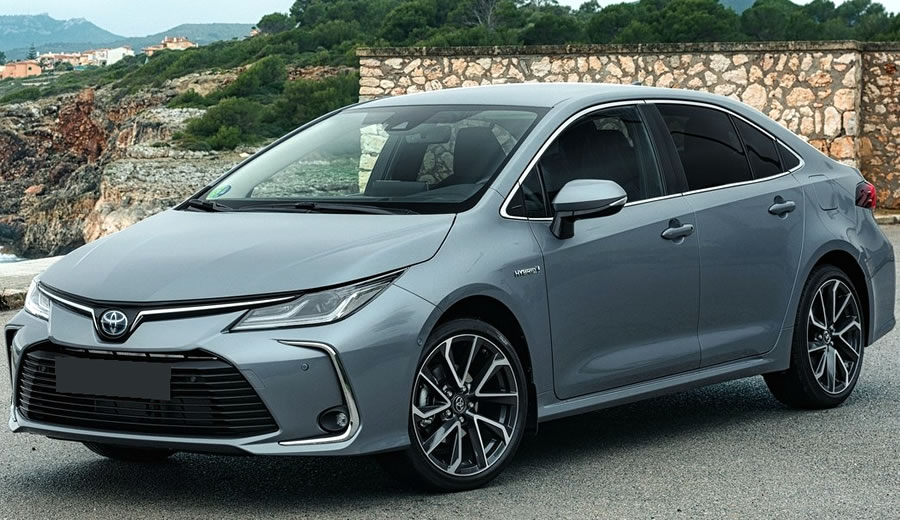
The twelfth generation was presented in March 2018 at the Geneva International Motor Show in the form of a hatchback called "Auris", as well as at the New York International Auto Show. Production began in June 2018. The car is based on the platform "Toyota New Global Architecture" (TNGA-C), which is also being built "Prius", "Prime", "C-HR", "Levin", "Auris" and "Lexus UX". First came the five-door hatchback (length 4370 mm, width 1790 mm, height 1440 mm), then in January 2019 a four-door sedan appeared (length 4640 mm, width 1780 mm, height 1435 mm) and a five-door station wagon (length 4650 mm, width 1790 mm, height 1440 mm). The curb weight of the regular car was 1240-1310 kg, the hybrid 1300-1560 kg. Assembly was carried out in Japan, Great Britain, China, the USA and Turkey.
Currently, only petrol four-cylinder engines of the following capacities are installed:
- 1.2 liters (1197 cm³, 8NR-FTS, turbocharged) with a capacity of 114 hp.
- 1.6 liters (1598 cm³, 1ZR-FAE) with a capacity of 132 hp.
- 1.8 liters (1798 cm³, 2ZR-FAE) with a capacity of 138 hp.
- 1.8 liters (1798 cc, 2ZR-FXE, hybrid) with a total power of 134 hp.
- 2.0 liters (1986 cm³, M20A-FKS) with a capacity of 170 hp.
- 2.0 liters (1986 cc, M20A-FXS, hybrid) with a total capacity of 180 hp.
Gearbox: six-speed manual "EG60" or continuously variable transmission "K120".
The Australian new car rating program ANCAP has awarded the hatchback a maximum five-star safety rating. The American non-profit organization Insurance Institute for Highway Safety (IIHS) also conducted safety tests and assigned the following ratings:
- Frontal Low Overlap Test - Good
- Frontal Test with Partial Overlap - Good
- Side Kick - Good
- Roof Strength - Good
- Head protection - Good
- Collision Avoidance System - Excellent
- Headlights - Acceptable
- Child seat attachment - Good