Share information:
Toyota Camry — a mid-size car (D-segment) produced by a Japanese company "Toyota Motor Corporation" from 1982 to the present. It was produced with a narrow body until 2003 in the Japanese domestic market (C-segment), which was also called "Toyota Vista" and with a wide body (D-segment) for export to other countries, which appeared in 1991 and completely replaced the narrow body at present. In 1989, they released a business-class sedan "Lexus ES" (E-segment) on the "Camry" platform, which is still being produced. From 2000 to the present, the Japanese company "Daihatsu" offers the "Camry" brand under the name "Daihatsu Altis", sold only in Japan. In Australia, the car was sold under the name "Holden Apollo" from 1989 to 1997. In the same place in 1993, "Camry" with a "V6" engine began to be called "Toyota Vienta", and since 2006 - "Toyota Aurion".
The name "Camry" comes from the English phonetic transcription of the Japanese word "kanmuri", which translates as "crown". This is a tradition of the Toyota company, which implies the use of this word in the name of flagship cars. Other examples using the word "crown" in the name are "Toyota Crown", "Toyota Corona", Toyota Tiara and "Toyota Corolla". The engine was located transversely in the front, the drive was initially on the front wheels, then in 1986, models with all-wheel drive appeared.
Currently competitors and classmates "Toyota Camry" are the following cars - Audi A4, BMW 3 series, Citroen C5, Chevrolet Malibu, Ford Mondeo, Honda Accord, Hyundai Sonata, Kia Optima, Mazda 6, Mitsubishi Galant, Nissan Teana, Opel Insignia, Peugeot 408, Renault Laguna, Volvo S40, SEAT Altea, Skoda Superb, Suzuki Kizashi, Subaru Legacy and Volkswagen Passat. Competitors of the business class car "Lexus ES" are Mercedes-Benz E-Class, Jaguar XF, BMW 5 series, Audi A6, Volvo S80.
Toyota Celica Camry (A40, A50, 1979-1982)
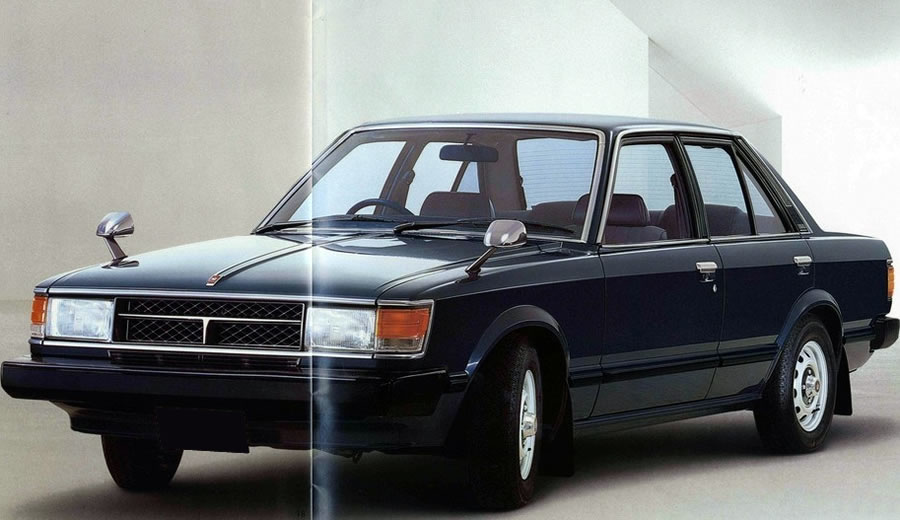
For the first time, the "Camry" logo appeared on a four-door sedan "Toyota Celica" under the name "Celica Camry", which went on sale in January 1980. Technically, this car was closer to the "Toyota Carina" second generation, which was lengthened and worked on the design. The engine was located in the front with a drive to the rear wheels. The suspension was initially a four-link with a rigid beam, and in August 1980 the front suspension became the MacPherson type, the brakes became disc brakes on all wheels.
The engines were four-cylinder petrol engines with a capacity of 1.6 liters (1588 cm³, 12T-U, 88 hp), 1.8 liters (1770 cm³, 13T-U, 94 hp), 1.8 liters (1770 cm³, 3T-EU, injector, 105 hp), 2.0 liters (1973 cm³, 21R-U, 105 hp) and 2.0 liters (1968 cm³, 18R-GEU, injector, 133 hp).
Toyota Camry/Vista (V10, V20, V30, V40, V50, 1982-2003)
Development of the Camry and Vista cameras began in August 1977 after the 1973 oil crisis and then continued through the 1979 oil crisis. It was a move toward lighter, more aerodynamic, and more fuel-efficient cars. At the same time, all the major automakers saw the potential for front-wheel drive to save fuel and began to retool their production.
First generation (V10, 1982-1986)
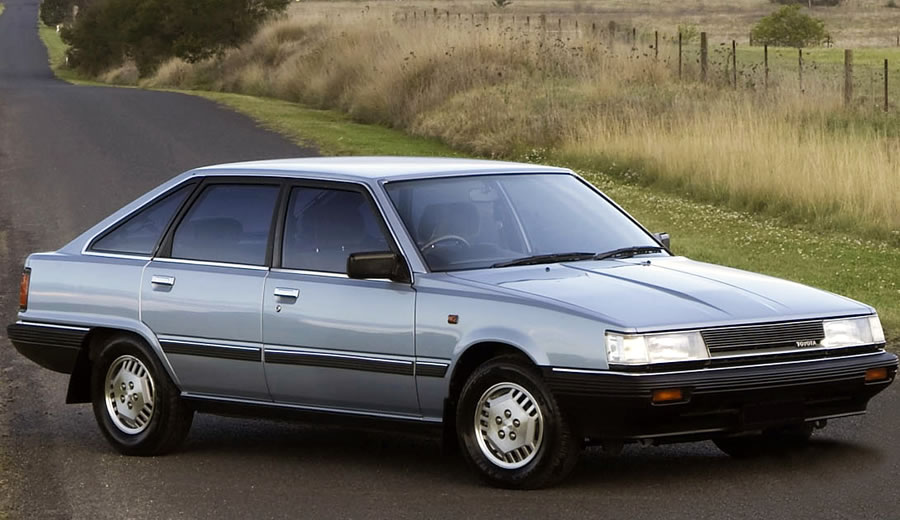
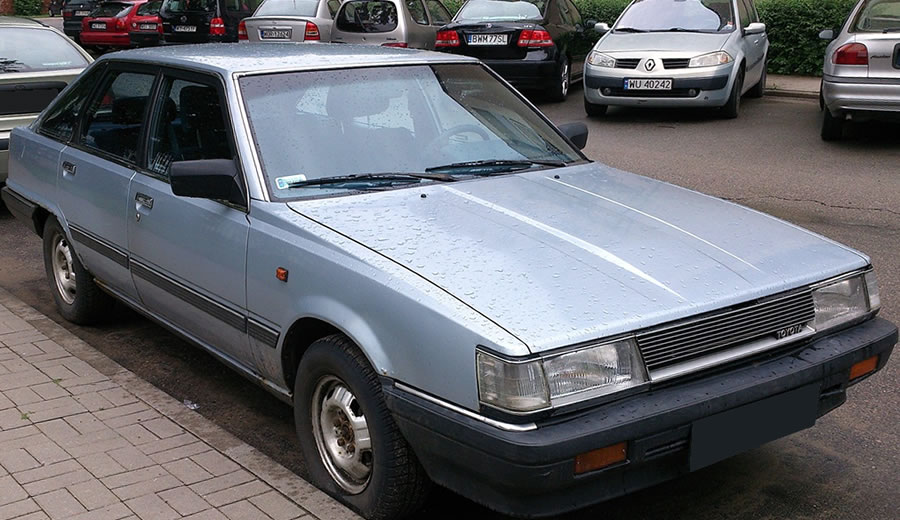
The production of the first generation started in March 1982. Petrol models had codes "SV10", "SV11" and "SV12", and the diesel ones were called "CV10" and "CV11". At first there was only a four-door sedan with a length of 4400 mm, a width of 1690 mm and a height of 1395 mm. In August 1982, a five-door liftback appeared with a length of 4435 mm, a width of 1690 mm and a height of 1370 mm. The curb weight of the car was 990-1130 kg. Only the sedan was exported. The engine was turned 90° and began to be installed transversely to the body with front-wheel drive. This allowed to increase the interior space quite decently, and the location of the fuel tank under the rear seat increased the luggage space. The exterior design corresponded to the angular style of the 80s. The car was tested in a wind tunnel, due to which the sedan had a drag coefficient of 0.38. Production was carried out only in Japan.
The range of petrol engines included four-cylinder engines with a volume of 1.8 liters "SV10" (1832 cm³, 1S-L/1S- LU, 99 hp), 1.8 liter "SV10" (1832 cm³, 1S-iLU, 84 hp), 2.0 liter "SV11" (1995 cm³, 2S-EL: 118 l. s., 2S-ELC: 101 l. s., 2S-ELU: 91 hp) and 2.0 liters "SV12" (1998 cm³, 3S-GELU, 138-158 hp). There were two diesel engines, 1.8 liter "CV10" (1839 cm³, 1C-TL: 80 hp, 1C-TLC: 73 hp) and 2.0 liters "CV11" (1974 cm³, 2C-TL: 88 hp, 2C-TLC: 79 hp). The transmission is a five-speed manual or a four-speed automatic.
The car was updated in 1984 and 1985, when work was carried out on the technical part and on the design.
Second generation (V20, 1986-1992)
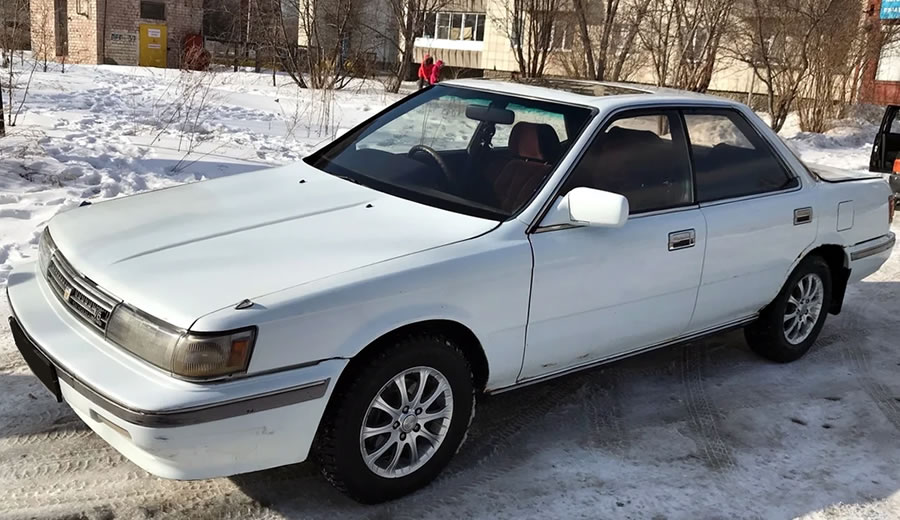
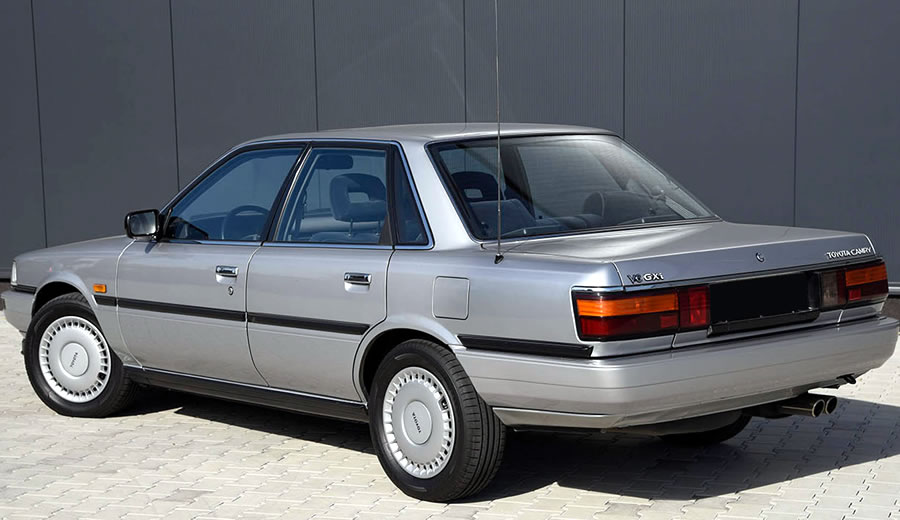
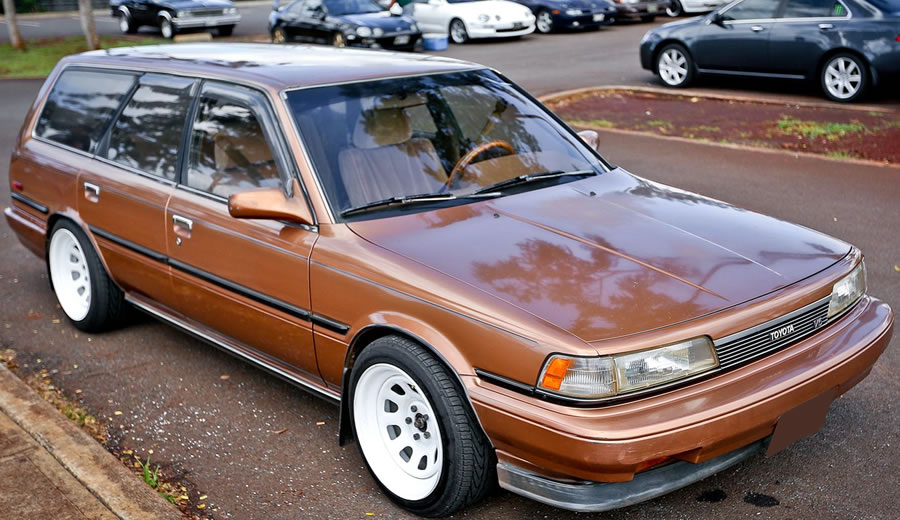
In August 1986, the second generation Camry went on sale simultaneously with the Vista for the Japanese domestic market. The body style was a four-door sedan (Camry) and a hardtop sedan with a folding hardtop roof (Vista), as well as a five-door station wagon, which was exported for the first time. Later, the hardtop would become the basis for a business-class car "Lexus ES 250", which was mainly produced for the North American market. The sedan was 4,500 mm long and 1,395 mm high; the length of the station wagon was 4525 mm, the height was 1440; the width of the car was 1695 mm and the unladen weight was 1080-1295 kg. The aerodynamic drag coefficient of the sedan became even better and was 0.34. The drive was on the front wheels, and in October 1987, all-wheel drive appeared. Assembly was carried out in Australia, Japan and the USA.
Higher quality materials were used for finishing, the quality of assembly was significantly improved to bypass competitors. The exterior design became smoother. The suspension became fully independent with spring shock absorbers and an anti-roll bar. The rear suspension was mounted on a subframe, which reduced the noise level in the cabin. Ventilated disc brakes at the front, and mostly conventional drum brakes at the rear. In 1991, the anti-lock braking system ABS became available as an option. The wheel size was increased from 13 to 14 inches.
Four-cylinder petrol engines had the following volumes: 1.8 litres (1832 cm³, 1S-i, 86 hp), 1.8 liters (1838 cm³, 4S-Fi, 103 hp), 2.0 liters (1998 cm³, 3S- FC, 110 hp), 2.0 liters (1998 cm³, 3S-FE, injection, 118 hp) and 2.0 liters (1998 cm³, 3S-GE, 138 hp). For the first time, six-cylinder V-shaped engines with a volume of 2.0 liters appeared (1992 cm³, 1VZ-FE, V6, 138 hp) and 2.5 liters (2507 cm³, 2VZ-FE, V6, 153 hp). The diesel engine was a single 2.0-liter turbocharged four-cylinder (1974 cm³, 2C-T, 81 hp). The transmission is a four-speed automatic or a five-speed manual.
Third generation (V30, 1990-1994)
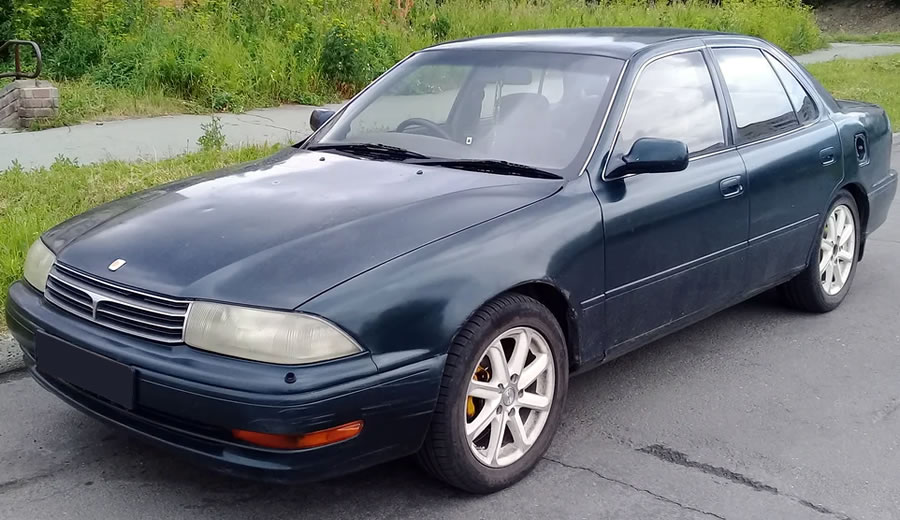
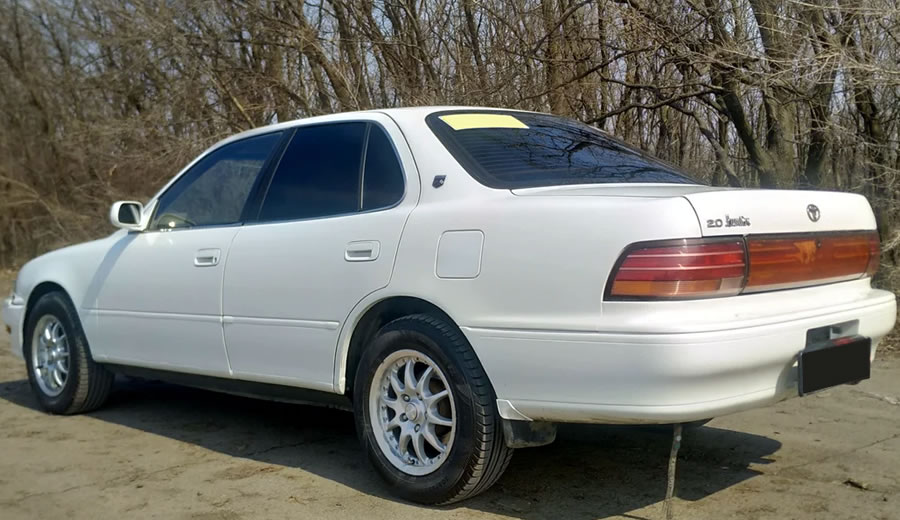
In Japan, the third generation was introduced in July 1990. The body design was in the form of a four-door sedan (length 4600 mm, width 1695 mm, height 1395 mm) and a hardtop sedan with a folding hardtop roof (length 4630-4670 mm, width 1695 mm, height 1380 mm). The curb weight was 1180-1360 kg. This car became the basis for the wide export model "XV10", released in 1991 (see description below), which would later completely replace the narrow-body Camry. Both lines are technically almost identical. The luxury "Lexus ES 300", which is sold in Japan as "Toyota Windom".
The drive is traditionally front, there are modifications with all-wheel drive. Independent suspension was carried over from the second generation (V20), but more expensive trim levels added electronically controlled shock absorbers (TEMS) and speed-sensitive four-wheel steering.
The range of petrol engines is represented by four-cylinder in-line engines with a volume of 1.8 liters (1838 cm³, 4S - FE, 115 hp), 2.0 liters (1998 cm³, 3S-FE, 126 hp) and 2.0 liters (1998 cm³, 3S-GE, 162 hp), as well as six-cylinder V-shaped 2.0-liter volume (1992 cm³, 1VZ-FE, V6, 136 hp) and 2.5 liters (2496 cm³, 4VZ-FE, V6, 173 hp). There was also one 2.0-liter turbocharged four-cylinder diesel engine (1974 cm³, 2C-T, 90 hp). The gearboxes are the same as those of the previous generation.
The updated car was released in 1992, on which a new radiator grille was installed, and the air conditioning was also improved.
Fourth generation (V40, 1994-1998)
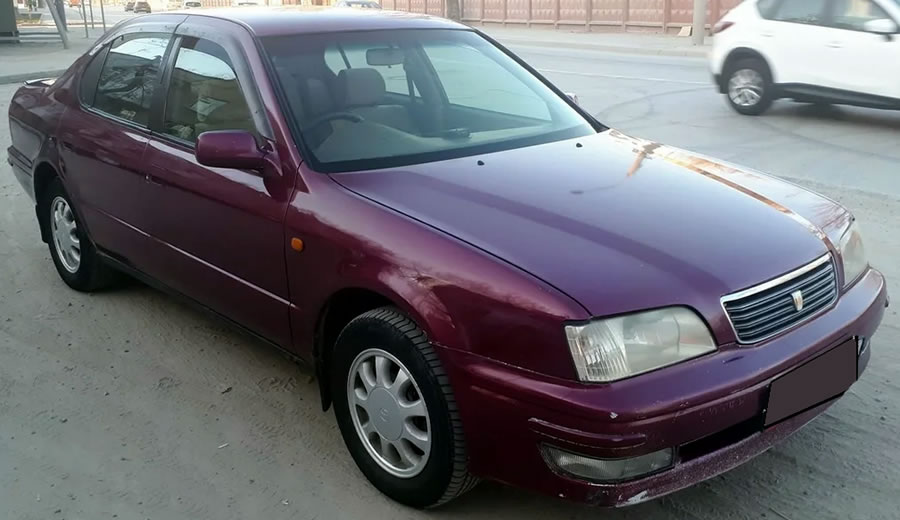
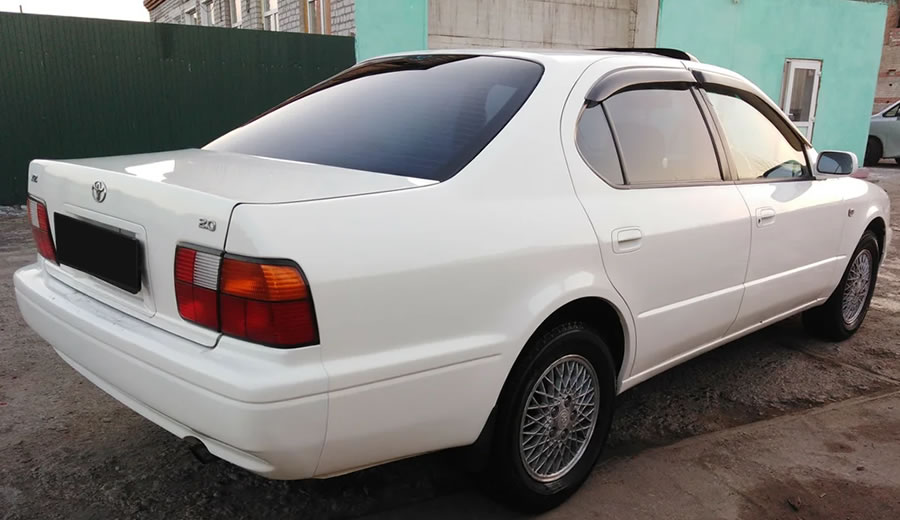
In July 1994, the narrow-body fourth generation Toyota Camry with chassis code "V40" appeared for the Japanese market. The body was a four-door sedan (Camry), as well as a hardtop with a folding hard roof (Vista). The length of the car was 4625 mm, width 1695 mm, height 1410-1435 mm. Horizontal dimensions for the domestic Japanese market were still less than 4700x1700 mm in order to avoid high taxation. The engine was located transversely in front, front-wheel drive or all-wheel drive. Production was carried out only in Japan.
There were only two petrol engines, each with a capacity of 1.8 litres (1838 cm³, 4S-FE, 115 hp) and 2.0 liters (1998 cm³, 3S-FE, 126 hp), both four-cylinder with direct fuel injection. There was also one turbocharged diesel engine with a volume of 2.2 liters (2184 cm³, 3C-T, 100 hp). The gearbox was a five-speed manual or a four-speed automatic.
In June 1996, the model was updated. Anti-lock brakes and dual airbags became standard equipment. After 1998, the Japanese and international market "Camry" were aligned with each other, and the "Vista" took over the role of the previous generations "V30" and "V40".
Fifth generation (V50, 1998-2003)
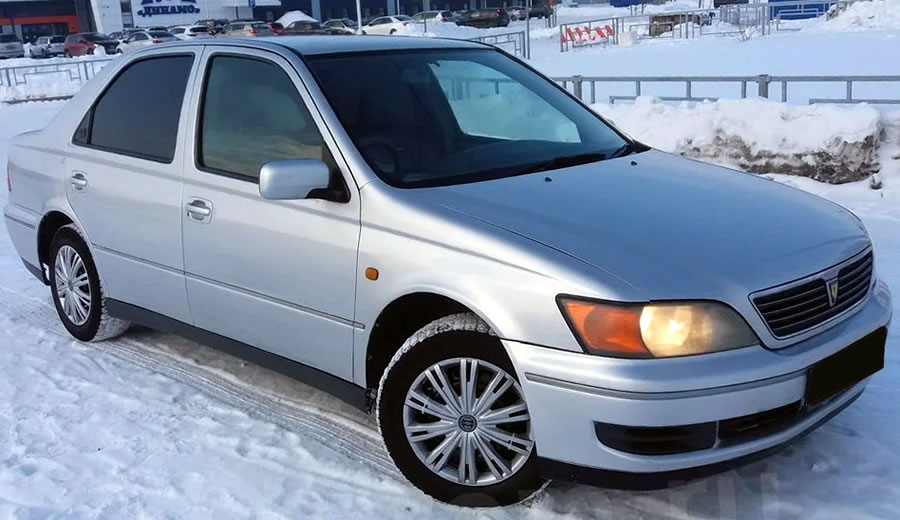
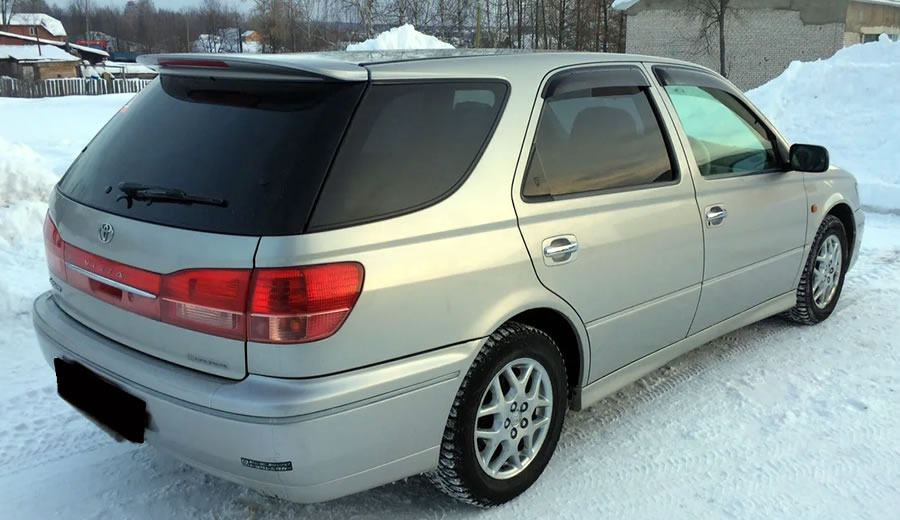
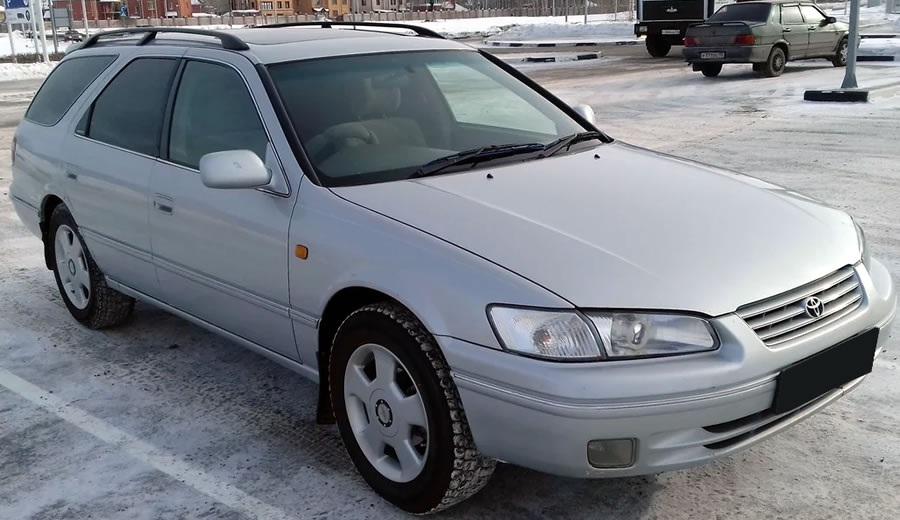
The fifth generation for the Japanese market was sold as "Vista" (four-door sedan) and "Vista Ardeo" (five-door station wagon). This is the latest generation of the narrow-body V50. The car is based on the Toyota MC platform, which also produced "Avensis", "Celica", "Corolla", "Isis", "Prius", "RAV4" and others. The body length was 4670 mm, width 1695 mm, height 1505-1515 mm and the unladen weight was 1310 kg. The rear MacPherson struts were replaced by a torsion bar suspension with a double lever. Assembly was carried out only in Japan.
The only engines available were 1.8-litre petrol four-cylinder engines (1794 cm³, 136 hp) and 2.0 liters (1998 cm³, 145-150 hp). The transmission is four-speed automatic.
Production of the Vista ended in September 2003, at which time Toyota decided to rename the Vista dealers to the Netz dealer network, and in October the car was replaced by the second generation Avensis.
Camry/Scepter "XV10" (1991-1996)
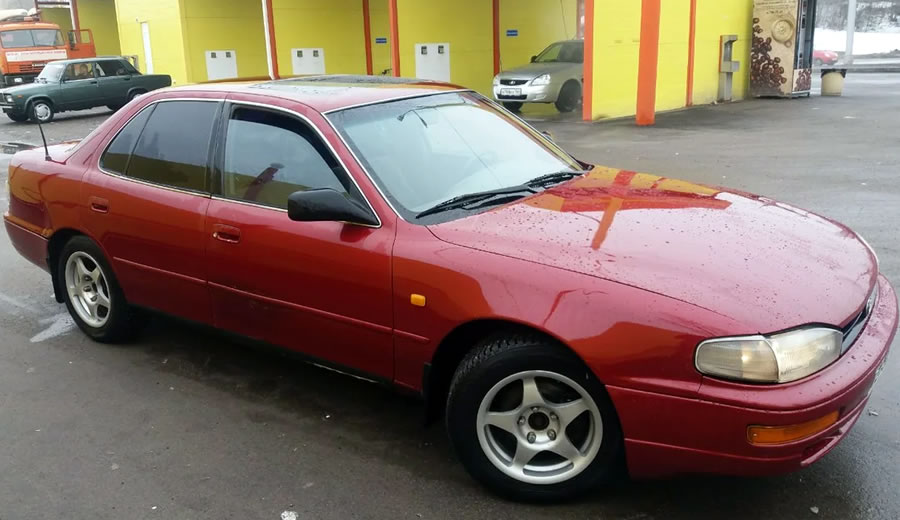
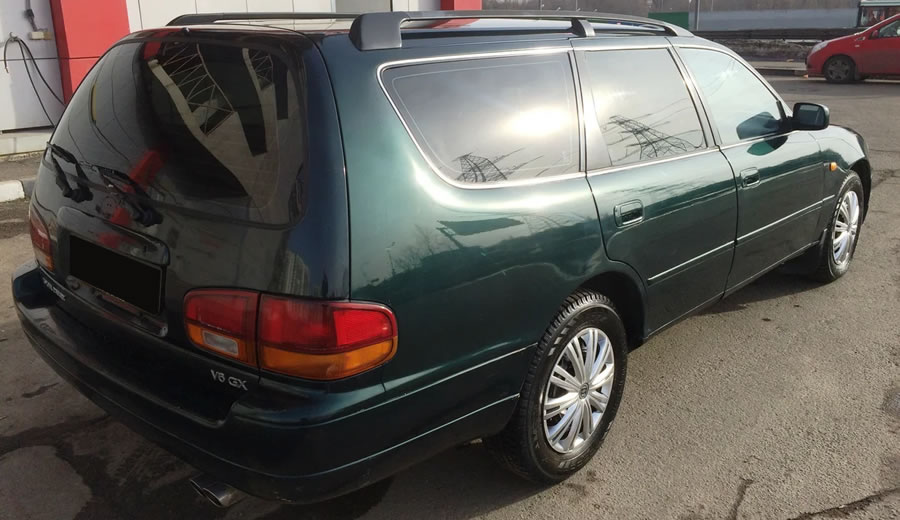
Due to the great popularity of the Camry worldwide, a model for the international market was released in September 1991, which was not limited by Japan's strict tax restrictions on the length and width of the car. It is believed that the XV10 is the third generation, released specifically for export to other countries. Models with the codes "SXV10" and "SDV10" are equipped with four-cylinder engines, and those with the codes "VCV10" and "MCV10" with V-shaped six-cylinder engines. Within Japan, the wide-body Camry model was called "Toyota Scepter" to avoid confusion. In Australia, from 1993 to 1997, the car was sold as "Holden Apollo". The body was in the form of a two-door coupe, a four-door sedan and a five-door station wagon. The length of the car was 4780-4811 mm, the width was 1770 mm and the height was 1394-1430 mm.
Only petrol engines were installed, one four-cylinder with a volume of 2.2 liters (2164 cm³, 5S-FE) with a capacity of 130 hp, as well as two six-cylinder V-shaped 3.0-liter (2958 cm³, 3VZ-FE) with a capacity of 185 hp and 3.0 liters (2994 cm³, 1MZ-FE) with a capacity of 188 hp. The gearbox was a five-speed manual "E153", as well as a four-speed automatic "A140E", "A540E" or "A541E".
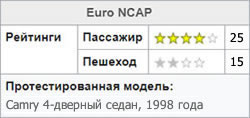
The car's safety was tested by the American organizations "National Highway Traffic Safety Administration" (NHTSA) and "Insurance Institute for Highway Safety" (IIHS) in frontal crash tests. NHTSA assigned a rating of 4 out of 5 stars, and IIHS gave a rating of "acceptable" in three categories and "good" in the other three categories out of six.
In 1994, the car was updated for the 1995 model year. The front end, headlights, turn signals, taillights were changed, and the inscription "Camry" appeared on the rear end.
Camry "XV20" (1996-2001)
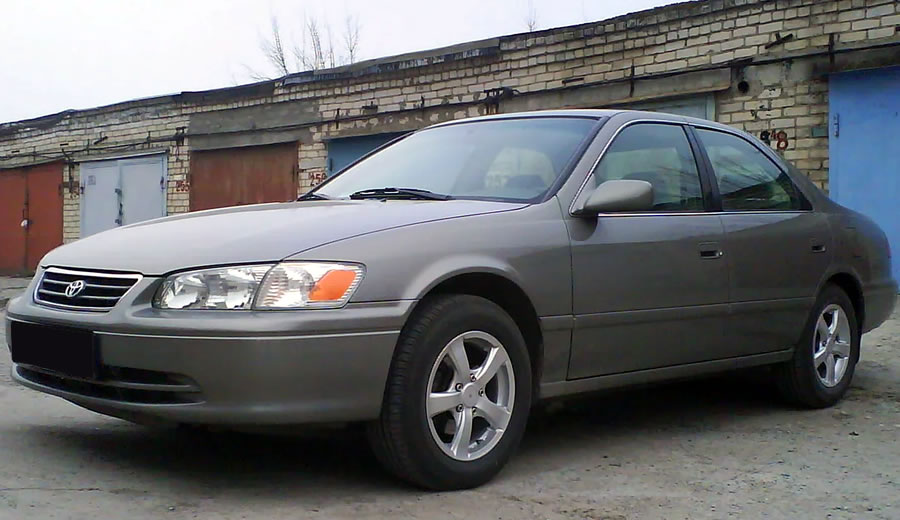
In September 1996, the next (fourth) generation of the export version of the Camry appeared. Cars with four-cylinder engines were designated by the code "SXV20", and V-shaped six-cylinder ones by the code "MCV20". The body was produced as a four-door sedan and a five-door hatchback. The length of the car was 4765 mm, width 1786 mm, height 1430 mm and the curb weight was 1361 kg. In Australia, the name was "Toyota Vienta". In Japan, the luxury version of the station wagon was sold as "Toyota Mark II Qualis", and also for the first time under the brand "Daihatsu Altis". The car was assembled in Japan, Australia, Indonesia, Thailand and the USA.
Only petrol engines were installed, one four-cylinder with a volume of 2.2 liters (2164 cm³, 5S-FE, 5S-FNE) power 130 hp and one six-cylinder V-shaped 3.0 liter volume (2994 cm³, 1MZ-FE) with a capacity of 194 hp. The gearbox was a five-speed manual "S51", as well as a four-speed automatic "A140E" or "A541E".
In 1999, the sedans underwent upgrades that affected the front and rear of the car, installing larger headlights, a chrome-edged radiator grille, larger taillights and side moldings. Side airbags on the front seats are now available.

Camry "XV30" (2001-2006)
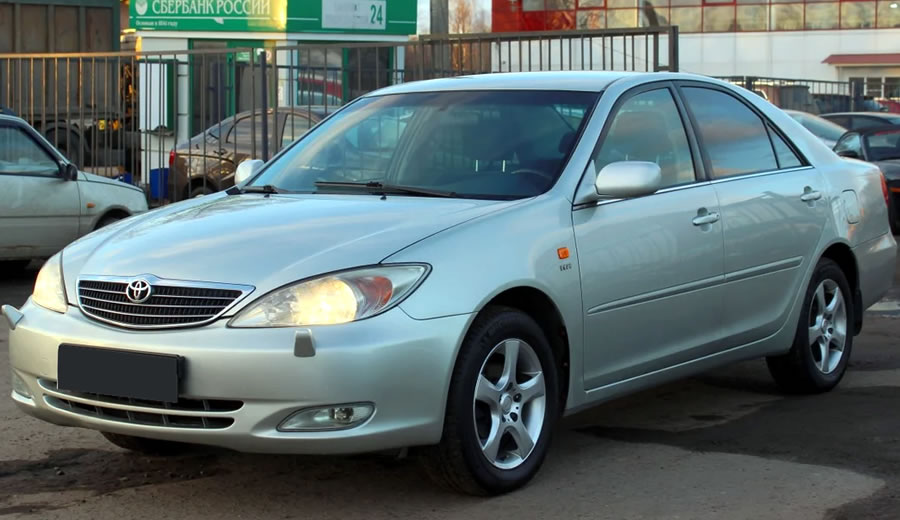
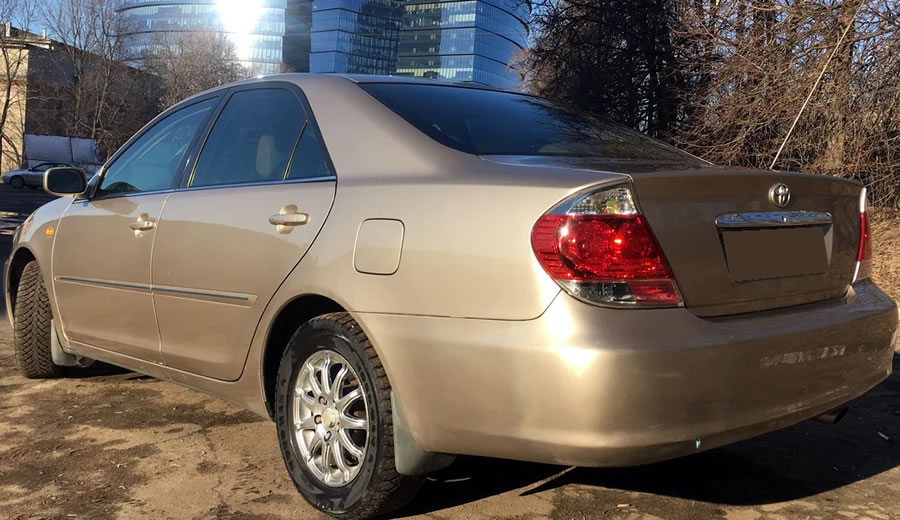
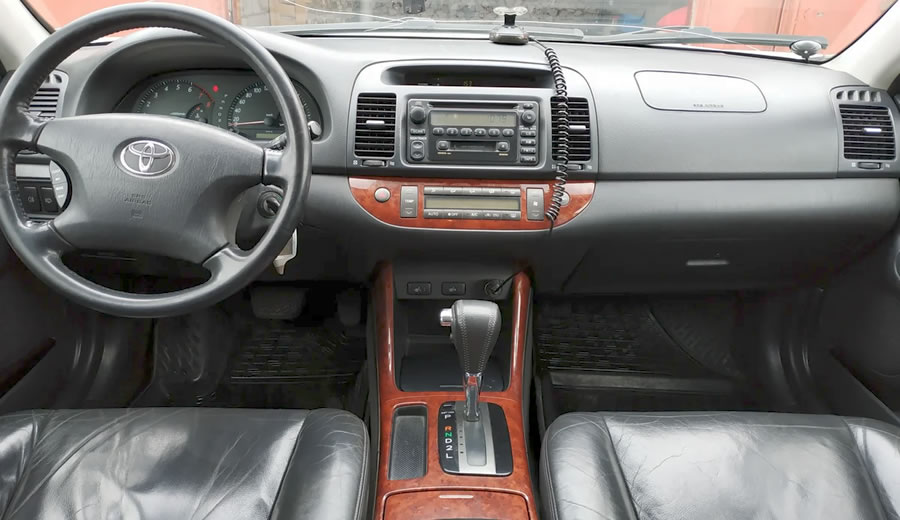
The fifth generation of the full-size Camry appeared in June 2001. For four-cylinder front-wheel drive, the code "ACV30" is used, for all-wheel drive, the code "ACV35", and six-cylinder were designated "MCV30" and "MCV31". The body was only a four-door sedan, 4805 mm long, 1795 mm wide and 1470-1490 mm high. The drag coefficient was reduced to 0.28, which had a positive effect on efficiency. Based on the "Toyota K" platform, on which the "Avalon", "Highlander", "Sienna", "Venza", "Previa", "Lexus ES" and "Lexus RX". Assembly shops were located in Australia, Indonesia, Malaysia, Thailand, Taiwan, the USA and Japan.
The engines were only petrol, one four-cylinder in-line engine with a volume of 2.4 liters (2362 cm³, 2AZ-FE) with a capacity of 157 hp, as well as two six-cylinder V-shaped 3.0-liter (2994 cm³, 1MZ-FE) with a capacity of 192-210 hp and 3.3 liters (3310 cm³, 3MZ-FE) 225 hp. Five-speed manual transmission, as well as a four-speed automatic (U241E, U140E) or five-speed automatic (U151E, U250E).
For safe driving, the ABS system, stability control system, side curtains and airbags were installed. The American non-profit organization "Insurance Institute for Highway Safety" (IIHS) assigned the car an overall rating of "Good" for a frontal impact with offset. The same rating was given to models equipped with side airbags. Without these airbags, the rating for a side impact was "Bad".
The 2004 model year saw a facelift for some markets.
Camry "XV40" (2006-2011)
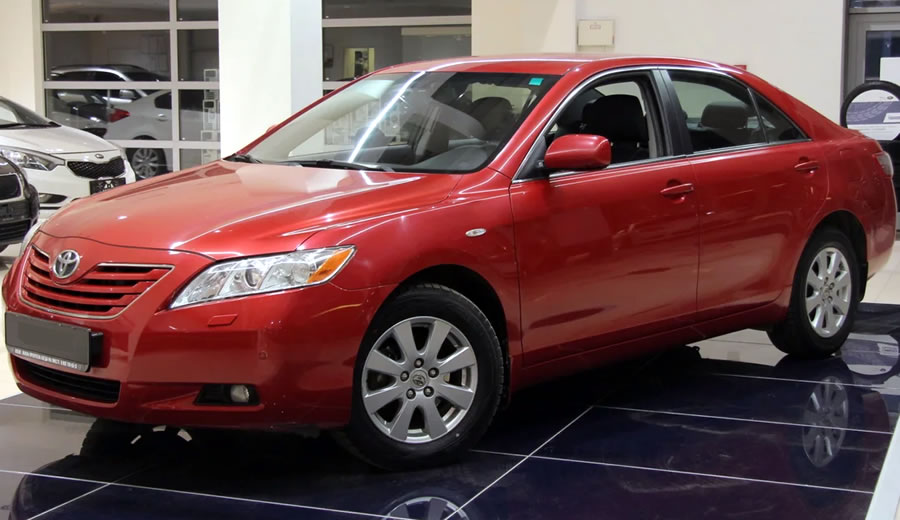
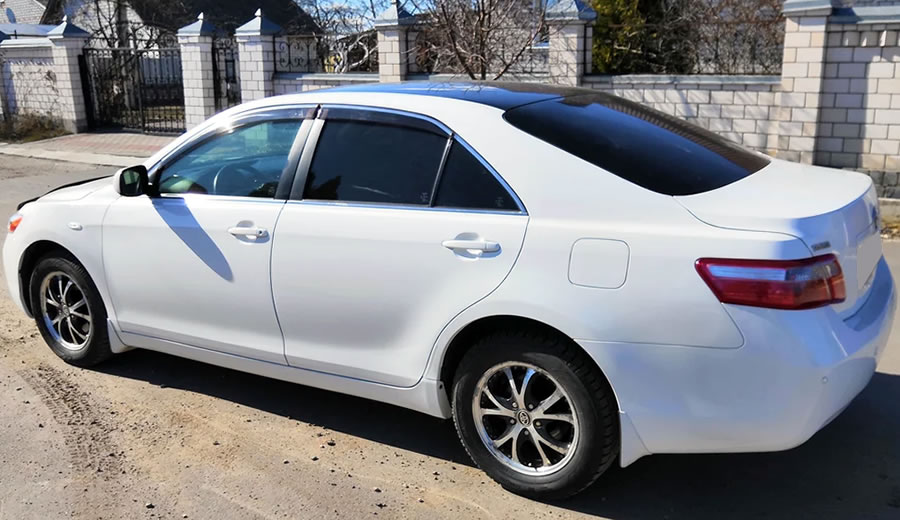
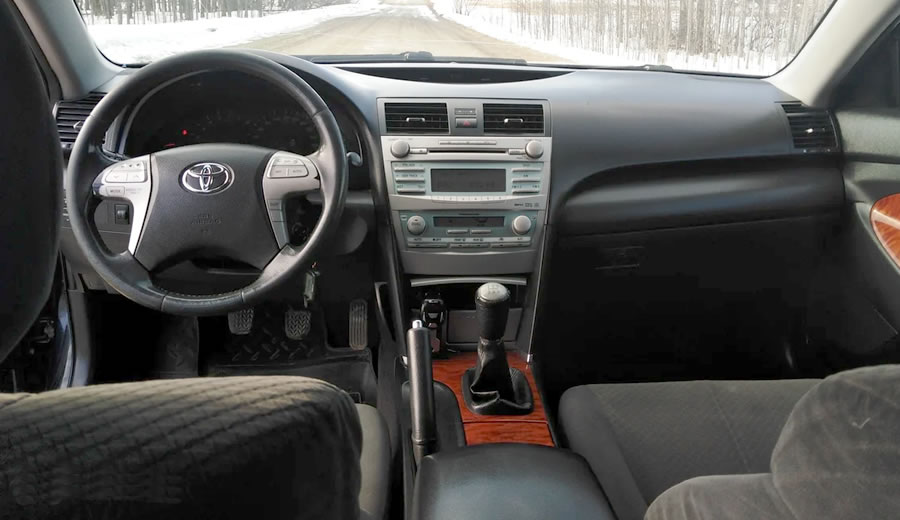
In January 2006, the sixth generation appeared in the Japanese markets, and the new Camry appeared in export markets a few months later. Also sold in Japan in parallel "Daihatsu Altis". The car was first shown in the United States at the North American International Auto Show in Detroit in January 2006, and sales began in March. In Australia and the Middle East, the car was sold as a prestige model "Toyota Aurion", which was the same as the "Camry", but with a slightly modified external and internal design. Based on the "Toyota K" platform, like the previous generation. The engine was located transversely in the front, front or full drive. The body is only a four-door sedan, 4805 mm long, 1820 mm wide and 1470 mm high. Assembly was carried out in Japan, Australia, the USA and Russia.
Only petrol engines were offered, two four-cylinder 2.4-litre units (2362 cm³, 2AZ-FE, 157-165 hp) and 2.5 liters (2494 cm³, 2AR-FE, 169-178 hp), and also one V-shaped six-cylinder with a volume of 3.5 liters (3456 cm³, 2GR-FE, 268 hp). For the first time, a hybrid model with a 2.4-liter four-cylinder engine was offered (2362 cm³, 2AZ-FXE) with a total capacity of 188 hp. The transmission was a five- and six-speed manual, a four-, five- and six-speed automatic, as well as a continuously variable transmission "CVT".
The use of ultra-high-strength steel has increased the rigidity of the body, making the car safer inside. The design of the front seat mounts has been developed to transfer impact loads to the frame during a side impact. The American organization "Insurance Institute for Highway Safety" (IIHS) has assigned the car a rating of "Good" in all categories. "National Highway Traffic Safety Administration" (NHTSA) initially assigned a rating of 4 out of 5 stars, but in 2010 it was lowered to 3 out of 5 stars due to new testing methods.
In 2009, the model was restyled and shown at the Detroit Auto Show.
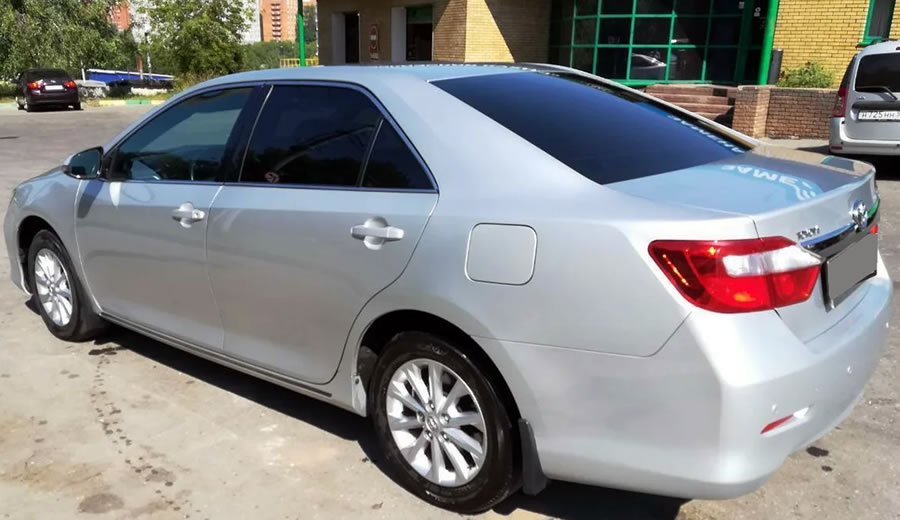
Camry "XV50" (2011-2017)
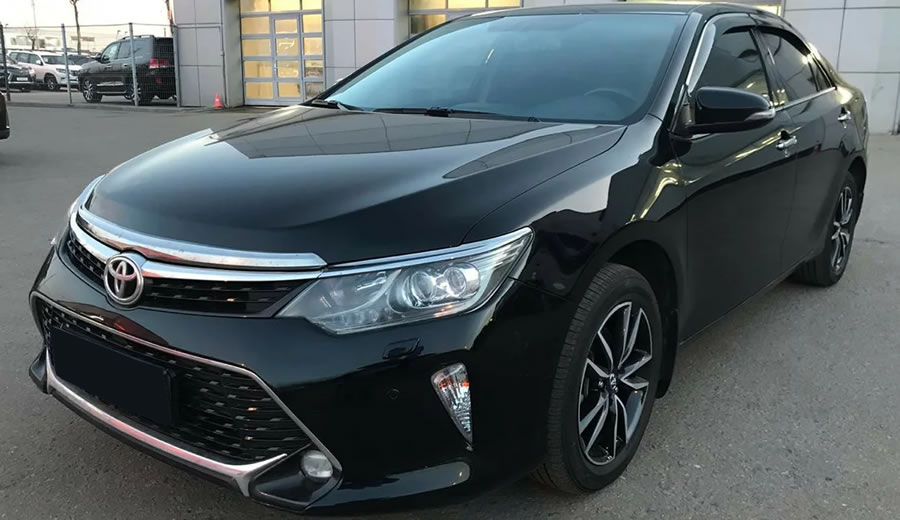
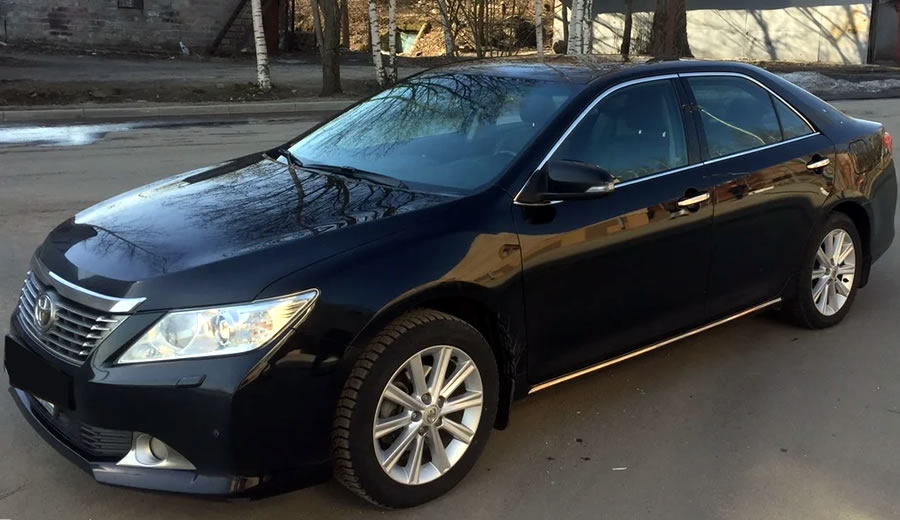
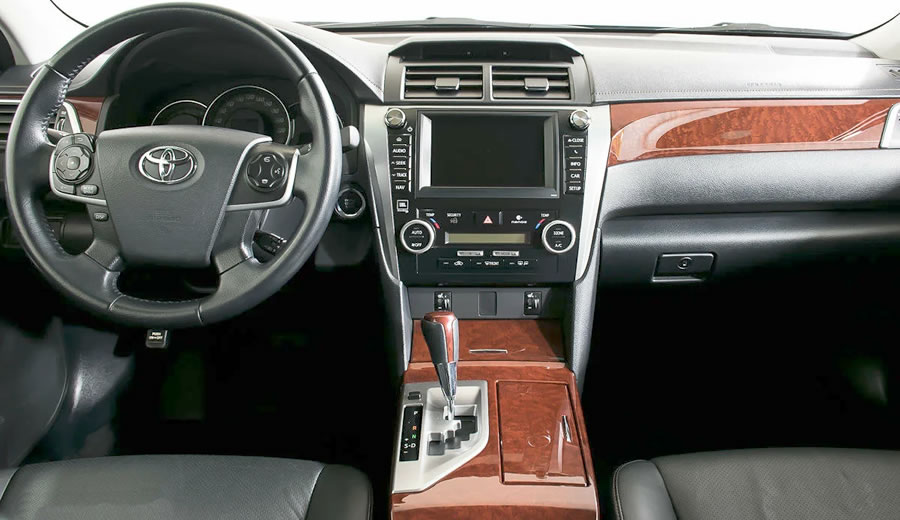
The seventh generation was launched in August 2011, replacing the "XV40" in all markets outside Japan. In Japan, the prestige model was called "Daihatsu Altis", and in Australia "Toyota Aurion". The exterior has become more angular, the interior has been completely redesigned. It is assembled on the "Toyota K" platform. The body is traditionally only a four-door sedan with a length of 4820-4850 mm, a width of 1820 mm, a height of 1470 mm and a curb weight of 1447-1551 kg. The car was produced in Australia, Vietnam, India, China, Malaysia, Russia, the USA, Thailand, Taiwan and Japan.
The engines were only petrol, mostly four-cylinder 2.0-litre units (1998 cm³, 1AZ-FE, 145 hp), 2.0 liters (1998 cm³, 6AR-FSE, 165 hp), 2.5 liters (2494 cm³, 2AR-FE, 178-181 hp) and 2.5 liters (2494 cm³, 5AR-FE, 173 hp), and also one V-shaped six-cylinder with a volume of 3.5 liters (3456 cm³, 2GR-FE) with a capacity of 268 hp. A four- or six-speed automatic transmission was installed. They continued to produce a hybrid model, which had a very successful start in the previous generation. The hybrid engine had a volume of 2.5 liters (2494 cm³, 2AR-FXE, 154 hp) with a total power of 202 hp, working with a continuously variable transmission "CVT".
The restyling of the model was presented at the International Auto Show in New York in April 2014. The changes affected almost all the exterior elements, except for the roof. The interior received a more premium appearance due to the use of higher-quality materials, new options and improved amenities. The release of the updated car began in late 2014 and early 2015 in different countries. In February 2015, a limited version of the car was released for the United States in the amount of 12 thousand units with a unique color scheme.
Camry "XV70" (2017-present)
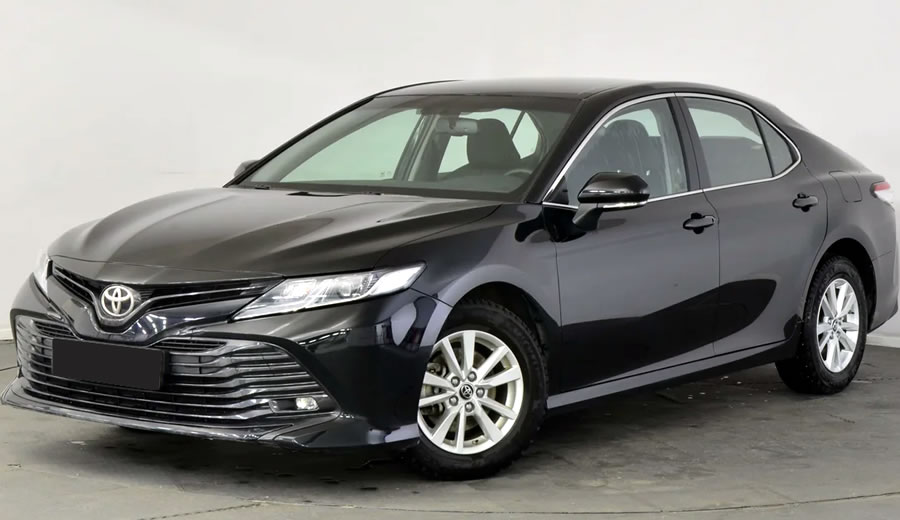
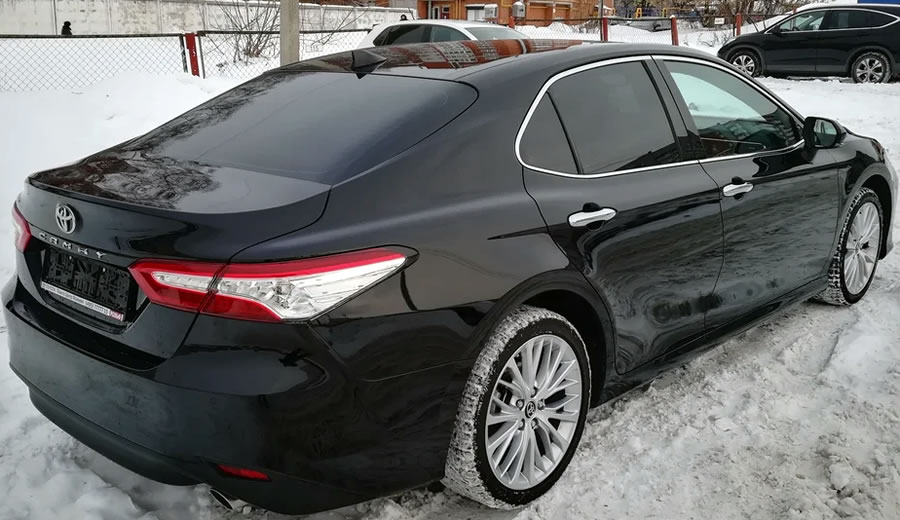
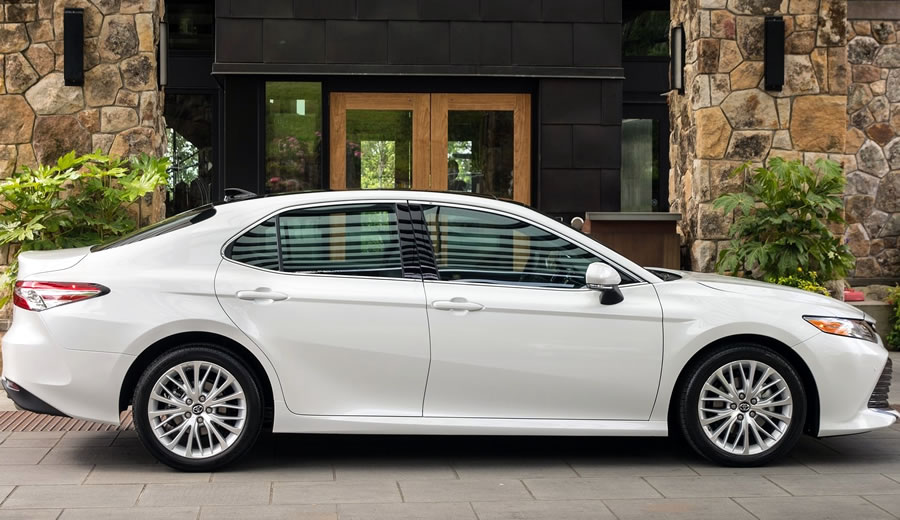
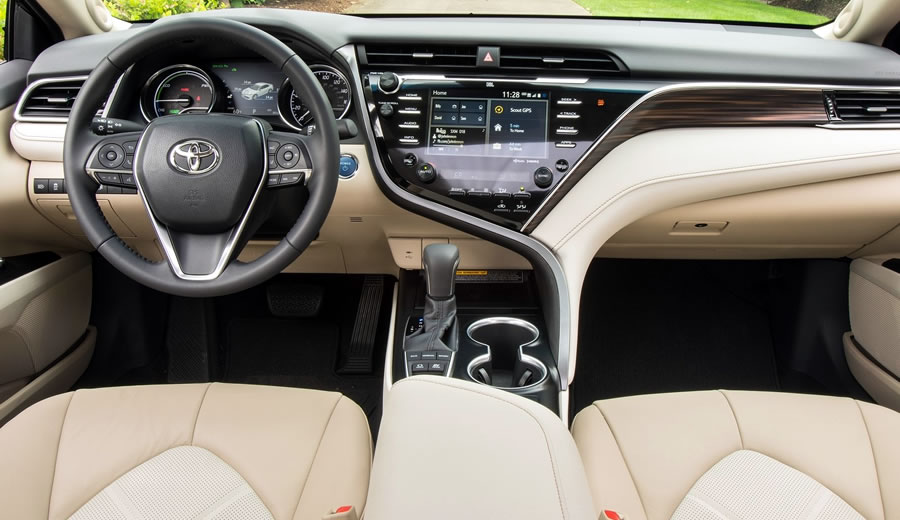
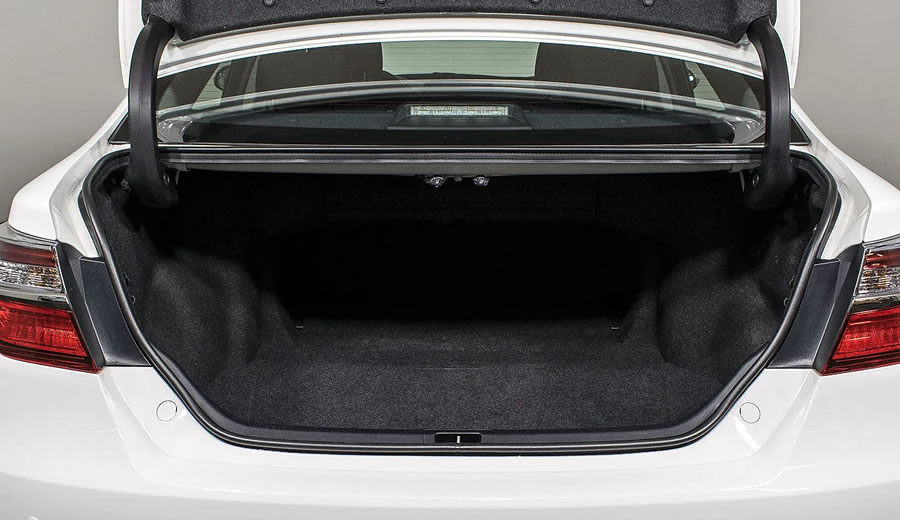
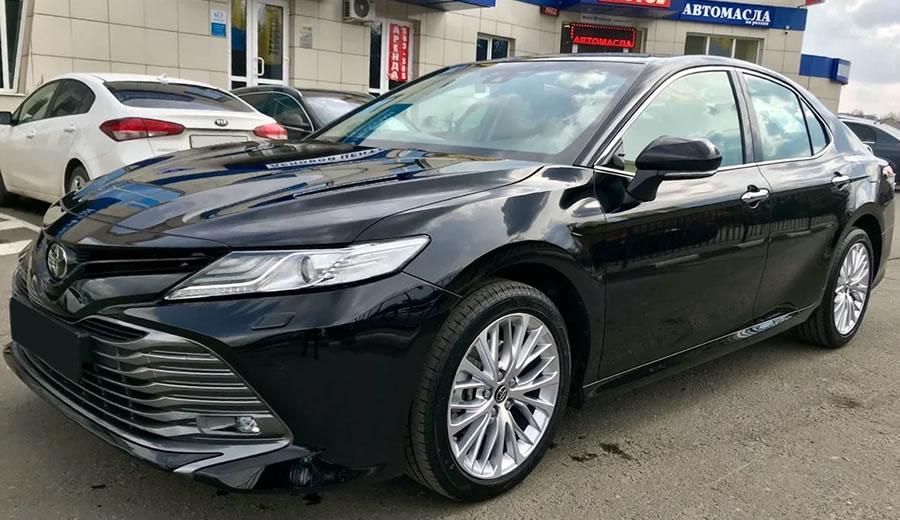
The seventh generation was first shown in January 2017 at the North American International Auto Show in Detroit. Sales started in Japan in July 2017, in other countries later in 2017 and 2018. The car is built on the new global architecture platform "TNGA" (GA-K), which is shared with the latest hybrid hatchback "Toyota Prius" and an SUV "Toyota C-HR". Each trim level will have a different dashboard. The body is only a four-door sedan, 4880 mm long, 1840 mm wide and 1450 mm high. Assembly was carried out in Japan, China, India, Malaysia, Russia, Taiwan, Thailand and the United States. Production in Australia was stopped due to the closure of the plant, which operated there for 55 years.
Only petrol engines are installed, mainly four-cylinder 2.0-liter engines (1998 cm³, 6AR-FSE/6AR - FBS, 165 hp), 2.5 liters (2494 cm³, 2AR-FE, 178 hp) and 2.5 liters (2487 cm³, A25A-FKS/A25A-FKB, 203 hp), and also one six-cylinder V-shaped 3.5-liter (3456 cm³, 2GR-FKS, 301 hp). The gearbox is only automatic, six or eight speed. The hybrid model runs on a 2.5-liter engine (2487 cm³, A25A-FXS, 184 hp) with a total power of 208 hp, working with a CVT with six virtual speeds.
Driver comfort and safety are ensured by a pedestrian detection system, radar cruise control, lane departure warning and automatic high beam. As an option, you can choose a blind spot monitoring system with monitoring of the adjacent traffic lane, automatic braking when reversing, a system to prevent unintentional acceleration and others.
The system was presented for the first time "Entune 3.0", which runs on the open source Linux operating system, allowing the development of various applications that will work with the new car infotainment system.