



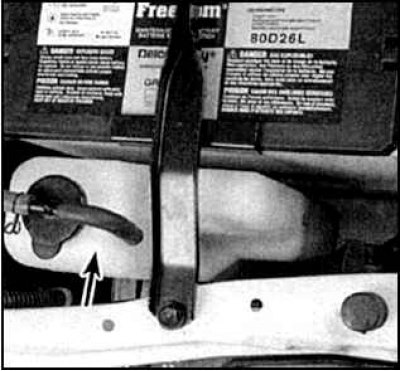
1. All vehicles covered in this manual are equipped with a pressurized cooling system. Expansion tank (indicated by the arrow) is located next to the radiator.
2. The fluid level in the expansion tank depends on the engine temperature. On a cold engine, the fluid level must be brought to a level slightly above the Low mark on the tank, on a warm engine – to the Full mark, for which unscrew the expansion tank cap. The recommended composition and brand of fluid are indicated in the vehicle operating instructions.
3. The need to frequently top up the fluid indicates a leak in the system and the need to eliminate its cause. Inspect the condition of the radiator and all hoses. If no signs of leakage are visually detected, then the entire cooling system should be pressure tested and the radiator cap should be checked. Pressure testing will help detect even minor, previously unnoticeable leaks. Once finished, tighten the cap of the expansion tank.
4. If severe rust contamination is detected, replace the fluid.
5. If necessary, unscrew the radiator cap, wrap it with a rag and turn it to the first stop, then wait a little, and remove the cap.
6. Avoid contact of antifreeze with painted surfaces.