



Checking the steering wheel play
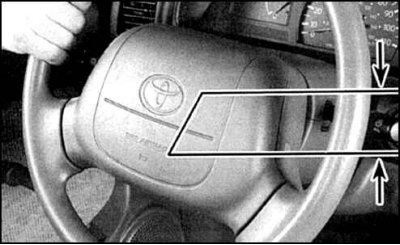
Steering play is determined by the distance between the points of increasing resistance in both directions.
1. Check the play on the steering wheel rim by setting the wheels to the straight-ahead position and turning the steering wheel in both directions until you feel resistance. Increased play indicates wear of the steering components (steering cardan joints, steering knuckle bearings (on 4WD vehicles), rod ends, steering gear).
2. Wear of suspension and steering components is indicated by strong body swaying when driving over bumps, tight steering wheel rotation, and strong vehicle tilt when turning.
3. Check the shock absorbers by shaking and releasing the car. No vibrations of the body after releasing are allowed.
4. Raise the front of the vehicle and support it on stands.
5. Check the condition of the tires.
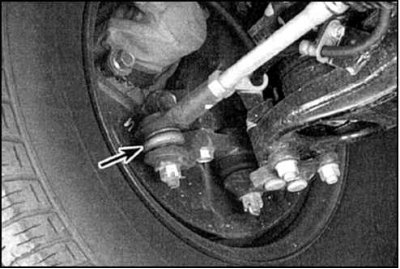 | 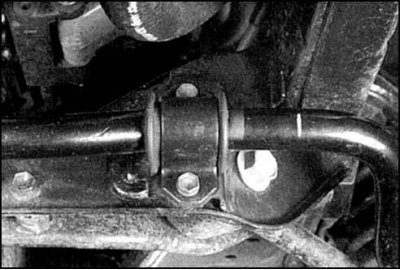 |
6. Check the condition of the steering shaft cardan joint. Inspect the rubber bushings and protective covers of the suspension ball joints, covers of the steering rack tips, steering gear sectors and axle shafts, check for cracks, wear and tear, and grease. Ask an assistant to turn the steering wheel and observe the operation of the steering gear, check for play in the joints, or interference with body parts.
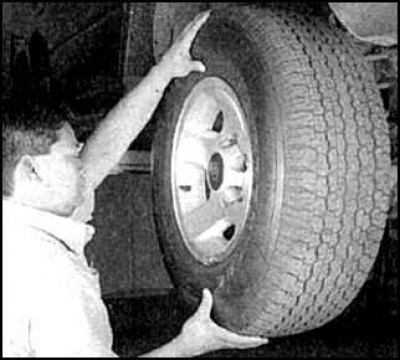
7. Rock the wheel in a vertical plane, holding the upper and lower edges. A barely noticeable movement of the wheel is allowed, noticeable play indicates a weakening of the tension in the hub bearings and the need for their lubrication and adjustment.
8. Check the condition of the steering knuckle by rocking it with a crowbar from bottom to top. Noticeable play is not allowed. Otherwise, disassemble and change the grease in the bearings.
9. Check the wear of the cardan joints in the forks and splines.
10. Check for leaks in the transmission and transfer case.