



16. To check the fluid level in the brake hydraulic reservoir, simply look at the MAX and MIN marks on the reservoir wall (Fig. 4.16). The level should be at the prescribed distance from the maximum filling volume line.
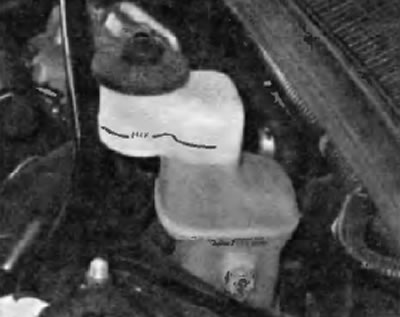
Row 4.16. The brake fluid level should be maintained between the Min and Max marks on the tank wall
17. If the level is low, wipe the top of the reservoir cap with a clean rag before removing it to prevent contamination of the brake system.
18. Add only the specified brake fluid to the brake fluid reservoir (refer to the Recommended Lubricants and Fluids section at the beginning of this chapter or to the owner's manual supplied with your vehicle). Mixing different grades of brake fluid may cause damage to the system. Fill the brake fluid reservoir only to the dotted line - this will ensure that the fluid level is correct when the cap is replaced.
Warning! Be careful when pouring brake fluid into the reservoir. Brake fluid can cause eye injury and damage paintwork. Do not use brake fluid from a container that has been opened for more than a year or has been left open for a long time. Brake fluid absorbs moisture from the air. Excess moisture can lead to a dangerous drop in braking efficiency.
19. With the tank cap removed, inspect the tank for contamination. If there are deposits, dirt particles or water droplets, the system should be emptied and refilled (see chapter 9).
20. Once the reservoir is filled to the correct level, replace the cap and tighten it securely to prevent loss of system pressure and/or fluid leakage.
21. The brake fluid level in the brake fluid reservoir will drop slightly as the brake pads wear during normal brake operation. If the brake fluid reservoir requires frequent topping up to maintain the correct level, this is an indication that there is a leak in the brake system that should be repaired immediately. Check all brake lines and their connections, as well as the wheel cylinders and the brake booster (for additional information on the brake system, refer to chapter 9).
22. If, when checking the fluid level in the reservoir, you find that it is empty or almost empty, you should carefully inspect the brake system for leaks (for additional information on the brake system, refer to chapter 9).