



Please read all removal and installation procedures carefully before you begin. The engines discussed here are removed by lowering them to the floor and then raising the vehicle enough to remove the engine from underneath the vehicle. This will require a vehicle lift.
It is very important to choose the right place to do this work. You need a suitable working area and space for the car. If you do not have the opportunity to work in a workshop or garage, you will need, at a minimum, a flat, horizontal, clean work area with asphalt or concrete pavement. Cleaning the engine compartment and the engine before removing the latter will help keep the tools clean and tidy (fig. 6.1 and 6.2).
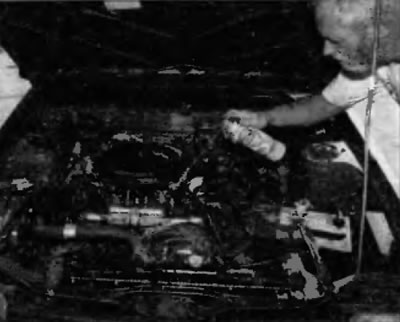
6.1 After thoroughly covering water-sensitive areas, apply aerosol cleaner to all areas of the engine compartment, applying a larger amount to heavily oiled areas, usually around the cylinder head cover and the lower edges of the cylinder block. If any area dries out, apply more cleaner
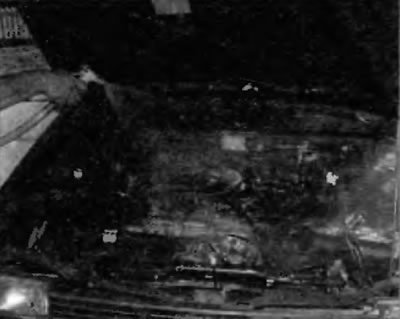
Fig. 6.2 Depending on how dirty the engine is, allow the cleaner to soak in according to the directions provided, then use a hose to rinse off the dirt and cleaner. Run the rinse water down into every area you can reach; then dry the important elements with a hair background or napkins
An engine hoist or A-frame will also be required. Make sure the equipment is rated to support the combined weight of the engine and transmission. Safety is a top priority, especially given the potential dangers of this type of procedure.
If you are removing an engine for the first time, it is highly advisable to have an assistant. There are many instances where one person cannot safely perform the steps required to remove a large and heavy engine from a vehicle. A second person should always be on hand to provide assistance in an emergency. Also, if you are removing an engine for the first time, advice and assistance from someone more experienced would be very helpful.
Plan all work in advance. Before you start, get (buy or rent) tools and equipment that you will need but do not have (fig. 6.3 and 6.4). The list of equipment required for safe and relatively easy removal and installation of the engine, in addition to the lifting device (with a set of slings and hooks) includes heavy-duty floor jack, full sets of wrenches and sockets (as described at the beginning of this Guide), wooden blocks, sufficient rags and cleaning solvent to remove traces of spilled oil, coolant and fuel. If any equipment, such as a lifting device, is to be rented, take care of this in advance and perform all the tasks that do not require it before renting it. This will save money and time.
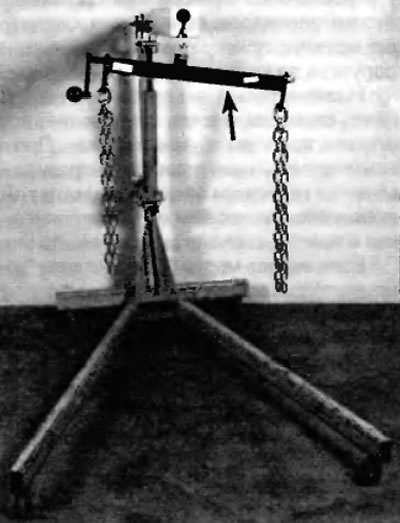
Fig. 6.3. Purchase/rent an engine lift with a lifting capacity that allows the engine to be easily removed from the engine compartment and returned to its place. An adapter like the one shown here can be used to change the angle of the engine when removing or installing it
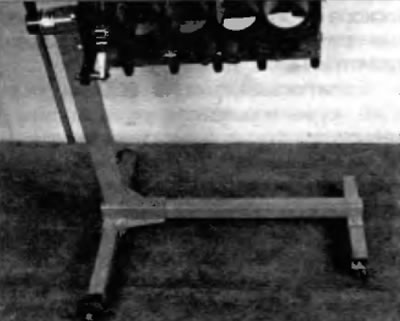
Fig. 6.4. Purchase/rent a stand that is stable enough to support the engine securely while working on it. In the case of CVTs with three support wheels, stay away from the stand, as it has a tendency to tip over. Therefore, it is recommended to use a stand with four support wheels
Expect to be away from your vehicle for a long period of time. Some major repairs may require a visit to a dealer or specialist service centre. Such services often have busy schedules, so it is recommended to consult with them before removing and disassembling the engine. This will allow you to accurately estimate the time required to complete the repair.