



Contents: Removal ↓ Installation ↓
Note: Removing the engine on these vehicles is a more difficult job, especially for the DIY mechanic. Due to the design of the vehicle, the manufacturer requires the engine and transmission to be removed as a complete unit (in block with driving axle) as a single unit from underneath the vehicle rather than being removed from above. The vehicle cannot be raised high enough or supported safely enough using a floor jack and reliable supports to remove the engine and transmission assembly from underneath the vehicle. The manufacturer recommends that engine and transmission assembly removal be performed only using a frame-type vehicle lift.
Note: Please note that when performing this procedure, you will need to adjust the height of the vehicle using a vehicle lift to perform some of the steps.
Removal
1. Place the vehicle over a vehicle lift, position the lift arms under the jacking point on the vehicle. Raise the lift arms until they contact the vehicle, but not so much that the vehicle's wheels come off the floor.
2. Relieve the pressure in the fuel system (see chapter 4).
3. On 2004 and later V6 Highlander and all Lexus models, remove the upper hood panel/air intake deflector (see chapter 11).
4. On 2004 and later Highlander V6 models and all Lexus models, remove the windshield wiper arms and windshield wiper motor (see chapter 12).
5. On 2004 and later Highlander models with VB engine and all Lexus models, remove the lower hood panel (see chapter 11).
6. Remove the battery and battery tray (see chapter 5).
7. Remove the air filter housing and air intake duct (see chapter 4).
8. Disconnect the accelerator cable from the throttle body (see chapter 4) (if available).
9. Disconnected the cruise control cable from the throttle body (if available).
10. Disconnect the gear shift cable from the transaxle (see chapter 7).
11. Remove the generator (see chapter 5).
12. Remove the air conditioning compressor without disconnecting the refrigerant lines from it (see chapter 3). Tie the compressor to the side (but not to the subframe).
13. Disconnect the intermediate shaft from the steering gear (see chapter 10).
14. Disconnect the fuel supply hose from the fuel rail (see chapter 4). Plug the main line and the fitting.
The information was taken from a web portal [TOYOTAMAN.ru]
15. Clearly label and decal all components to be removed, disconnect all vacuum lines and emission control hoses, disconnect electrical connectors, and disconnect the ground busbars connecting the engine and transmission to the chassis. Masking tape and/or paint work well for marking components (Figure 7.15). If necessary, take photographs or pencil sketches of component and bracket locations.
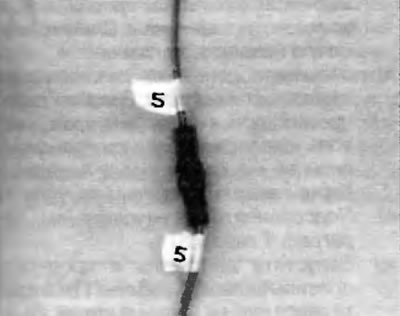
Ryas. 7.15. Mark both ends of each wire or hose before disconnecting it
16. Using a syringe, suck out as much fluid as possible from the power steering reservoir. Disconnect the power steering hose from the return line.
17. Remove the engine mount thrust rod (see chapter 2A or 2B). Also remove the corresponding support bracket from the cylinder head.
18. Disconnect the wiring from the main fuse/relay box in the engine compartment (see chapter 5. fig. 4.4, b). Disconnect all other electrical connectors installed in the wiring harness leading to the PCM.
19. Loosen the front wheel nuts and axle/hub nuts (see chapter 8).
20. Raise the car on a lift and remove the front wheels.
21. Remove the lower engine protection sections (see chapter 2A or 2B). Also remove the mudguards and wing apron seals (see chapter 11).
22. Disconnect the stabilizer struts from the anti-roll bar and the steering rod ends from the steering knuckles (see chapter 10).
23. Remove the axle shafts (see chapter 8).
24. On all-wheel drive models, remove the propeller shaft (see chapter 8).
25. On all-wheel drive models, drain the oil from the transfer case (see chapter 1).
26. Drain the engine coolant (see chapter 1).
27. Drain the engine oil (see chapter 1).
28. On models with four-cylinder engines, disconnect the lines from the separately mounted oil cooler (see chapter 3).
29. Drain the oil from the gearbox in the block with the drive axle (see chapter 1).
30. Remove the bolts securing the faceplate to the torque converter (fig. 7.30, a, b). Also disconnect the hoses from the transmission fluid heat exchanger (see chapter 7).
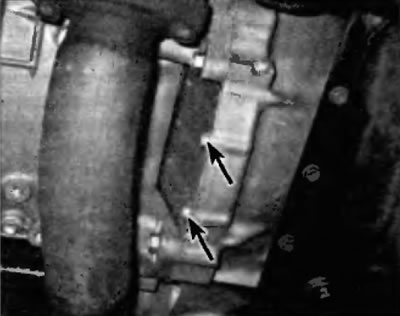
Fig. 7.30,a. Unscrew the bolts securing the process cover on the front section of the gearbox housing in the block with the drive axle...
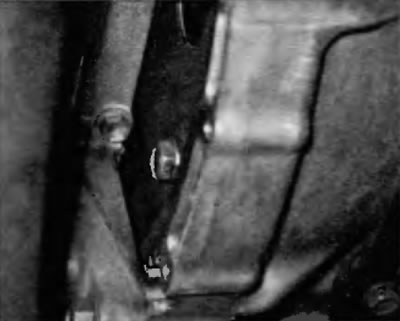
Fig. 7.30.6. ...then unscrew the torque converter mounting bolts
31. Disconnect the hydraulic lines from the power steering pump. Disconnect the pressure and return lines from the power steering.
32. Unscrew the corresponding bolts and disconnect the exhaust pipe from the exhaust manifold assembly with the catalytic converter (if necessary on two cylinder banks (see chapter 2A or 2B), and then remove the front section of the exhaust system (see chapter 4).
33. Lower the vehicle and disconnect the radiator hoses and heater hoses from the engine. Remove the radiator (see chapter 3).
34. Support the engine and transmission assembly from above with a lifting device. Attach the lifting device chain to the lifting brackets. If lifting brackets or hooks are not provided, lifting hooks can be purchased from an auto parts store or dealer parts department. Alternatively, you can attach the chains to some part of the engine that is strong enough to support the weight of the engine and is located to provide good balance. If you attach the chain to a stud on the engine or use a bolt that goes through the chain and into a threaded hole, place a washer between the nut/bolt head and the chain and tighten the nut or bolt securely.
Caution: Do not work under the engine/transaxle assembly when the unit is supported only by a lifting device.
35. Remove slack from the lifting device chains/slings, but only enough to create a slight tension. Position the chain/slings on the lifting device so that the engine and transmission assembly are in a horizontal, balanced position.
Note: Depending on the design of the engine hoist, it may be helpful to position the hoist to the side of the vehicle so that when the engine/transmission assembly is lowered, the unit is between the hoist legs.
Note: The straps or chain must be long enough to allow the engine and transmission assembly to be lowered using the lifting device without the lifting arm touching the vehicle.
36. Support the subframe with a pair of floor jacks. Check again that there are no hoses or electrical wiring between the subframe and the car. Remove the bolts and remove the powertrain mounts from the subframe (see chapter 2A or 2B). Unscrew the subframe mounting bolts (see chapter 10) and lower it to the floor, then remove it from under the car.
Caution: Depending on the design of your engine hoist, this may be difficult, but be sure to securely support the subframe before removing the subframe mounting bolts.
37. Check again that there are no elements connecting the engine or gearbox to the car. If necessary, disconnect anything that prevents the engine from being removed, marking the connections with suitable tags.
38. Lower the engine and gearbox assembly (Fig. 7.38). Once the engine and gearbox assembly is lowered to the floor, disconnect the chains/slings from the lifting device and lift the vehicle enough to remove the power unit from under the vehicle.
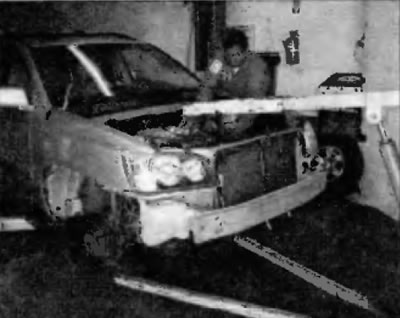
Fig. 7.38. After removing the subframe, lower the engine assembly with the gearbox to the floor
39. Reconnect the chain or straps to support the engine and gearbox assembly.
40. Raise the engine and transmission assembly, then place blocks of wood or another floor jack under the engine, leaving the slings or chain attached to the engine. Support the transaxle with another floor jack, preferably one with a special transaxle jack head adapter. At this point, you can remove the appropriate bolts and remove the transfer case (4WD models - see chapter 7). Be very careful to ensure that the elements are supported securely so that they do not tip over when disconnected.
41. Unscrew the bolts securing the gearbox in the block with the drive axle to the engine and separate the gearbox from the engine.
42. Connect the lifting chain to the engine, then lift the engine and secure it to a suitable stand.
Installation
43. Installation is carried out in the reverse order of removal, taking into account the following points:
- a) Check the engine/gearbox mounts in the block with the driving axle. If they are worn or damaged, replace them.
- b) Connect the transaxle to the engine following the procedure described in chapter 7.
- c) When installing the subframe, tighten the subframe mounting bolts to the prescribed torque specified in Specifications at the beginning of this chapter.
- d) Tighten the axle/hub nuts to the specified torque as shown in Specifications at the beginning of this chapter. Tighten all steering and suspension fasteners to the specified torque as shown in Specifications at the beginning of this chapter. Tighten the wheel nuts to the specified torque shown in Specifications at the beginning of this chapter
- d) Fill the engine with coolant and oil. Pour the working fluid into the power steering reservoir. Pour the transmission oil into the gearbox in the block with the driving axle (see chapter 1).
- e) Connect the battery (see paragraph 1 of chapter 5).
- g) Start the engine and check that it is working properly. Check the engine for leaks. Turn off the engine and check the fluid levels again.