



26. Remove the cover from connecting rod No.1 (refer to the marks made during removal).
27. Remove the "old" bearing shells and wipe the working surfaces under the bearings in the connecting rods and caps with a clean, lint-free cloth. They must be spotlessly clean.
Checking radial clearances in connecting rod bearings
28. Clean the backs of the new upper bearing shells and install them into the connecting rods. Make sure the tab on the shell fits into the recess in the connecting rod. Do not use a hammer when installing the shell and be very careful not to damage the bearing surface in any way. Do not lubricate the bearing at this stage.
29. Clean the back of the other bearing shell and install it in the connecting rod cap. Again, make sure that the lug on the shell fits into the recess in the cap. Do not apply grease. It is very important that the mating surfaces of the bearing and connecting rod are absolutely clean and free of grease when reassembling.
30. Position the piston ring locks around the piston circumference as shown (fig. 10.30, a, b).
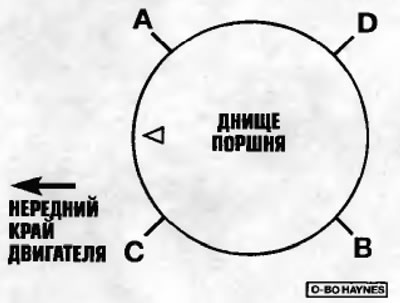
Fig. 10.30, a. On four-cylinder engines, before installing the piston assembly with the connecting rod, position the piston ring locks as shown here
A - Upper compression ring lock and oil scraper ring spacer/expander lock
B — Second compression ring lock
C — Lock of the upper element of the oil scraper ring
D — Lock of the lower element of the oil scraper ring
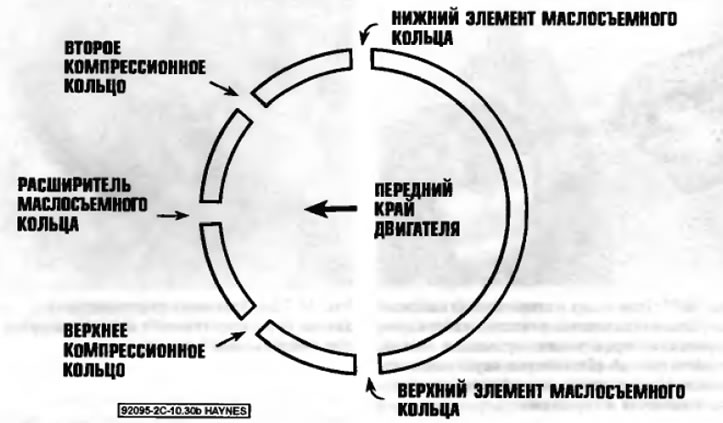
Fig. 10.30, b. On VG engines, before installing the piston assembly with the connecting rod, position the piston ring locks as shown here
31. Lubricate the piston and rings with clean engine oil and fit a piston ring compressor to the piston. Leave approximately 6 mm of free skirt to guide the piston into the cylinder. The rings should be compressed until they are flush with the piston.
32. Turn the crankshaft so that the crank pin No.1 is located in the BDC position (bottom dead center), and apply a generous amount of engine oil to the cylinder walls.
33. Position the piston so that the marking on its bottom (one or two dots, see note in paragraph 18) was directed towards the front edge of the engine (to the timing belt/chain), carefully insert the piston assembly with the connecting rod into cylinder No.1 and rest the lower end of the piston ring compressor against the cylinder block.
Note: There is also a mark on the connecting rod that must be facing the correct direction. On all models, the marking on the connecting rods must face the front edge of the engine (to the timing belt/chain).
34. Tap the top edge of the piston ring compressor to bring it into contact with the cylinder block around its entire perimeter.
35. Lightly tap the piston bottom with the end of a wooden or plastic hammer handle (fig. 10.35) insert the piston into the cylinder, guiding the end of the connecting rod onto the crankshaft journal. Just before entering the cylinder, the piston rings may try to jump out of the tool, so continue to hold the tool while inserting the piston. Work slowly, and if you feel any resistance as the piston enters the cylinder, stop immediately. Find out the cause of the seizure and eliminate it before continuing. Never force the piston into the cylinder. You can break a ring and/or damage the piston.
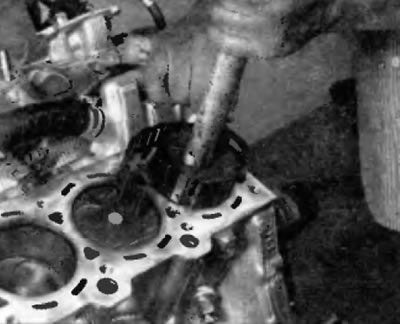
Fig. 10.35. Using a plastic or wooden hammer handle to install a piston into a cylinder
36. After installing the piston assembly with the connecting rod, before final installation of the connecting rod cap, check the radial clearance in the connecting rod bearing.
37. Cut a piece of thread from the Plastigage kit (set for measuring clearances in plain bearings) of a suitable size, slightly shorter in length than the width of the connecting rod bearing, and place the thread on the connecting rod journal of crankshaft No.1, parallel to the axis of the journal (fig. 10.37).
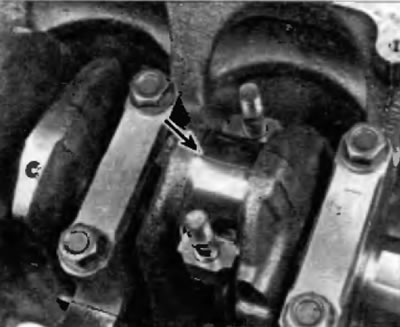
Fig. 10.37. Lay out the Plastigage drinking (from a set for measuring clearances in plain bearings) pi each crank pin parallel to the crankshaft centerline
38. Clean the working surface of the connecting rod bearing cap and install the cap. Make sure that the alignment mark on the cap is on the same side as the mark on the connecting rod.
39. Install the connecting rod bolts and tighten them in two stages to the specified torque specified in Specifications at the beginning of this chapter.
Note: To avoid erroneous torque readings that may result if the socket head is jammed between the connecting rod cap and the bolt, use a thin-walled socket head. If the socket head tends to jam directly between the bolt and the cap, lift it slightly until contact with the cap is eliminated. Do not rotate the crankshaft while performing this operation.
40. Remove the nuts and the connecting rod cap, working very carefully so as not to dislodge the Plastigage thread.
41. To determine the radial clearance value, compare the width of the Plastigage dispensing thread with the scale printed on the edge of the plain bearing clearance measuring kit packaging (fig. 10.41). Radial clearance is typically in the range of 0.025-0.050 mm. Consult your dealer for the exact connecting rod bearing clearance for your specific engine.
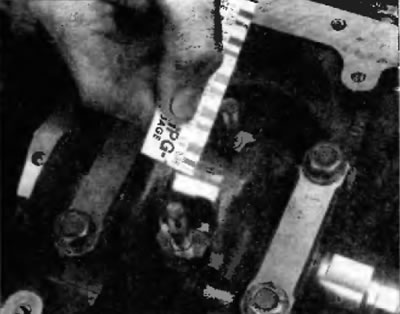
Fig. 10.41. Estimate the radial clearance in the bearing using the scale on the plain bearing clearance measuring kit packaging. Measure across the widest part of the Plastigage casting and use the correct scale (british and metric scales are available)
42. If the clearance is not within the norm, this may be caused by the incorrect size of the bearing shells (then other inserts will be required). Before deciding whether to use different bearings, make sure there is no dirt or oil between the bearings and the connecting rod or cap when measuring clearance. Recheck the journal diameter. If one end of the Plestigage is wider than the other, the journal may be tapered. If clearance still exceeds the specified limit, replace the bearings with undersized bearings.
Caution: When installing a new crankshaft, be sure to use standard size bearings.
Final installation
43. Carefully remove all traces of Plastigage from the crankpin and/or bearing surface. Be very careful not to scratch the bearing, use your fingernail or the edge of a plastic card.
44. Make sure the bearing surfaces are absolutely clean, then apply an even coat of clean molybdenum-based grease or motor oil to both bearings. You will need to push the piston into the cylinder to expose the bearing surface in the connecting rod.
45. Slide the connecting rod back onto the journal, install the connecting rod cap and tighten the bolts in two stages to the specified torque shown in Specifications at the beginning of this chapter.
46. Repeat the entire procedure for the remaining pistons assembled with connecting rods.
47. Remember the following:
- a) When assembling, support the back sides of the bearings and the inner sides of the connecting rods and caps at absolute frequency;
- 6) carefully monitor the alignment of the pistons with the connecting rods and cylinders:
- e) the marking on the piston must face the front edge of the engine (to the timing belt/chain);
- d) generously lubricate the cylinder walls with clean oil;
- d) after checking the radial clearance when installing the connecting rod caps, lubricate the working surfaces of the bearings.
48. After the pistons and connecting rods have been correctly installed, turn the crankshaft by hand several times to check for obvious binding.
49. Finally, check the axial clearance in the connecting rods again. If it was correct before disassembly and the original crankshaft and "old" connecting rods were returned to their place, it should be correct. If new connecting rods or a new crankshaft were installed, the axial clearance may be incorrect. In this case, you should remove the connecting rods and contact a service station to have them reworked.