



Note: To perform this test, the engine must be at normal operating temperature and the battery must be fully charged.
2. Start the spark plug removal parade by cleaning the area where they are located (use compressed air if possible). This is necessary to prevent dirt from entering the cylinders when performing compression welding.
3. Disconnect the electrical connector and remove the ignition coils (see chapter 5). Then remove all spark plugs from the engine (see chapter 1).
4. Hold the throttle valve in the wide open position.
5. Disconnect the fuel pump by relieving the fuel pressure (see chapter 4).
The original source is located on the website: ToyotaMan.ru
6. Install the compression tester into the spark plug hole. Use a compression tester with a threaded connector that screws into the spark plug hole. Do not use a compression tester that requires manual pressure to ensure a tight seal. When performing the test, open the throttle valve fully (Fig. 3.6).
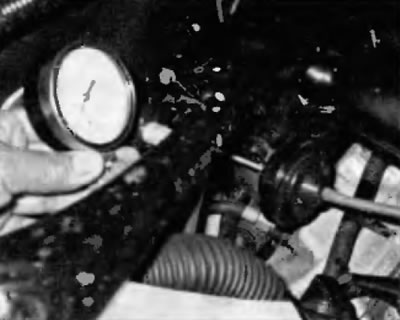
Fig. 3.6. Use a compression tester with a threaded connector that screws into the spark plug hole
7. Crank the engine through at least seven compression strokes and read the compression gauge. On a healthy engine, compression should build up quickly. Low compression on the first stroke and a subsequent gradual increase in pressure on the remaining strokes is a sign of worn piston rings. A low reading on the first stroke that does not increase on the remaining strokes indicates leaky valves or a burnt-out cylinder head gasket (the cause could also be cracks in the head). Low compression can also be caused by deposits on the backs of the valve heads. Record the highest reading you get on the compression gauge.
8. Repeat the procedure for the remaining cylinders and compare the results with the values given in Specifications at the beginning of this chapter.
9. Add some motor oil (about a full teaspoon) in each cylinder (through the spark plug holes) and repeat the compression test.
10. If adding oil temporarily increases compression, this indicates a loss of pressure due to worn piston rings. If there is no significant improvement, the cause may be leaky valves or a burnt-out cylinder head gasket. Valve leaks may be caused by burnt-out valve seats and/or valve faces, or warped, cracked or deformed valves.
11. Equally low compression in two adjacent cylinders is almost certainly a consequence of a burnt or broken cylinder head gasket between them. This can be confirmed by the presence of coolant in the combustion chamber or engine crankcase.
12. If the pressure in one cylinder is slightly lower than in the others and the engine runs slightly rough at idle, the cause may be wear of the camshaft cam.
13. If the compression is abnormally high, there may be carbon deposits in the combustion chambers. In this case, remove the cylinder head and remove the carbon deposits.
14. If the compression has dropped to the specified minimum value or varies significantly between cylinders, it is recommended to perform a leak test, which should be done at a service station. This welding will show exactly where the leak is located and how serious it is.