



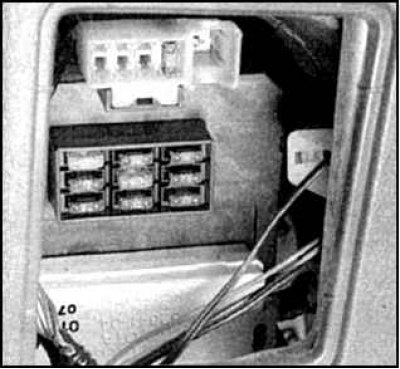
Fuse box in the passenger compartment
Engine compartment fuse box
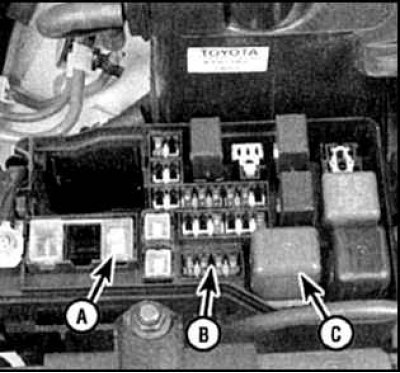
A. Fusible links
B. Fuses
S. Rele
Fuses
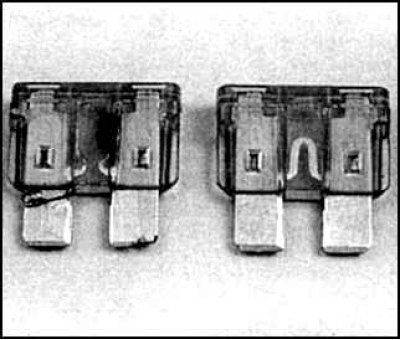
On the left is the burnt out one
On the right is the working one
The vehicle's electrical circuits are protected by fuses, circuit breakers or fusible links.
The fuse box is mounted inside the passenger compartment under the front bulkhead on the left side (see Fig. Fuse box in the passenger compartment). In the engine compartment, the fuse box is mounted in the left corner (see Fig. Engine Compartment Fuse Box).
To access the fuse, remove the cover of the mounting block. The cover indicates the circuit that this fuse protects.
If the circuit fails, first check the fuse. Fuses are installed on blade-type contacts and are removed by hand.
A blown fuse can be easily detected by its appearance (see fig. Fuses).
You can also check the voltage at the terminals. The fuse is blown if the voltmeter shows voltage. To replace the fuse, remove the faulty one and insert a new one by pushing it into the socket.
The nominal current of the new fuse must exactly match the current of the one being replaced. The nominal current is indicated on the fuse. It is prohibited to use wire sections instead of a fuse.
If the new fuse blows immediately, find the cause and fix it. As a rule, the blowing is caused by a short circuit of the wires due to their chafing.