



Warning! Clutch operation produces dust containing asbestos, which is harmful to health. Do not use compressed air or inhale the dust when cleaning the clutch. Clean the clutch components from dust using brake cleaner or methyl alcohol, then wipe dry.
Removal the clutch driven disc produce as follows:
Remove the clutch slave cylinder and secure it to the body using soft wire without disconnecting the tube from it.
Remove the gearbox. The clutch release fork and bearing may remain installed on the transmission.
To support the clutch disc during removal, install a special mandrel or the old input shaft of the gearbox into the disc hub.
Mark the position of the clutch assembly in relation to the flywheel with a marker or paint.
The official source is on the portal ToyotaMAN.ru
Using a special tool or a screwdriver, lock the flywheel ring gear teeth to prevent it from turning.
Gradually loosen the clutch assembly mounting bolts diagonally, turning each bolt half a turn until the spring force is released and the bolts can be removed by hand.
Remove the pressure plate.
Remove the driven clutch disc together with the special mandrel.
Checking the condition of the clutch driven disc produce as follows:
Check the condition of the flywheel friction surface for cracks, burns and surface wear.
Check the flywheel runout by:
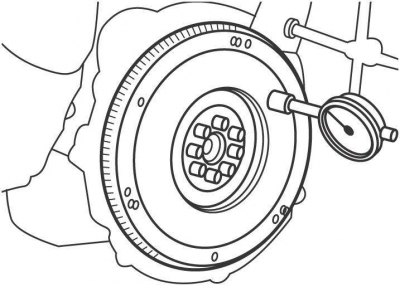
Figure 8.3. Measuring flywheel runout
- install a bracket with a dial indicator on the engine cylinder block so that the measuring tip of the indicator rests against the end of the flywheel (figure 8.3);
- set the indicator to 0;
- turn the engine crankshaft and record the maximum and minimum values on the indicator;
- the difference between these values is the flywheel runout, which should be no more than 0.1 mm.
Check the condition of the friction linings of the driven clutch disc and if there are traces of oil or mechanical damage, replace the driven disc.
Check the thickness of the clutch disc linings; they should protrude above the rivet heads by at least 0.8 mm. If their thickness is less than the permitted value or if the rivet heads are close to the working surface, replace them or the clutch disc.
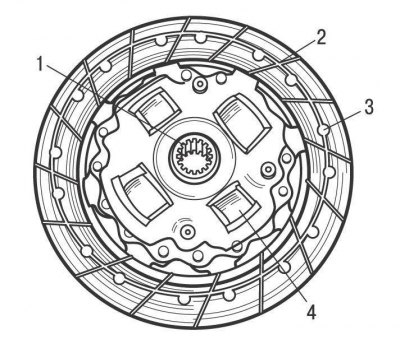
Figure 8.4. Clutch driven disc inspection locations: 1 – splines in the hub; 2 – thickness of the linings; 3 – rivets; 4 – springs
Check that the springs are not broken or cracked. Check the condition of the splines in the clutch disc hub for wear (figure 8.4).
The driven clutch disc should slide easily and smoothly on the splines of the input shaft of the gearbox. If the clutch driven disc is replaced, the clutch release bearing must also be replaced.
Check the condition of the release bearing. A faulty clutch release bearing can be identified without removing it from the vehicle by pressing the clutch pedal while the engine is running. If noise occurs when you press the clutch pedal, the clutch release bearing is faulty and needs to be replaced.
Check the condition of the clutch pressure plate.
Check the reliability of the spring connection between the pressure plate and the clutch housing. Scratches, missing or damaged rivets are not allowed.
Check the pressure plate for cracks, burns and surface wear.
Installing the clutch driven disc produce as follows:
Note: When installing new clutch driven or pressure plates, remove the anti-corrosion protection from them.
Caution! When installing the driven disc, ensure that no oil, even in small quantities, gets on its friction linings. Therefore, before installation, wipe the flywheel mating surface and the pressure plate surface with a clean rag. Install the driven disk with clean hands.
Lubricate the splines in the driven disk hub with a thin layer of special grease based on molybdenum disulfide.
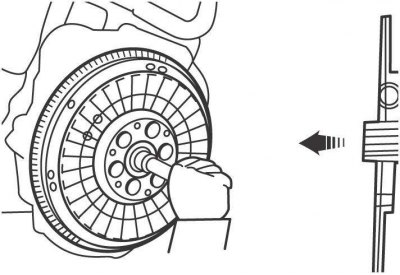
Figure 8.5. Clutch driven disc installation position (the arrow points towards the flywheel)
Install the driven disc with the centering mandrel on the flywheel so that the protruding part of the disc hub with the springs is directed outward, towards the gearbox (figure 8.5).
Install the clutch assembly, aligning the holes in the clutch housing with the flywheel guide pins. When reinstalling a previously removed clutch pressure plate, check that the marks made before removal are aligned.
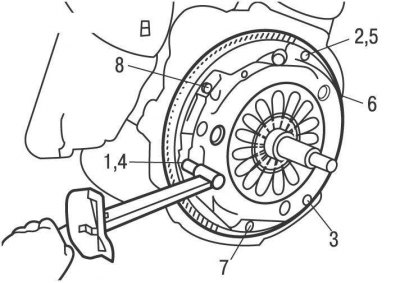
Figure 8.6. Clutch housing mounting bolt tightening sequence
Gradually tighten the clutch housing mounting bolts to a torque of 19 N·m in the sequence shown in Figure 8.6.
Remove the mandrel from the driven disk.
Lubricate the splined portion of the gearbox input shaft and the clutch release bearing guide sleeve with a thin layer of special molybdenum disulfide-based grease.
Install the clutch release bearing.
Install the gearbox.
Install the clutch slave cylinder.