



Contents: Heater/air conditioner/automatic…↓ Governing bodies ↓ Operation of ventilation, heating…↓ Heating ↓
Heater/air conditioner/automatic climate control
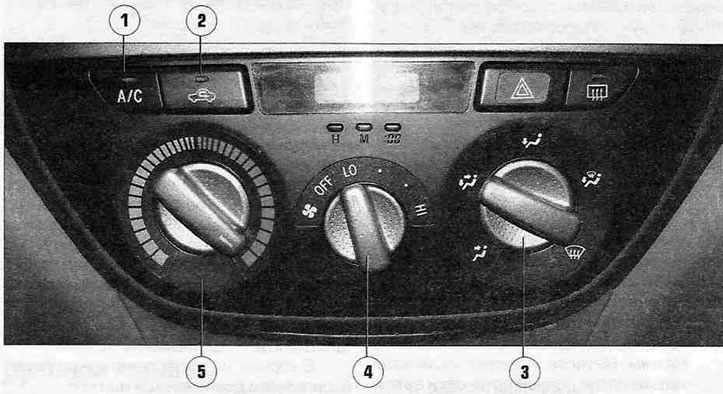
Figure 39. Heating/ventilation/air conditioning control panel
1 - Air conditioning switch (not on all models);
2 - Recirculation mode activation button;
3 - Air flow distribution regulator;
4 - Fan speed controller;
5 - Temperature regulator.
Ventilation, heating and air conditioning systems (with appropriate configuration) they form a single functional unit, which is designed to maintain a comfortable temperature inside the car, regardless of the outside temperature and weather conditions. Depending on the configuration, the set temperature can be adjusted either manually or automatically ("climate control"). Air is typically drawn into the cabin from outside. If necessary, the outside air intake can be turned off—a "recirculation" mode. Air is exhausted through special openings in the rear wall of the luggage compartment. To maintain a comfortable microclimate in the cabin, do not block the air intake with luggage.
Governing bodies
Air flow direction regulator
The air flow distribution is clear from the pictograms.

Recirculation mode
To activate recirculation mode, press button (2). When the mode is activated, the indicator on the button lights up.
In this mode, you can isolate the interior from the penetration of foreign odors from the outside, dust, and plant pollen that causes allergic reactions, or speed up the achievement of the required air temperature in the interior.
It should be noted that in recirculation mode the flow of fresh air into the car interior stops. The fan provides air circulation only inside the cabin. Pressing the button again will resume the supply of outside air to the cabin (the indicator should go out).
Note: Long-term use of the recirculation mode will cause the windows to fog up and the air to become stagnant, so it is recommended to use this mode for short periods of time.
Air conditioning mode
To turn on the air conditioner, press the "A/C" button - it will be illuminated. The air conditioner is turned off by pressing this button again.
Operation of ventilation, heating and air conditioning systems
Below are detailed instructions for operating heating, ventilation and air conditioning systems in various climates. Information is provided on how to ensure effective ventilation, heating and cooling of the air in the car's interior, as well as how to quickly remove condensation and frost from the windows.
Note:
- The basis for air conditioner maintenance is to turn it on regularly for a few minutes at least once a month (including in winter); at the same time, the necessary lubrication of all parts and seals of the air conditioner occurs.
- The air conditioner and heater only work when the engine is running.
- The rear window is heated by very thin metal threads glued to the inside of the window. To avoid damaging these threads, use only a soft cloth to wipe the inside of the glass, carefully running it along the threads.
- To warm up the passenger compartment, the heater uses the heat from the engine coolant, so maximum heating is achieved only when the engine has warmed up to operating temperature.
- The operation of the air conditioner does not depend on the temperature of the engine coolant.
Cooling the air in the cabin The cooling mode can only be selected when the engine is running. At low outside temperatures, the cooling mode is automatically switched off.
Cooling of the air in the cabin is carried out as follows:
- Turn on the air conditioner by pressing the "A/C" button - the button should light up.
- Make sure the air temperature control is turned to the far left position.
- If the outside air humidity is high, turn on the recirculation mode; if the humidity is low, turn it off.
- Set the fan speed to a comfortable level.
If your car has been parked in the sun for a long time and the air inside has become very hot, you can quickly reduce the temperature in the cabin as follows:
- Start the engine.
- Turn on the air conditioner (A/C button).
- Make sure the air temperature control is turned to the far left position.
- Set the fan speed to maximum.
- Open the windows slightly and turn on the air supply to the front level - hot air will leave the cabin faster.
- Turn on the recirculation mode, after a while close the windows.
Note: Operating the air conditioning system increases the load on the engine, so when driving in traffic jams or on long hills, keep an eye on the coolant temperature gauge. When the pointer approaches the red sector of the scale, turn off the air conditioner until the engine temperature returns to normal.
Heating
When warming up the air in the cabin in winter, keep in mind that increasing the fan speed does not improve the heater's performance; it is much more effective to choose a low fan speed for a while (so as not to suffocate) turn on air recirculation mode. To prevent the windows from fogging up, you can open them a little; it is more reasonable to direct the supply of warm air towards the feet.
When the air conditioner is running, the humidity in the car's interior decreases, which allows the air in the car's interior to be both warm and dry by turning on the heating and air conditioning systems simultaneously: by turning the temperature control knob, set the desired degree of heating of the air entering the interior. In this mode, cold air from the air conditioner is mixed with warm air from the heater.
The combined activation of the heating and air conditioning systems can be used in any driving conditions when the ambient air temperature is above 0°C.
Removal condensation and frost from glass
- Turn on the fan.
- Turn on (if provided by the package) air conditioner.
- Turn off recirculation mode.
- Turn on maximum windshield defroster.
- Turn on the rear window defroster.
- To speed up the defogging process, it is sometimes useful to open the windows a little so that the moist air leaves the car faster.