



Relieve pressure in the fuel system.
The metal fuel lines are routed underneath the vehicle and secured with clamps and self-tapping screws. Inspect them periodically for leaks and damage.
If there is dirt in the fuel filter and fuel lines when replacing it, be sure to disconnect the lines and blow them out with compressed air. Also check the condition of the mesh filter on the fuel pump block.
Never use copper or aluminum tubes to replace steel tubes installed on a vehicle, as they may not be able to withstand the vibrations experienced during vehicle operation.
Since fuel lines are under high pressure, they require special maintenance.
Some fuel lines have threaded connections with O-rings that must be removed before servicing or replacing components. These connections use cone nuts, which, when tightened, additionally compress the connection. Check the sealing rings for cracks or damage and replace if necessary. If steel tubes are being replaced, install only original tubes.
Flexible fuel hoses must be located at least 100 mm from the exhaust system components and 250 mm from the catalytic converter.
Some models are equipped with nylon fuel hoses with quick-release connectors. In this case, if it is necessary to replace one hose, replace the hoses together with quick-release connectors.
Replace fuel lines/hoses as follows.
Relieve pressure in the fuel system.
Release all clamps securing the tube/hose to the vehicle body.
On normal steel fuel line and hose connections, loosen the clamp, then pull the line out of the hose. Rotating the tube and hose in different directions makes the disconnection process easier.
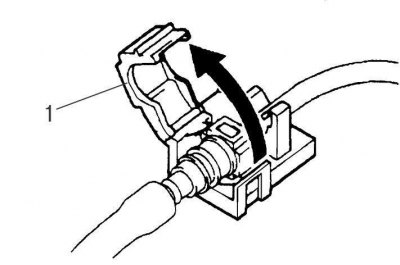
Figure 5.3. Opening the clamp (1) of the quick-release connector
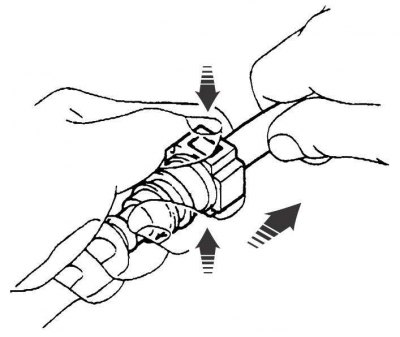
Figure 5.4. Pressing the latches and removing the tube from the quick-release connector
If the hoses are connected using a quick-release connector, open and remove the clamp, then press the clamps on both sides with one hand and pull the tube out of the connector with the other hand (figure 5.3, 5.4).
When connecting tubes and hoses, be sure to install new sealing rings (if provided for by the design).
On quick-release connectors, align the tube with the connector and insert the tube into the connector until it snaps into place.
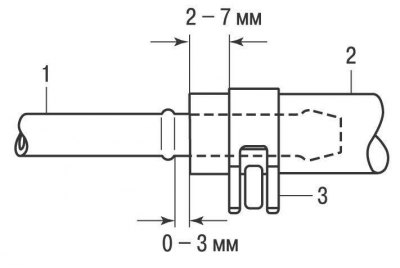
Figure 5.5. Typical hose connection to steel tube: 1 – steel tube; 2 – hose; 3 – clamp
When connecting a hose to a steel tube in a normal manner, slide the hose onto the tube and secure the connection with a clamp (figure 5.5).
(The original publication can be found on the website: «ToyotaMAN.ru»)