



Before flaring the ends of the tubes, connecting nuts are put on them, which, after tightening on the fittings, press and seal the tube.
Brake hoses provide connections between the moving and fixed parts of the vehicle.
Replacing the front brake hose
Loosen the wheel nuts and raise the car on a lift. Remove the wheel.
To reduce brake fluid loss, remove the cap from the brake fluid reservoir, cover the reservoir neck with plastic and screw the cap back on. This is necessary to ensure that the lid seals the tank tightly.
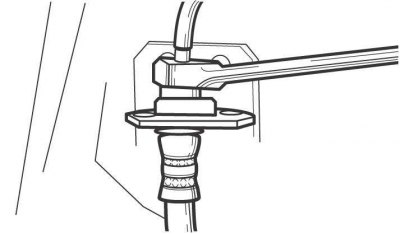
Figure 11.38. Unscrewing the connecting nut securing the brake pipe to the brake hose
On the bracket, unscrew the connecting nut securing the brake pipe to the brake hose (figure 11.38). Use a socket wrench to loosen the nut and use a second wrench to hold the brake hose from turning.
Using pliers, remove the U-shaped clamp securing the brake hose to the bracket.
On the caliper, unscrew the hollow bolt securing the brake hose.
Remove the bolt securing the brake hose bracket to the front suspension strut and remove the hose from the vehicle.
Installation is carried out in the reverse order of removal, taking into account the following.
Make sure the brake hose is not kinked or touching any moving parts of the suspension. When attaching the brake hose to the caliper, use new seals.
Bleed the hydraulic brake system.