



Contents: SRS system (airbags) ↓ Airbag module ↓ SRS control module ↓ System shutdown ↓ Precautionary measures ↓ Removal and installation of system…↓
SRS system (airbags)
All models under consideration are equipped with the SRS system (Supplemental Restraint System), better known as airbags. This system is designed to protect the driver and front seat passenger from serious injury in a frontal collision. The system consists of frontal impact sensors mounted on the side members at the front of the underbody and a control module mounted in the central part of the vehicle near the centre console.
Note: 1996 and 1997 models do not have front impact sensors; the system is controlled only by a module located near the center console.
Airbag module
Driver's side module
The module, located in the middle part of the steering wheel, consists of a housing with a cushion and a cushion filling unit. Filling block (squib with fuse) located at the rear of the housing above the hole through which gas is released, instantly inflating the cushion when a signal is received from the control module. This signal is transmitted to the airbag module by a special spiral contact, which is located on the steering column under the steering wheel and looks like a clock spring.
The spiral contact transmits an electrical signal to the module's pyropatrometer at any position of the steering wheel. The pyropatron's point fuse converts the electrical signal into high-energy heat and ignites the explosive charge. The gas generated by the explosion fills the airbag.
Passenger side module
The module is located on the right side of the dashboard, above the glove compartment, and is marked with the letters "SRS." It contains the squib cartridge with the igniter, the airbag assembly, the reactive housing, and the decorative trim. The passenger airbag has a significantly larger volume than the driver's airbag; it is located in a steel reactive housing. The overlay is made in the color and material of the front panel lining, and it has a seam that opens when the cushion is inflated.
SRS control module
1. The control module supplies power to the SRS system during a collision, even if the battery is disconnected for any reason. The module checks the SRS system every time the engine is started, which is indicated by the illumination of the AIRBAG light. If the SRS system is functioning properly, the AIRBAG light turns off. If a fault is detected in the system, the AIRBAG light on the instrument panel does not go out; it starts flashing or an intermittent sound signal is heard from the instrument panel. In this case, immediately contact your dealership for assistance.
System shutdown
Caution! Failure to follow safety precautions may result in unexpected, unauthorized activation of the system and personal injury.
2. If you plan to work near airbags installed on your vehicle (steering wheel, steering column and any other components of the SRS system), disable the SRS system. To do this:
- Set the front wheels in the straight-ahead position and turn the ignition key to the LOCK position.
- Disconnect the ground wire from the negative battery terminal, then disconnect the wire from the positive battery terminal.
- Wait at least two minutes for the capacitors of the backup power supply system to discharge (during these two minutes, the SRS system remains energized and may suddenly activate).
Precautionary measures
- When working with airbags, always hold the module with the airbag (decorative overlay) away from you. Never place the pillow face down on a workbench or other surface. Store the module with the cushion facing up, in a place inaccessible to unauthorized persons.
- Never perform any resistance measurements on SRS system components. The ohmmeter contains a built-in power source that could trigger unexpected airbag deployment.
- Never weld on a vehicle equipped with an SRS system without first disconnecting the yellow SRS connectors located under the steering column near the combination switch connector (driver's airbag) and behind the glove compartment (passenger airbag).
- Do not keep the removed airbag on your premises; instead, take it to a dealership or other professional workshop for storage or disposal.
Removal and installation of system components
Driver airbag module and coil contact
In the paragraph "Steering wheel - removal and installation" describes the procedures for removing and installing the driver's airbag module and coil contact.
Passenger airbag module
1. Disable the SRS system as described earlier in this paragraph.
2. If you are working with a model produced before 2000, remove the front panel (see chapter 11). Now you can access the airbag module mounting bolts (see Figure 26.2).
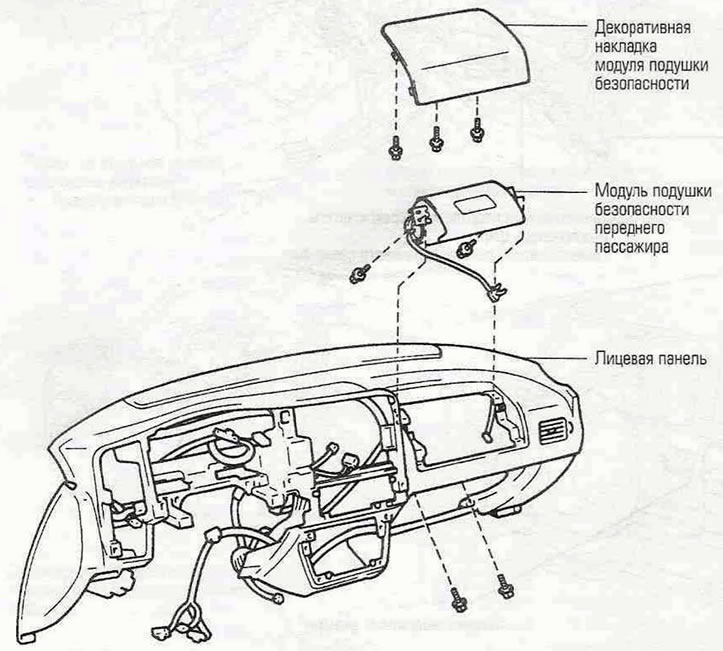
Figure 26.2. SRS system components (airbags) from the passenger side - "left-hand drive" models produced before 2000.
Loosen the mounting bolts, disconnect the wiring connector and remove the module from the front panel. When performing this operation, strictly observe the precautions given earlier in this paragraph.
3. If you are working on a 2001-later model, remove the glove compartment door (see chapter 11), then disconnect the wiring connector and unscrew the airbag module mounting bolts (see Figure 26.3).
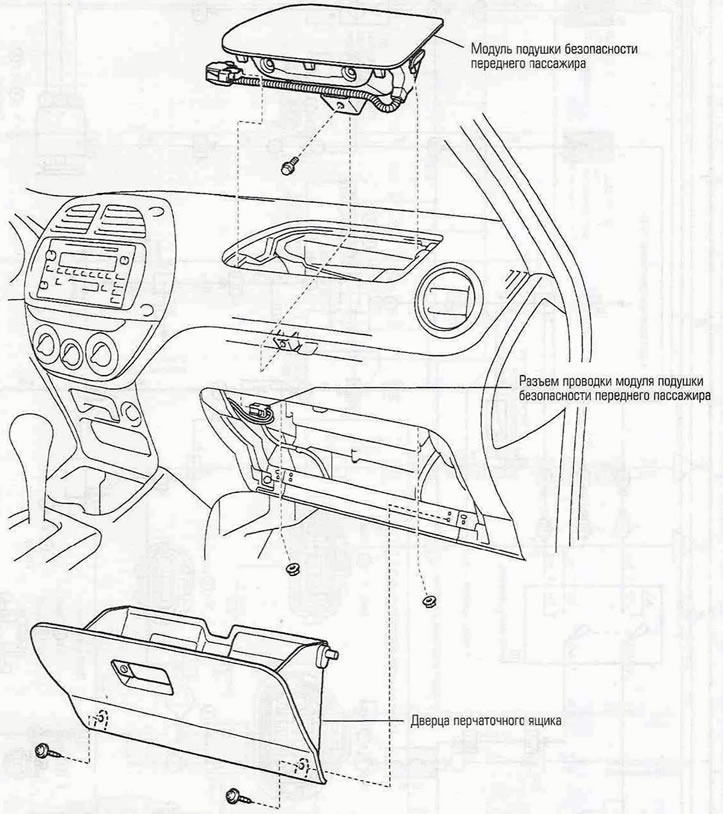
Figure 26.3. SRS system components (airbags) from the passenger side - "left-hand drive" models produced since 2001.
When performing this operation, strictly observe the precautions given earlier in this paragraph.
4. Installation of airbag modules is performed in the reverse order of removal. Tighten the module mounting bolts to 20 Nm.