



Mounting locations of typical emission control system units on a 2.7L 4-cylinder engine
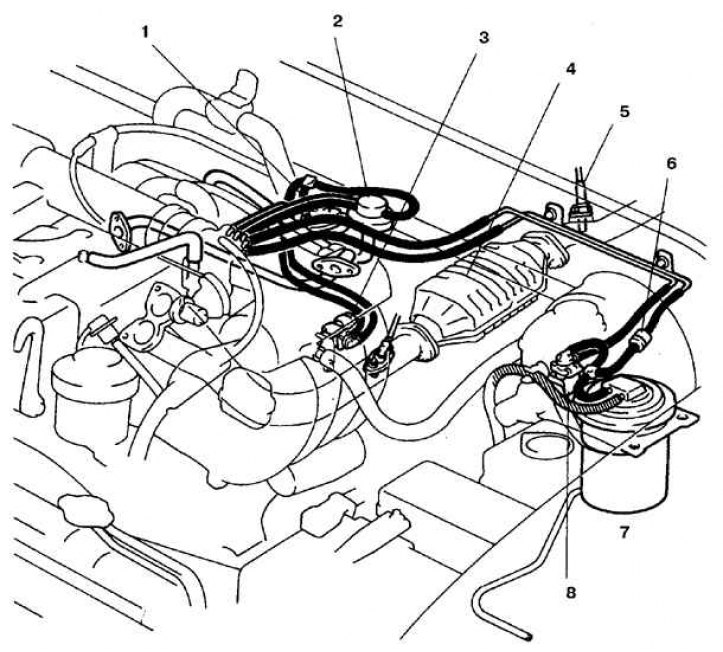
1. Recirculation valve; 2. Vacuum valve controlling the recirculation valve; 3. Vacuum distributor controlling the recirculation valve; 4. Neutralizer; 5. Oxygen sensor; 6. Check valve; 7. Tank with gasoline vapor absorber; 8. Vacuum distributor controlling the tank valve
Vacuum Hoses on a 3.4L V6 Engine
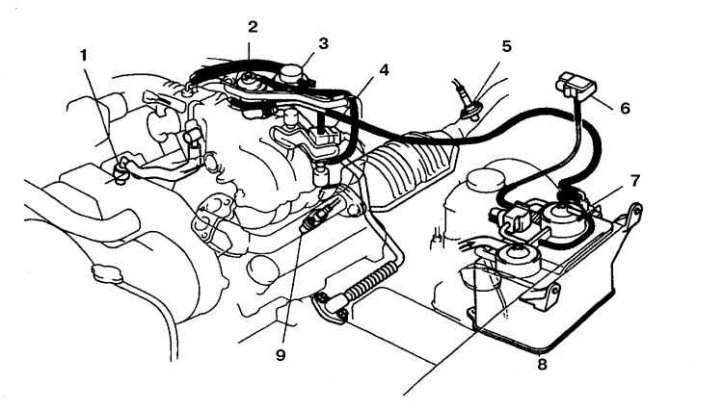
1. Crankcase ventilation valve; 2. Recirculation valve; 3. Vacuum valve controlling the recirculation valve; 4. Vacuum distributor controlling the recirculation valve; 5. Gasoline vapor sensor; 6. Check valve; 7. Vacuum distributor controlling the tank valve; 8. Tank with gasoline vapor absorber; 9. Oxygen sensor 2
(The article is taken from a web resource: toyotaman.ru)
The vehicles covered by this Manual are equipped with several exhaust gas toxicity reduction systems. The specific implementation of the environmental protection system is determined by the vehicle brand and the territory of its sale. The systems in question include:
- forced crankcase ventilation system (PCV system),
- gasoline vapor recovery system (EEC system),
- exhaust gas recirculation system (EGR system),
- catalytic converter (TWC),
- pulsating exhaust gas oxidation system (PAIR system).
- on-board diagnostic system (OBDII system).
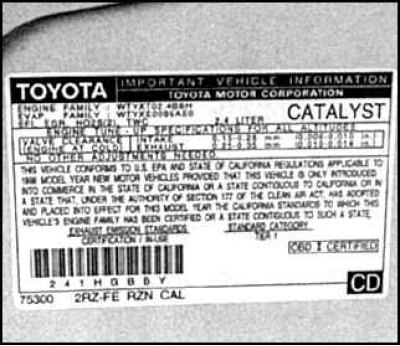
The specific type of system with the indication of adjustment data and vacuum hose layout is indicated on the underhood plate (VECI-plate).
Failure of sensors and devices of some emission control systems can affect the performance of the engine. Reading diagnostic codes and accurately identifying a specific faulty device is possible thanks to the use of the OBDII on-board diagnostic system in the car (since 1996). To read diagnostic codes in this system and identify them, special expensive scanners are required, so all types of diagnostic, repair and adjustment work should be carried out in a car service.