



Electronic fuel injection system units for 4-cylinder engines
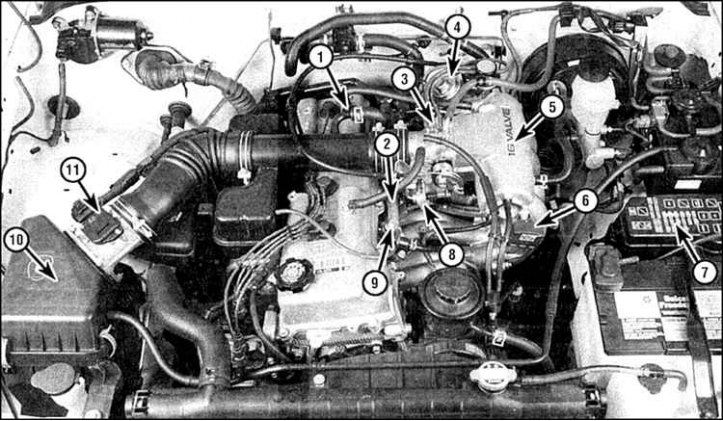
1. Crankcase ventilation valve; 2. Fuel distributor and injector; 3. Throttle angle sensor; 4. Recirculation sensor; 5. Equalization chamber; 6. Diagnostic connector; 7. Mounting block; 8. Air shock absorber; 9. Fuel pressure regulator; 10. Air filter; 11. Flow speed sensor
Electronic fuel injection system units for 3.4L V6 engines
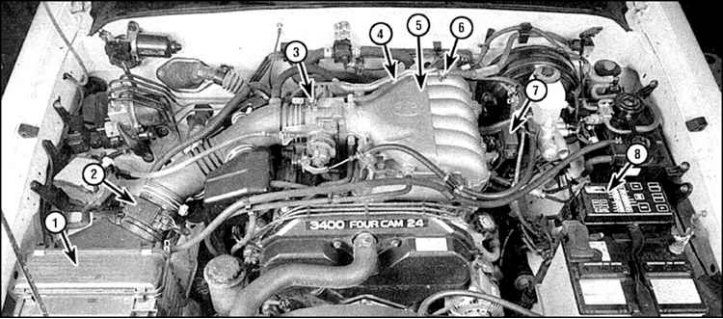
1. Air filter; 2. Flow speed sensor; 3. Throttle angle sensor; 4. Recirculation sensor (under the equalization chamber); 5. Equalization chamber; 6. Fuel pressure regulator; 7. Diagnostic connector; 8. Mounting block
The cars are equipped with an electronic fuel injection system (EFI system), which includes three subsystems:
- fuel system;
- air intake system;
- electronic control system.
Fuel system
The fuel pump, located in the tank, supplies fuel under constant pressure to the distributor, from which the fuel is evenly distributed to the injectors. From the distributor, the fuel is supplied to the intake ports of the cylinders through the injectors. The amount of fuel injected is strictly controlled by the electronic control unit (ECM block). The fuel pressure regulator ensures that the fuel pressure changes in accordance with the vacuum in the intake manifold.
Air intake system
The air intake system consists of an air filter, a throttle chamber, and a channel connecting these two units. Air temperature sensor (IAT sensor) monitors the temperature of the air being sucked in. The signal from the sensor is sent to the electronic control unit, which provides the dosage of injected fuel in accordance with the air temperature. The driver controls the throttle valve. As the throttle valve opens, the speed of the incoming air increases, which leads to a decrease in its temperature. The sensor registers the change in air temperature and sends a signal to the ECM, which in turn sends a signal to the injectors.
Electronic Control Unit (ECM)
The control of electronic fuel injection and other systems is provided by the processor unit. The unit includes a microcomputer. The control unit receives signals from a number of sensors that monitor such parameters as the air temperature at the cylinder inlet, the throttle angle, etc. Based on this data, the control unit determines the duration of fuel injection, which ensures the maintenance of the optimal ratio of gasoline and air in the combustible mixture.