



When the starter is turned on, current from the battery begins to flow through the starter traction relay winding. The relay anchor is pulled in and the relay contacts are closed. At the same time, the relay anchor moves the overrunning clutch with the gear through the lever. The overrunning clutch hub also rotates the gear on the helical splines of the starter armature shaft, which facilitates its engagement with the flywheel ring gear. Current flows through the closed contacts of the traction relay, supplying power to the stator and armature windings, and the starter armature begins to rotate together with the hub and overrunning clutch.
After the engine starts, the rotation speed of the gear exceeds the rotation speed of the starter armature. In this case, the overrunning clutch rotates freely, and torque is not transmitted from the engine flywheel to the starter armature shaft. After the ignition key is released, the power supply circuit of the traction relay windings through the ignition switch is opened, the traction relay armature is pressed back to its original position by the spring, the relay contacts are opened and the drive gear disengages from the flywheel ring gear.
Remove the starter as follows:
Turn off the ignition and disconnect the ground wire from the battery.
Remove the air filter housing.
Remove the cruise control unit and, without disconnecting the cable from it, move it to the side.
Remove the expansion tank.
Disconnect the electrical connectors from the starter solenoid.
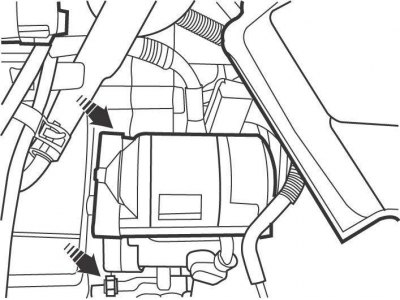
Figure 15.19. Bolt locations (one bolt is not visible) starter mounts on 2001 and later models
Remove the bolts and take off the starter (figure 15.19).
Installation is carried out in the reverse order of removal.