



Check the terminals at the ends of the wires for corrosion. The presence of white flakes under the insulation indicates that the wire has been corroded and needs to be replaced. Check the clamps for deformation that would reduce the contact patch with the battery terminal.
Replace the battery cables as follows:
First, disconnect the cable from the negative battery terminal, set it aside and insulate it to prevent accidental connection to the battery.
Important: Even if you only need to replace the positive battery cable, disconnect the negative battery cable first.
After disconnecting the wires from the battery, disconnect them from opposite sides.
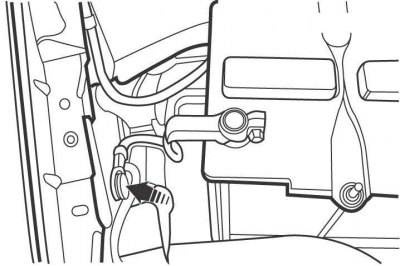
Figure 15.1. Ground wire connection point to the car body
Disconnect the wires from the starter solenoid relay, fuse box, and ground wires from the body and power unit (figure 15.1).
Mark the location of each wire to ensure the new wire is installed correctly.
When replacing wires, use new wires with the same cross-sections and lengths as those being replaced. Positive wires are usually red and have a larger cross-section (diameter), while negative wires are black and their cross-section is smaller than that of positive wires.
Use a wire brush to clean the threaded contact of the starter solenoid relay. To protect against corrosion, apply a thin layer of petroleum jelly to the battery terminals.
Attach the battery terminal clamps to the new wires and secure them with the bolt and nut, tightening them very securely.
Before connecting the new cable to the battery, make sure there is no tension on the cable.
After installing the new wires, connect the ground wire to the negative battery terminal.