



Car pressure regulator
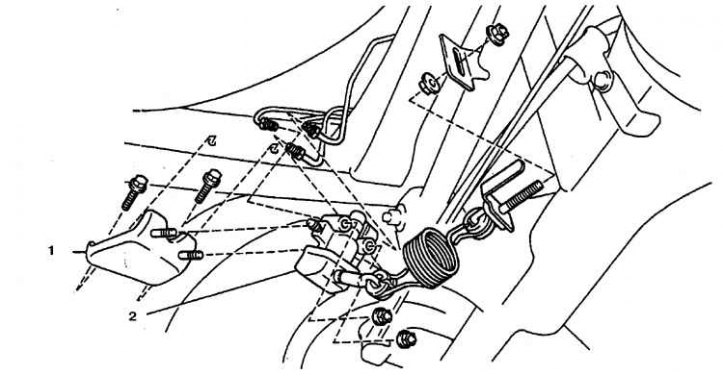
1. Bracket
2. Regulator
The pressure regulator is designed to change the pressure in the brake circuit of the front and rear wheels depending on the load on the front and rear axles. The load on the front axle of an unloaded truck exceeds the load on the rear axle, so when braking, the pressure in the front brake circuit should be higher than in the rear brake circuit. If the car has a load, the load on the rear axle may exceed the load on the front. Therefore, the pressure regulator of the vehicles in question ensures the redistribution of pressure in the brake circuits depending on the load.
The sensitive element of the pressure regulator is a spring that stretches depending on the weight of the load. The initial tension of the spring is adjustable. The regulator includes a metering and bypass valve.
Repair and adjustment of the regulator are performed only in a car service center; you can do the work of removal and installation (replacement) yourself. When disconnecting the regulator rod in case of dismantling the rear axle, adjustment of the unit is not required.
Attention! After replacing the regulator, it should be checked on a special stand in a car service center.
Removal and installation
1. Raise the car.
2. Unscrew the nuts of the regulator fittings, disconnect and plug the tubes.
[The material is reprinted from an online resource: ToyotaMan.ru]
3. Loosen the lock nut and remove the adjusting bolt on the rear arm.
4. Loosen the bolts and remove the regulator with the bracket.
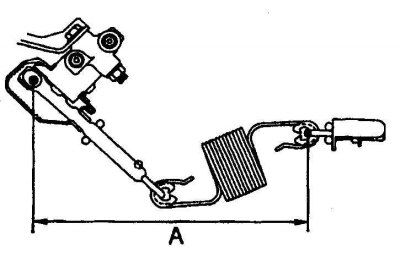
5. Installation is performed in reverse order. Adjust the distance A by turning the bolt. Remove air and hydraulic drives.