



Caution! Checking and repairing exhaust system components should only be performed after the system has completely cooled down.
1. The exhaust system consists of an exhaust manifold and catalytic converter, a turbocharger, a downpipe and catalytic converter, a center pipe with a muffler, and an exhaust pipe with a muffler. The exhaust pipe is attached to the catalytic converter with tie bolts, with a sealing ring installed between them (see Figure 15.1).
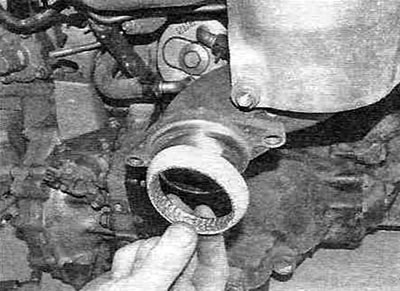
Figure 15.1. There is a sealing ring between the front exhaust pipe and the catalytic converter.
The exhaust system is attached to the body from below using various brackets and hangers. If any part of the system is damaged or installed incorrectly, it will transmit extraneous noise and vibration to the body.
2. To keep the system in good working order and safe, regular checks should be carried out. During inspection, check for damaged or bent components, broken welds, burnt holes, excessive corrosion, or other defects that could cause exhaust gases to enter the passenger compartment. Rusty system components are usually replaced with new ones; "Welding" rusty mufflers helps only for a short time.
3. To remove rusty components of the exhaust system in order to replace them with new ones, mechanical, pneumatic and electric cutting tools are used. If you want to save money on hiring a mechanic but don't have a cutting torch, you can cut the muffler with a regular hacksaw. If you decide to do this yourself, wear safety glasses and gloves.
4. Below are some recommendations for repairing the exhaust system:
- When removing components, start with the exhaust pipe, "from tail to head".
- If you wet the nuts and bolts with liquid wrench before unscrewing, the work will go faster.
- When installing new components, always use new gaskets and fasteners.
- Before installation, lubricate the threaded elements with a non-stick compound. Before final tightening of the clamps, ensure that there is sufficient clearance between the exhaust system components and the body, and that the hot catalytic converter will not melt the carpets and plastic in the cabin - install the heat shields in their places.
Caution! When the engine is running, the catalytic converter reaches high temperatures and takes a very long time to cool down. Wait until the catalytic converter has cooled completely before attempting to remove it. Neglecting this can result in serious burns.