



1. Raise the vehicle and place it on stands.
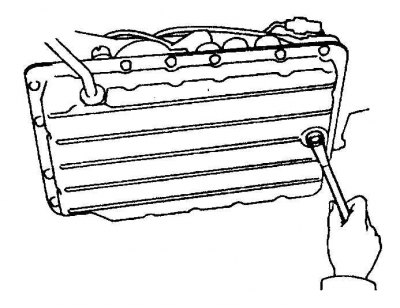
2. Place a tray underneath, unscrew the drain plug and drain all the liquid, avoiding any losses. Replace the plug and tighten it.
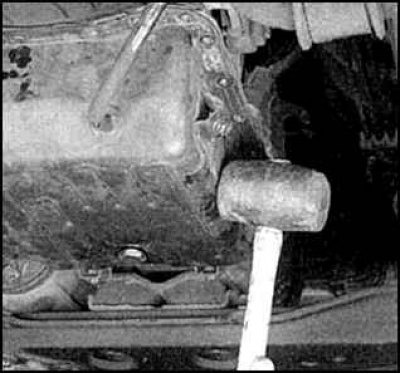
3. Carefully remove the transmission oil pan and drain the remaining fluid. To remove the pan, unscrew the bolts and lightly tap the hammer to remove the seal.
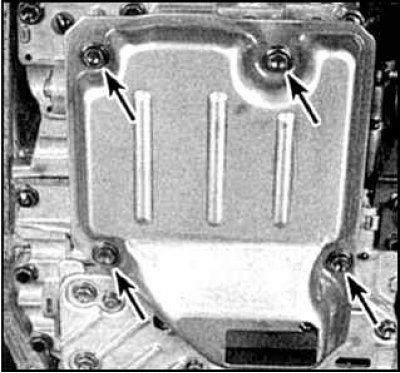
4. Remove the bolts and filter from the transmission valve block (transmission filter bolts are indicated by arrows).
5. Check the condition of the fluid. If the fluid is dark and has a burnt smell, this indicates that the transmission is overheating. The presence of small particles of metal or friction material in the pan or filter indicates the destruction of internal transmission components (multi-plate clutch). In this case, it is recommended to take the car to a car service center.
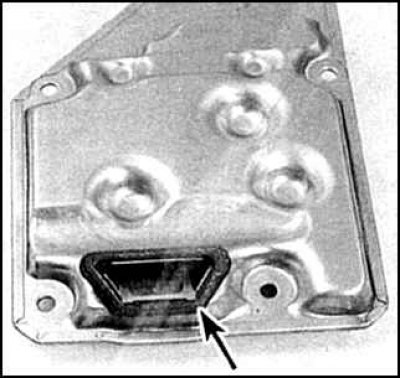
6. Wash the pan with solvent and dry, remove the remains of the old seal. Install a new filter, replacing the gasket (indicated by the arrow).
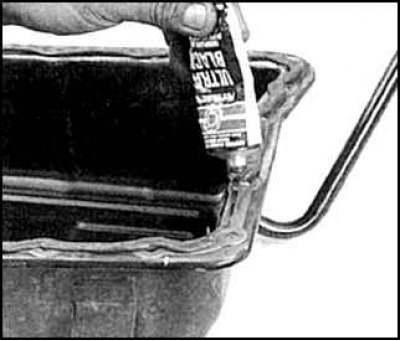
7. Apply a bead of RTV sealant to the split surface of the pan, lining the holes from the inside.
8. Place a hose on the level indicator pipe and install the tray. Tighten the bolts evenly and gradually to the specified torque.
9. Lower the car and pour in about 3.5 liters of transmission fluid through the hose on the branch pipe; the recommended brand is indicated in subsection 2.1.
10. Move the selector to the Park position and start the engine.
11. Move the selector to all positions, move it back to the Park position and check the level, add fluid if necessary, bringing the level to normal.
View the full text on the portal (www.ToyotaMan.ru)
12. During your first trips, keep an eye on the fluid level (on a warm transmission) and check for leaks from the crankcase.