



If the level is low, check for leaks and add coolant up to the "FULL" mark (warm engine) and "LOW" marks (cold engine).
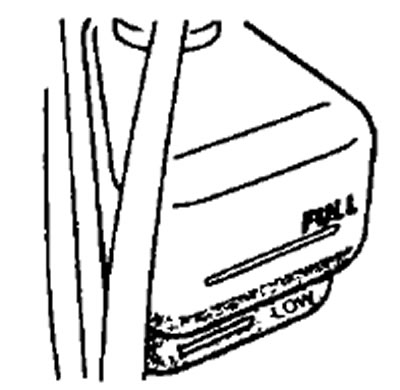
2. Check the quality of the coolant.
- a) Remove the radiator cap.
Caution: To avoid burns, do not remove the radiator cap when the engine is hot because the fluid and steam are under pressure.
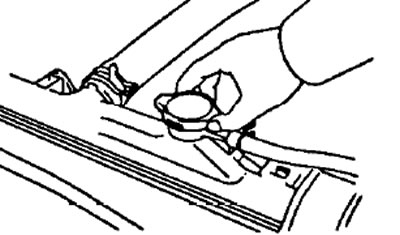
- b) There should be no excessive rust deposits around the radiator cap valves or radiator filler neck seats.a The coolant should be free of oil and cloudy. If the coolant is dirty, clean the cooling system passages and replace the fluid.
- c) Install the radiator cap
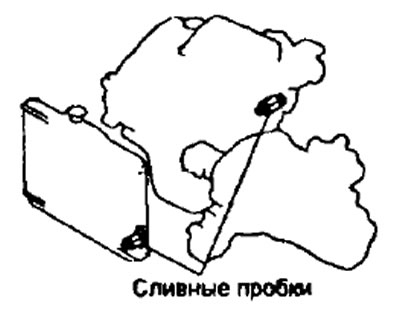
2C, 2C-T. | 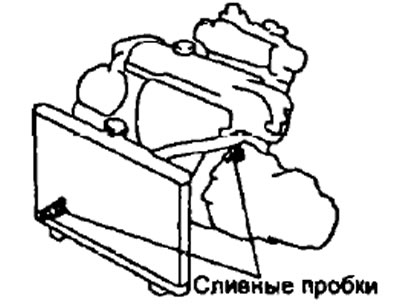
3S-FE, 3S-GE, 4S-FE. |
4A-FE | 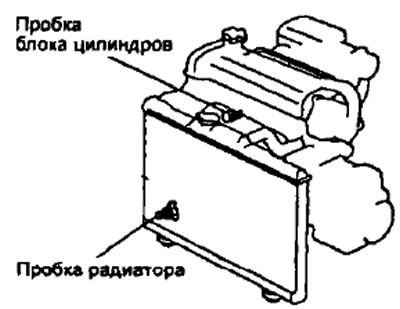
5F-FE, 7A-FE |
3. Replace the coolant.
- a) Remove the radiator cap. Note: Be careful when removing the cap from a hot engine
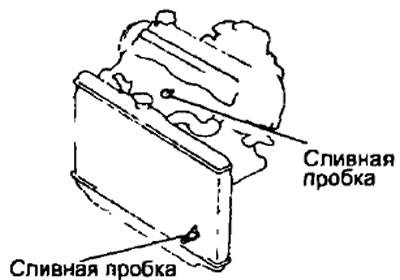
- b) Drain the coolant by unscrewing the radiator and engine drain plugs.
- c) Apply sealant to two or three threads of the drain plugs and tighten them.
- d) Slowly pour coolant into the cooling system in an amount corresponding to the filling capacity.
Note:
- Use a good brand of ethylene glycol based coolant and mix according to the manufacturer's instructions.
- It is recommended to use a coolant that contains more than 50% ethylene glycol, but not more than 70%.
- Do not use alcohol-based antifreeze.
- The coolant must be mixed with demineralized water or distilled water.
Filling capacities:
- 2C, 2C-T - 6.9L
- 3S-FE, 4S-FE:
- models with manual transmission - 6.6 l
- models with automatic transmission - 7.0 l
- 3S-GE:
- models with manual transmission - 6.0 l
- models with automatic transmission - 6.5 l
- 4A-FE, 7A-FE - 5.3 l
- 5E-FE:
- models with manual transmission - 5.0 l
- models with automatic transmission - 5.4 l
The original source is located on the website (toyotaman.ru)
d) Install the radiator cap.
c) Warm up the engine and check it for leaks.
g) Check the coolant level and top up if necessary.