



Share information:
Brake system of the car Toyota Corona 9 (T190)
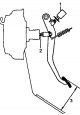
Checking and adjusting the brake pedal
1. Check that the pedal height is adjusted as shown in the figure. Pedal height from the floor: Models up to 96 g.: 159-169 mm Models from 96: 149-159 mm 1 - brake light switch, 2 - control rod, 3 - pedal height 2....
1. Check that the pedal height is adjusted as shown in the figure. Pedal height from the floor: Models up to 96 g.: 159-169 mm Models from 96: 149-159 mm 1 - brake light switch, 2 - control rod, 3 - pedal height 2....

Checking the performance of the vacuum booster
1. Checking the functionality a) Press the brake pedal several times with the engine off and check that the iceberg range does not change. b) Press the brake pedal and start the engine. If the brake pedal goes down...
1. Checking the functionality a) Press the brake pedal several times with the engine off and check that the iceberg range does not change. b) Press the brake pedal and start the engine. If the brake pedal goes down...

Bleeding the brake system
Note: After any work involving air entering the brake system, bleed it. Caution: Do not allow brake fluid to come into contact with painted surfaces. If brake fluid comes into contact with a painted surface, wash it off...
Note: After any work involving air entering the brake system, bleed it. Caution: Do not allow brake fluid to come into contact with painted surfaces. If brake fluid comes into contact with a painted surface, wash it off...

Checking and adjusting the parking brake
1. Check the travel of the parking brake lever. Pull the parking brake lever all the way down and count the number of clicks. Parking brake lever movement at 196 N tension force: 4-7 clicks. 2. If necessary, adjust the...
1. Check the travel of the parking brake lever. Pull the parking brake lever all the way down and count the number of clicks. Parking brake lever movement at 196 N tension force: 4-7 clicks. 2. If necessary, adjust the...

Removal the master brake cylinder
(Models up to 96.) Removing the master brake cylinder: 1 - tee, 2 - connector, 3 - master brake cylinder, 4 - gasket, 5 - brake booster (Models since 1996.) Removing the master brake cylinder: 1 - nipple,! - master...
(Models up to 96.) Removing the master brake cylinder: 1 - tee, 2 - connector, 3 - master brake cylinder, 4 - gasket, 5 - brake booster (Models since 1996.) Removing the master brake cylinder: 1 - nipple,! - master...

Disassembling and checking the master brake cylinder
Master Brake Cylinder: 1 - gasket, 2 - rubber bushings, 3 - reservoir mounting screw, 4 - cover, 5 - mesh filter, 6 - reservoir, 7 - dust cover, 8 - retaining ring, 9 - piston #1 and spring, 10 - piston #2 and spring,...
Master Brake Cylinder: 1 - gasket, 2 - rubber bushings, 3 - reservoir mounting screw, 4 - cover, 5 - mesh filter, 6 - reservoir, 7 - dust cover, 8 - retaining ring, 9 - piston #1 and spring, 10 - piston #2 and spring,...

Assembling the master brake cylinder
1. Lubricate the surfaces indicated by arrows in the figures. For cars with ABS For cars without ABS 2. Install the pistons. Caution: Be careful not to damage the cuffs. a) Install the pistons strictly along the axis...
1. Lubricate the surfaces indicated by arrows in the figures. For cars with ABS For cars without ABS 2. Install the pistons. Caution: Be careful not to damage the cuffs. a) Install the pistons strictly along the axis...

Installing the master brake cylinder
1. Adjust the length of the vacuum booster rod before installing the brake master cylinder on it. 2. Install the new gasket and the brake master cylinder on the vacuum booster and tighten the mounting nuts. Tightening...
1. Adjust the length of the vacuum booster rod before installing the brake master cylinder on it. 2. Install the new gasket and the brake master cylinder on the vacuum booster and tighten the mounting nuts. Tightening...

Vacuum brake booster — design description
(Models up to 96.) Vacuum brake booster: 1 - tee, 2 - master brake cylinder, 3 - gasket, 4 - vacuum hose, 5 - vacuum booster, 6 - fork axle, 7 - cotter pin, 8 - return spring (Models since 1996.) Vacuum brake booster: 1...
(Models up to 96.) Vacuum brake booster: 1 - tee, 2 - master brake cylinder, 3 - gasket, 4 - vacuum hose, 5 - vacuum booster, 6 - fork axle, 7 - cotter pin, 8 - return spring (Models since 1996.) Vacuum brake booster: 1...

Removal the brake booster
1. Remove the brake master cylinder. 2. Disconnect the hose from the brake booster. 3. Remove the brake pedal return spring. 4. Remove the cotter pin and fork axle. (Models since 1996.) Remove the clutch master...
1. Remove the brake master cylinder. 2. Disconnect the hose from the brake booster. 3. Remove the brake pedal return spring. 4. Remove the cotter pin and fork axle. (Models since 1996.) Remove the clutch master...

Installing a vacuum brake booster
1. Install the brake booster. a) Install the vacuum booster and a new gasket. b) Install and tighten the vacuum booster mounting nuts. Tightening torque 13 Nm. c) Install the fork axle into the fork and brake dropper...
1. Install the brake booster. a) Install the vacuum booster and a new gasket. b) Install and tighten the vacuum booster mounting nuts. Tightening torque 13 Nm. c) Install the fork axle into the fork and brake dropper...

Camshaft driven vacuum pump
Vacuum pump: 1 - vacuum hose, 2 - vacuum pump, 3 - gasket, 4 - plug, 5 - lower engine protection Removal the vacuum pump 1. Remove the lower engine guard. 2. Remove the plug from the timing belt protective cover No.2....
Vacuum pump: 1 - vacuum hose, 2 - vacuum pump, 3 - gasket, 4 - plug, 5 - lower engine protection Removal the vacuum pump 1. Remove the lower engine guard. 2. Remove the plug from the timing belt protective cover No.2....

Generator Driven Vacuum Pump
Vacuum pump: 1 - gasket, 2 - oil drain hose, 3 - generator, 4 - O-ring, 5 - vacuum pump, 6 - vacuum hose nipple, 7 - check valve, 8 - housing, 9 - oil drain nipple, 10 - rotor, 11 - blade, 12 - end plate, 13 - pin...
Vacuum pump: 1 - gasket, 2 - oil drain hose, 3 - generator, 4 - O-ring, 5 - vacuum pump, 6 - vacuum hose nipple, 7 - check valve, 8 - housing, 9 - oil drain nipple, 10 - rotor, 11 - blade, 12 - end plate, 13 - pin...

Front brakes — design description
Front brakes (Single cylinder caliper): 1, 10 - anti-squeak gasket, 2 - dust cover, 3 - bushing, 4 - guide pin, 5 - caliper bracket, 6 - gasket, 7, 11 - retaining plate insert, 8 - shoe, 9 - inner anti-squeak gasket...
Front brakes (Single cylinder caliper): 1, 10 - anti-squeak gasket, 2 - dust cover, 3 - bushing, 4 - guide pin, 5 - caliper bracket, 6 - gasket, 7, 11 - retaining plate insert, 8 - shoe, 9 - inner anti-squeak gasket...

Replacing the front brake pads
1. Remove the front wheel and temporarily secure the brake disc with wheel nuts. 2. Check the thickness of the brake pads through the inspection hole in the caliper. The minimum thickness is 1.0 mm. Replace the pads if...
1. Remove the front wheel and temporarily secure the brake disc with wheel nuts. 2. Check the thickness of the brake pads through the inspection hole in the caliper. The minimum thickness is 1.0 mm. Replace the pads if...
Removal the front caliper
1. Disconnect the brake hose. a) Loosen the union bolt, remove the two gaskets and disconnect the brake hose. b) Using a container, drain the brake fluid. 2. Remove the caliper. a) While holding the guide pins, loosen...
1. Disconnect the brake hose. a) Loosen the union bolt, remove the two gaskets and disconnect the brake hose. b) Using a container, drain the brake fluid. 2. Remove the caliper. a) While holding the guide pins, loosen...

Disassembling the front caliper
1. Using a screwdriver, remove the brake cylinder boot snap ring and boot. 2. Remove the piston. a) Place a rag between the piston and the cylinder. b) Using compressed air, remove the piston from the cylinder. Caution:...
1. Using a screwdriver, remove the brake cylinder boot snap ring and boot. 2. Remove the piston. a) Place a rag between the piston and the cylinder. b) Using compressed air, remove the piston from the cylinder. Caution:...
Checking and repairing front brakes
1. Using a ruler, measure the thickness of the brake pads Single cylinder caliper: Standard thickness 12.0 mm Minimum thickness 1.0 mm Dual cylinder caliper: Standard thickness 10.0 mm Minimum thickness 1.0 mm Replace...
1. Using a ruler, measure the thickness of the brake pads Single cylinder caliper: Standard thickness 12.0 mm Minimum thickness 1.0 mm Dual cylinder caliper: Standard thickness 10.0 mm Minimum thickness 1.0 mm Replace...

Front Caliper Assembly
1. Lubricate the surfaces indicated by arrows in the figures 2. Install the dust covers and guide pins. a) Using a suitable drift and hammer, install two new dust covers. b) Make sure the dust boots fit snugly into the...
1. Lubricate the surfaces indicated by arrows in the figures 2. Install the dust covers and guide pins. a) Using a suitable drift and hammer, install two new dust covers. b) Make sure the dust boots fit snugly into the...

Installing the front caliper
1. Install two brake pads. 2. Install the caliper. a) Install the caliper onto the bracket. b) Hold the guide pins and tighten the two mounting bolts. Tightening torque 34 Nm. 3. Connect the brake hose. Install the...
1. Install two brake pads. 2. Install the caliper. a) Install the caliper onto the bracket. b) Hold the guide pins and tighten the two mounting bolts. Tightening torque 34 Nm. 3. Connect the brake hose. Install the...

Rear Drum Brakes — Design Description
Rear drum brakes: 1,3 - spring seat, 2 - holder spring, 4 - locking spring, 5 - automatic adjuster, 6 - front brake shoe, 7 - holder, 8 - piston, 9 - dust cover, 10 - cuff. 11 - spring, 12, 16 - retaining ring, 13 -...
Rear drum brakes: 1,3 - spring seat, 2 - holder spring, 4 - locking spring, 5 - automatic adjuster, 6 - front brake shoe, 7 - holder, 8 - piston, 9 - dust cover, 10 - cuff. 11 - spring, 12, 16 - retaining ring, 13 -...

Rear Drum Brakes — Removal
1. Remove the inspection hole plug and check the thickness of the brake shoe linings through it. If the lining thickness is less than the minimum allowable, replace the brake pads. Minimum thickness 1.0 mm. 2. Remove...
1. Remove the inspection hole plug and check the thickness of the brake shoe linings through it. If the lining thickness is less than the minimum allowable, replace the brake pads. Minimum thickness 1.0 mm. 2. Remove...
Rear Drum Brakes — Checking Parts
1. Check the removed parts for wear, rust and damage. 2. Measure the thickness of the brake shoe linings. Standard: 4.0mm Minimum allowable: 1.0 mm If the lining thickness is less than the minimum or the linings are...
1. Check the removed parts for wear, rust and damage. 2. Measure the thickness of the brake shoe linings. Standard: 4.0mm Minimum allowable: 1.0 mm If the lining thickness is less than the minimum or the linings are...

Rear Drum Brakes — Installation
Note: Install the parts as shown in the figure. 1. Apply grease to the following parts: two cuffs, two pistons, two anthers. 2. Assemble the Wheel Brake Cylinder. a) Install two new cuffs. b) Install the spring and two...
Note: Install the parts as shown in the figure. 1. Apply grease to the following parts: two cuffs, two pistons, two anthers. 2. Assemble the Wheel Brake Cylinder. a) Install two new cuffs. b) Install the spring and two...

Rear Disc Brakes — Design Description
Rear disc brakes: 1 - gasket; 2; 15 - retaining plate inserts; 3; 18 - anti-squeak gasket; 4 - caliper bracket; 5 - main guide pin; 6 - dust cover (For 3S-GE engine); 7 - support; 8 - Main guide pin dust cover; 9 -...
Rear disc brakes: 1 - gasket; 2; 15 - retaining plate inserts; 3; 18 - anti-squeak gasket; 4 - caliper bracket; 5 - main guide pin; 6 - dust cover (For 3S-GE engine); 7 - support; 8 - Main guide pin dust cover; 9 -...

Rear Disc Brakes — Pad Replacement
1. Remove the rear wheel and temporarily secure the brake disc with wheel nuts. 2. Check the thickness of the brake pads through the inspection hole in the caliper. The minimum thickness is 1.0 mm. Replace the pads if...
1. Remove the rear wheel and temporarily secure the brake disc with wheel nuts. 2. Check the thickness of the brake pads through the inspection hole in the caliper. The minimum thickness is 1.0 mm. Replace the pads if...
Rear Disc Brakes — Caliper Removal
1. Disconnect the brake hose. a) Loosen the union bolt, remove the two gaskets and disconnect the brake hose. b) Using a container, drain the brake fluid. 2. Remove the caliper. a) Unscrew the mounting bolt. b) Remove...
1. Disconnect the brake hose. a) Loosen the union bolt, remove the two gaskets and disconnect the brake hose. b) Using a container, drain the brake fluid. 2. Remove the caliper. a) Unscrew the mounting bolt. b) Remove...
Rear Disc Brakes — Caliper Disassembly
1. Remove the bushing and two dust covers (for 3S-GE engine) or dust cover (for 3S-FE engine). 2. Remove the main guide pin dust cover. 3. Using a screwdriver, remove the brake cylinder boot spring ring and boot. 4....
1. Remove the bushing and two dust covers (for 3S-GE engine) or dust cover (for 3S-FE engine). 2. Remove the main guide pin dust cover. 3. Using a screwdriver, remove the brake cylinder boot spring ring and boot. 4....
Checking and repairing rear disc brakes
1. Using a ruler, measure the thickness of the brake pads. Standard thickness: 10.0 mm Minimum thickness: 10 mm Replace the brake pads if the brake lining thickness is less than the minimum permitted or if uneven lining...
1. Using a ruler, measure the thickness of the brake pads. Standard thickness: 10.0 mm Minimum thickness: 10 mm Replace the brake pads if the brake lining thickness is less than the minimum permitted or if uneven lining...

Rear Disc Brakes — Caliper Assembly
1. Lubricate the surfaces indicated by arrows in the figures. 2. Install the piston seal and piston into the cylinder. 3. Install the boot and cylinder boot spring ring. 4. Install the main guide pin dust cover. 5....
1. Lubricate the surfaces indicated by arrows in the figures. 2. Install the piston seal and piston into the cylinder. 3. Install the boot and cylinder boot spring ring. 4. Install the main guide pin dust cover. 5....

Rear Disc Brakes — Caliper Installation
1. Install the main guide pin and tighten the mounting bolt. Tightening torque 27 Nm. 2. Install two pads with the lining wear indicator located on top (3S-GE engine) or from below (3S-FE engine). Caution: Do not allow...
1. Install the main guide pin and tighten the mounting bolt. Tightening torque 27 Nm. 2. Install two pads with the lining wear indicator located on top (3S-GE engine) or from below (3S-FE engine). Caution: Do not allow...

Parking brake for rear disc brakes
Parking brake for rear disc brakes: 1 - guide plate, 2 - spring, 3 - spacer plate, 4 - adjusting washer, 5 - rear brake shoe, 6 - holder, 7 - shoe tension spring, 8 - caliper assembly, 9 - plug, 10 - brake disc (drum),...
Parking brake for rear disc brakes: 1 - guide plate, 2 - spring, 3 - spacer plate, 4 - adjusting washer, 5 - rear brake shoe, 6 - holder, 7 - shoe tension spring, 8 - caliper assembly, 9 - plug, 10 - brake disc (drum),...

Disassembling the parking brake
1. Remove the rear wheel. 2. Remove the rear caliper assembly. a) Unscrew the two mounting bolts and remove the rear caliper assembly. b) Hang the caliper so as not to stretch the hose. 3. Remove the brake disc. Note:...
1. Remove the rear wheel. 2. Remove the rear caliper assembly. a) Unscrew the two mounting bolts and remove the rear caliper assembly. b) Hang the caliper so as not to stretch the hose. 3. Remove the brake disc. Note:...

Checking the parking brake
1. Check the removed parts for wear, rust or damage. 2. Using a ruler, measure the thickness of the brake shoe linings. Standard thickness: 2.0 mm Minimum thickness: 1.0 mm Replace the brake pads if the brake lining...
1. Check the removed parts for wear, rust or damage. 2. Using a ruler, measure the thickness of the brake shoe linings. Standard thickness: 2.0 mm Minimum thickness: 1.0 mm Replace the brake pads if the brake lining...

Installing the parking brake
Application: Install the parts as shown in the figure. Parking brake parts installation diagram 1. Apply high temperature grease to the brake shield as shown in the figure. 2. Apply high temperature grease to the...
Application: Install the parts as shown in the figure. Parking brake parts installation diagram 1. Apply high temperature grease to the brake shield as shown in the figure. 2. Apply high temperature grease to the...

Rear axle load-sensing brake force distribution valve
1 - Rear axle load-sensing brake force distribution valve (LSPV) Checking fluid pressure 1. Setting the load on the rear axle. a) Make sure the vehicle is unloaded. b) Measure the load on the rear axle and remember the...
1 - Rear axle load-sensing brake force distribution valve (LSPV) Checking fluid pressure 1. Setting the load on the rear axle. a) Make sure the vehicle is unloaded. b) Measure the load on the rear axle and remember the...

Anti-lock Braking System (ABS) — Components
Models up to 96. Models since 1996 Anti-lock braking system (ABS): 1 - front wheel speed sensor, 2 - ABS indicator, 3 - rear wheel speed sensor, 4 - sensor rotor, 5 - ABS electronic control unit, 6 - diagnostic...
Models up to 96. Models since 1996 Anti-lock braking system (ABS): 1 - front wheel speed sensor, 2 - ABS indicator, 3 - rear wheel speed sensor, 4 - sensor rotor, 5 - ABS electronic control unit, 6 - diagnostic...

Description of the ABS diagnostic system
The electronic control unit has a fail-safe system that can detect any signal or malfunction in the system. When a malfunction is detected, the electronic control unit switches off the ABS system and the ABS indicator...
The electronic control unit has a fail-safe system that can detect any signal or malfunction in the system. When a malfunction is detected, the electronic control unit switches off the ABS system and the ABS indicator...
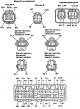
Checking the anti-lock braking system (ABS)
1. Check that the battery voltage is about 12V. 2. Checking the ABS indicator. a) Turn on the ignition. b) Check that the ABS indicator lights up for 3 seconds. c) If the indicator does not light, check, repair or...
1. Check that the battery voltage is about 12V. 2. Checking the ABS indicator. a) Turn on the ignition. b) Check that the ABS indicator lights up for 3 seconds. c) If the indicator does not light, check, repair or...

Pressure modulator — removal, installation and testing
Models up to 96 g. Pressure modulator: 1 - bracket No.2, 2 - pressure modulator, 3 - connector, 4 - pressure modulator with bracket, 5 - bracket No.5, 6 - adapter, 7 - bracket No.1, 8 - holder, 9 - cushion Models since...
Models up to 96 g. Pressure modulator: 1 - bracket No.2, 2 - pressure modulator, 3 - connector, 4 - pressure modulator with bracket, 5 - bracket No.5, 6 - adapter, 7 - bracket No.1, 8 - holder, 9 - cushion Models since...

Control Relay (Pre-1996 Models)
Checking the control relay 1. Checking the conductivity of the electric pump relay. a) Check for conductivity between terminals "9" and "10". b) Check for conductivity between terminals "7" and "8". If the conditions...
Checking the control relay 1. Checking the conductivity of the electric pump relay. a) Check for conductivity between terminals "9" and "10". b) Check for conductivity between terminals "7" and "8". If the conditions...

Control relay (models from 1996)
Checking the control relay 1. Checking the conductivity of the electric pump relay a) Check for conductivity between terminals "1" and "2" b) Check for conductivity between terminals "3" and "4". If the conditions are...
Checking the control relay 1. Checking the conductivity of the electric pump relay a) Check for conductivity between terminals "1" and "2" b) Check for conductivity between terminals "3" and "4". If the conditions are...

Front wheel speed sensors
Installation diagram of the rotation speed sensor Front Wheel Speed Sensor: 1 - sensor rotor, 2 - front wheel speed sensor (for all engines except 3S-GE), 3 - front wheel speed sensor (for 3S-GE engine) 1. Checking the...
Installation diagram of the rotation speed sensor Front Wheel Speed Sensor: 1 - sensor rotor, 2 - front wheel speed sensor (for all engines except 3S-GE), 3 - front wheel speed sensor (for 3S-GE engine) 1. Checking the...

Rear wheel speed sensor
Rear Wheel Speed Sensor: 1 - rear wheel speed sensor, 2 - caliper assembly, 3 - brake disc, 4 - rear axle hub, 5 - sensor rotor 1. Check the rear wheel speed sensor, a) Remove the seat cushion and back. b) Disconnect...
Rear Wheel Speed Sensor: 1 - rear wheel speed sensor, 2 - caliper assembly, 3 - brake disc, 4 - rear axle hub, 5 - sensor rotor 1. Check the rear wheel speed sensor, a) Remove the seat cushion and back. b) Disconnect...

Checking the Anti-lock Brake System Circuit
1. Check the target of the system with the connectors connected. a) Remove the ABS control unit. b) Using a voltmeter with high input resistance (minimum 10 kOhm/V), measure the voltage between each terminal and ground....
1. Check the target of the system with the connectors connected. a) Remove the ABS control unit. b) Using a voltmeter with high input resistance (minimum 10 kOhm/V), measure the voltage between each terminal and ground....
This section is available on: russian, bulgarian, belarusian, ukrainian, serbian, croatian, romanian, polish, slovak, hungarian
Similar sections for other Toyota models
➥ Brake system Toyota 4Runner N120 (1989-1995)
➥ Brake system Toyota Highlander 1 (2000-2007, petrol)
➥ Brake system Toyota Cruiser 100 (1998-2007)
➥ Brake system Toyota Corolla E80 (1983-1990)
➥ Brake system Toyota Camry XV30 (2001-2006)
➥ Brake system Toyota Carina T190 (1992-1996)
Link in different formats to this article
TEXTHTMLBB Code
- General information
- User manual
- Maintenance
- Power unit
- Engines 3S-FE/GE and 4S-FE
- Engines 4A-FE and 7A-FE
- Engines 5E-FE
- Diesel engines 2C and 2C-T
- Engine overhaul
- Cooling system
- Lubrication system
- Fuel injection (petrol)
- Control system (petrol)
- Fuel system (diesel)
- Turbo diesel
- Ignition system
- Engine electrical equipment
- Transmission
- Clutch
- Mechanical gearbox
- Automatic gearbox
- Drive shafts and cardan
- Chassis, running gear
- Front suspension
- Rear suspension
- Steering
- Brake system
- Body and interior
- Body and interior elements
- Doors, windows and locks
- Heating and air conditioning
- Electrical equipment
- Equipment and devices
- Lighting and signaling
- Electrical circuits