



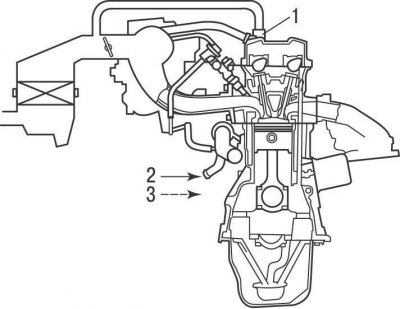
Figure 7.25. Forced crankcase ventilation diagram: 1 – PCV valve; 2 – crankcase gases; 3 – fresh air
The forced crankcase ventilation system ensures the extraction of crankcase gases and fuel vapors from the crankcase into the engine intake manifold, thereby eliminating the increase in pressure in the crankcase due to the penetration of exhaust gases into it and their release into the atmosphere (figure 7.25). Crankcase gases are mixed with fresh air and fed to the intake manifold through the positive crankcase ventilation valve.
The main components of the positive crankcase ventilation system are the valve, filter and vacuum hoses.
To maintain idle speed, the PCV valve restricts flow when intake manifold vacuum is high. If the exhaust gas breakthrough into the engine crankcase is large, for example, due to worn piston rings, the forced crankcase ventilation system directs the crankcase gases to the air filter, where they are then burned in the engine cylinders.
Checking the positive crankcase ventilation valve is given in section 2.
The original version is published on the website: ToyotaMan