



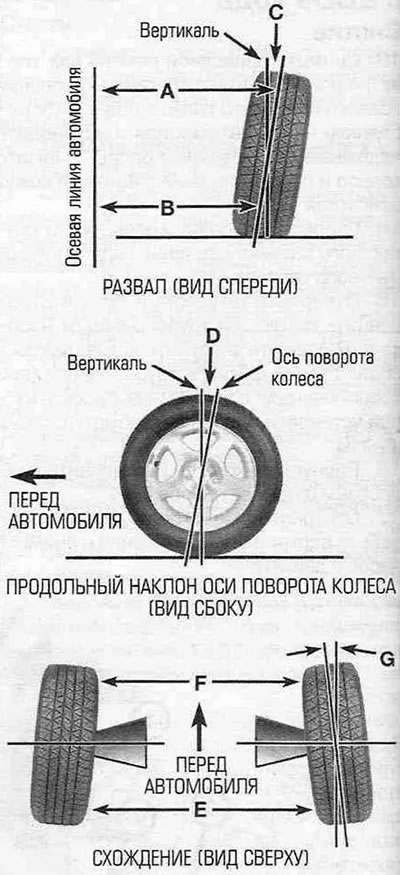
Figure 23.1. Camber, caster and toe angles:
A minus B = C (camber in degrees)
D = longitudinal inclination of the wheel's steering axis (expressed in degrees)
E minus F = convergence (measured in millimeters)
G = toe-in (expressed in degrees)
On the models under consideration, only wheel alignment and camber are adjusted during operation (front and rear). The longitudinal tilt of the steering axis is only checked to identify suspension faults or body geometry violations.
Publication Reprinted from a web portal: ToyotaMan
Correctly adjusting wheel alignment angles requires complex and expensive equipment. These tasks can only be performed by a specialist with sufficient experience. Below are the basic principles that will help you understand the process and facilitate communication with service station specialists.
Wheel toe is generally defined as the difference between the front and rear distances between the rims of the wheel at the hub height. When adjusting the toe-in, the goal is to achieve parallelism of the planes of rotation of the wheels. With zero toe-in, the front and rear distances between the wheel rims are equal. In reality, a toe-in of no more than a few millimeters is considered normal. The toe-in of the front wheels is adjusted by turning the steering tips in or out, changing the overall length of the steering rods. The toe-in of the rear wheels is adjusted by an eccentric washer at the front of the rear suspension trailing arm. Misalignment causes the tires to scrape the road, causing unnecessary wear.
Camber angle is the angle at which the plane of the wheel is tilted from the vertical when viewed from the front of the vehicle. Positive camber angle (in degrees), the angle by which the plane of the wheel is tilted outward from the top of the vertical, negative camber is the angle (in degrees), by which the plane of the wheel is tilted inward from the top of the vertical. Wheel camber affects the size of the tire tread contact patch with the road; the purpose of camber is to compensate for changes in suspension geometry when the car turns corners or when driving over rough terrain. The camber of the front wheels is set using special adjusting bolts that change the positions of the strut and steering knuckle relative to each other. Rear wheel camber is adjusted by a cam washer on the inner end of the lower suspension arm
The longitudinal tilt angle of the steering axis is the angle by which the wheel's steering axis deviates from the vertical. Backward tilt is called positive, forward tilt is called negative.