



Contents: Dismantling ↓ Installation ↓
Attention! Before performing work, read the contents of this subsection. The manufacturer recommends dismantling the engine assembly with the transmission by lifting the entire power unit up and removing it from the engine compartment. The transmission is separated from the engine after removing the power unit and lowering it to the workshop floor. If transmission repair is not planned, then the engine can be removed separately and the transmission left on the car. The engine is removed by lifting it up and removing it from the engine compartment, for which it is necessary to remove the crankshaft pulley and lift the engine from the toothed belt side so as not to touch the body.
Dismantling
Warning! The vehicles in question are equipped with airbags. At any time when the battery is connected, the airbag (which has a rigid structure) can unfold (inflate). To prevent accidental deployment of the airbag (and possible injuries) when performing any work near airbag components, turn the ignition key to the LOCK position and disconnect the battery from ground. After disconnecting the battery, wait two minutes (required to completely discharge the backup capacitor). A more detailed description is given in subsection 11.44.
1. Perform fuel system decompression procedures (see subsection 5.2).
2. Disconnect the battery from ground.
3. Remove the battery and battery tray.
4. Remove the battery and battery tray.
5. Remove the fender guards, hood and air intake grille.
6. Remove the air filter.
7. Raise the vehicle and place it on stands. Drain the cooling system, drain the engine oil and remove the drive belts.
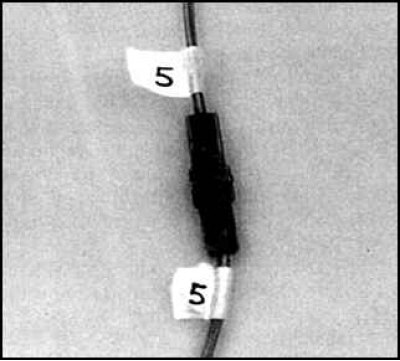
8. Label and disconnect all wiring connectors and hoses.
9. Remove the windshield washer reservoir and coolant reservoir.
10. Remove the fan, shroud and radiator.
11. Disconnect the heater hoses.
12. Relieve any residual fuel pressure in the tank by unscrewing the filler cap and disconnecting and plugging the fuel lines.
View the full text on the portal (www.TOYOTAMAN.ru)
13. Disconnect the throttle, transmission throttle valve and cruise control cables from the engine (if provided).
14. Remove the front grille and radiator baffle.
15. Disconnect the transmission wires and move them to the side.
16. On vehicles equipped with power steering, unscrew the power steering pump bolts. Move the pump to the side without disconnecting the hoses. If necessary, remove the pump.
17. On vehicles equipped with air conditioning, unscrew the mounting bolts and move the compressor to the side. Do not disconnect the hoses.
18. Disconnect the exhaust pipe(s) from the manifold(s).
19. Disconnect the hoses and remove the oil cooler (if provided).
20. Attach the hoist to the engine and remove the slack until the hoist is slightly tensioned.
21. Disconnect the axle shafts and the propeller shaft (see subsection 7.8 and subsection 7.3.2).
22. Loosen the engine mount mounting bolts.
23. On vehicles equipped with an automatic transmission, remove the protective cover on the bottom of the transmission case. Loosen the torque converter mounting bolts to the drive plate and gently push the torque converter toward the transmission.
24. Remove the transmission-to-engine mounting bolts and separate the engine from the transmission. The torque converter should remain on the transmission.
25. Make sure all parts that connect the engine to the body or transmission are removed. Mark and remove all remaining parts.
26. Secure the transmission housing by installing a stand and laying a board underneath. Remove the engine mount bolts except for those related to the transmission.
27. Carefully lift the engine (or a complete power unit) from the engine compartment. If necessary, separate the supports from the frame brackets.
28. Move the engine away from the vehicle and carefully lower it.
Installation
1. Check the condition of the engine mounts. If damage or signs of wear are found, replace the mounts.
2. On vehicles with manual transmission, check the condition of the clutch (see subsection 7.2), and on vehicles with automatic transmission, inspect the torque converter seal and bushing.
3. On vehicles with manual transmission, lubricate the pilot bearing with high-melting grease.
4. Carefully install the transmission onto the engine. Do not force the installation of the gearbox housing by tightening the bolts.
5. Tighten the transmission mounting bolts to the specified torque.
6. Attach a hoist to the engine and carefully lower the engine (or power unit) into the engine compartment.
Caution! If the engine was removed without the transmission, lower the engine until an assistant aligns the locating pins on the cylinder block with the transmission. To properly align the transmission with the engine, you will need to manipulate both units.
7. Tighten the support bolts securely.
8. Then assembly is carried out in reverse order.
9. Restore fluid and oil levels in the engine and transmission.
10. Start the engine, check the engine operation and check for leaks. Stop the engine and check the fluid levels.