



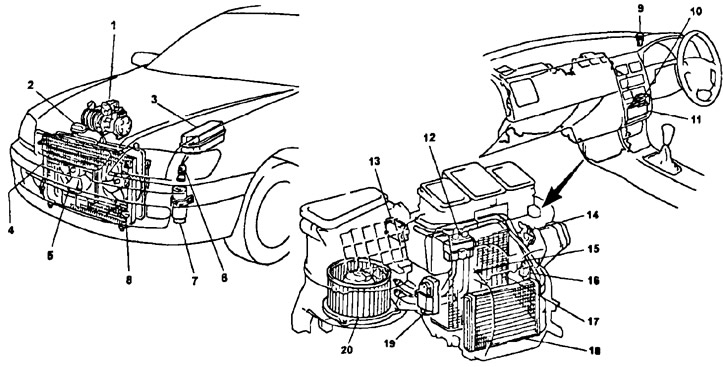
General appearance: 1 - compressor, 2 - relay block #2: heater fan relay #1, radiator fan relay #2, air conditioner electromagnetic clutch relay, 3 - relay block #1: heater main relay, 4 - radiator, 5 - radiator fan, 6 - ambient air temperature sensor, 7 - receiver, 8 - pressure switch, 9 - sunlight sensor, 10 - cabin temperature sensor, 11 - air conditioner control panel, 12 - expansion valve, 13 - air intake flap actuator, 14 - air flow direction flap actuator, 15 - evaporator temperature sensor, 16 - heater fan speed control relay, 17 - evaporator, 18 - heater radiator, 16 - air flow mixing flap actuator, 20 - heater fan motor
Security measures
1. Always follow safety precautions when working with refrigerant
- a) Do not work with refrigerant in a closed room or near an open flame.
- b) Always wear safety glasses.
- c) Be careful not to let the refrigerant come into contact with your eyes or skin. In case of injury:
- Do not rub the burnt area.
- Rinse the burnt area with plenty of cold water and lubricate the skin with pure petroleum jelly.
- Do not attempt to treat yourself, seek medical attention immediately.
- d) Before removing or checking electrical components, turn the ignition switch to the "LOCK" position and disconnect the negative battery cable.
Precautions when charging refrigerant
1. Do not operate the compressor without sufficient refrigerant. Insufficient refrigerant will result in insufficient lubrication of the compressor, which may result in compressor failure.
2. Do not open the high pressure valve on the gauge block while the compressor is running. Opening the high pressure valve will change the direction of the refrigerant flow, which will cause the cylinder to break.
View the original source on the website toyotaman.ru
3. Do not overcharge the system. Excess refrigerant leads to insufficient cooling, excessive fuel consumption, engine overheating, etc.