



Contents: Presence of water in the system ↓ Lack of refrigerant ↓ Poor circulation of refrigerant ↓ No cooling (the refrigerant does not…↓ Excess refrigerant or insufficient…↓ Presence of air in the cooling system ↓ Incorrect installation of expansion…↓ Compressor failure ↓
1. Connect the pressure gauge block.
2. Read pressure gauge readings under the following conditions.
- a) Air intake control switch in the "RECIRC" position (air temperature in the air intake is 30-35°C).
- b) The engine operates at 1500 rpm.
- c) Fan switch in the "HI" position (high speed).
- d) Temperature regulator in the "MAX COOL" position (maximum cooling).
Note: The instrument readings may vary slightly depending on the ambient temperature.
Presence of water in the system
The pressure in the low pressure line changes from normal to vacuum (cooling works only intermittently, then stops working).
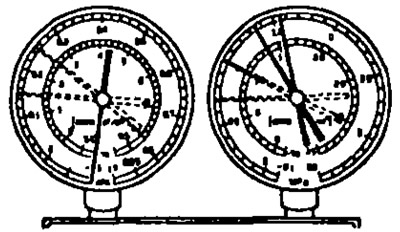
Reason: Water freezes in the expansion valve, temporarily stopping the cycle (blocks the circulation of the refrigerant). After defrosting, the system returns to normal.
Solution:
- a) Replace the receiver.
- b) Evacuate the system to remove water.
- c) Charge the system with fresh refrigerant.
Lack of refrigerant
Low pressure throughout the system. Insufficient cooling. Bubbles in the service window constantly.
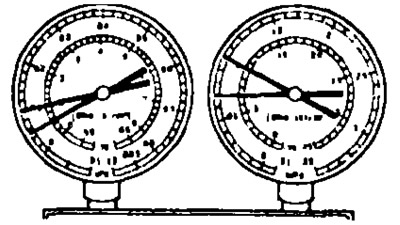
Reason: lack of refrigerant, refrigerant leaks
Solution:
- a) Check the system for leaks
- b) Top up the refrigerant to the required level.
Poor circulation of refrigerant
Low pressure in the entire system. Frost on the pipeline from the receiver to the cooling unit. Insufficient cooling.
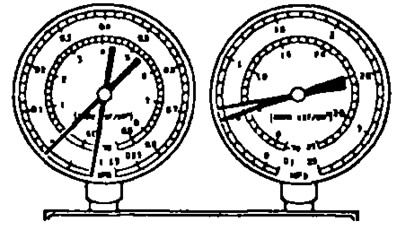
Reason: poor circulation of refrigerant due to clogging of the receiver
Solution: Replace the receiver.
No cooling (the refrigerant does not circulate)
Low pressure line vacuum, low pressure in high pressure line (no cooling or only intermittent cooling; frost or condensation near the receiver or expansion valve).
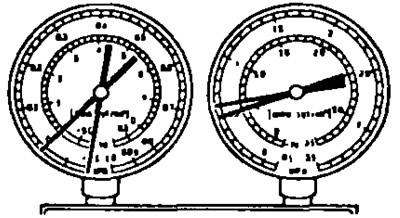
Reason: The refrigerant does not circulate due to moisture or contamination in the system, or refrigerant leaking from the expansion valve.
Solution:
- a) Check the temperature sensitive tube and expansion valve.
- b) If contamination is the cause, remove and clean the expansion valve with an air jet. Replace the valve if the dirt cannot be removed
- c) Replace the receiver.
- d) Evacuate and fill the system. If gas leaks from the temperature-sensitive tube, replace the expansion valve.
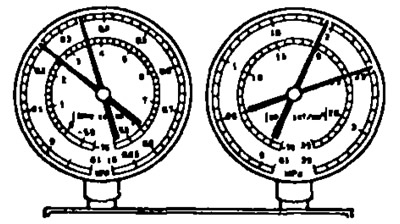
Excess refrigerant or insufficient condenser cooling
Increased pressure throughout the system (insufficient cooling), no bubbles in the service window, even when the engine is running at low speeds.
(The publication is taken from the website: toyotaman.ru)
Reasons:
- Insufficient circulation due to overcharging of the system.
- The condenser plates are clogged or the condenser fan motor is faulty.
Solution:
- a) Clean the plates.
- b) Check the operation of the fan.
- c) If points "a" and "b" are completed, check the amount of refrigerant.
Presence of air in the cooling system
Increased pressure throughout the system (insufficient cooling); low pressure line hot; bubbles in the service window.
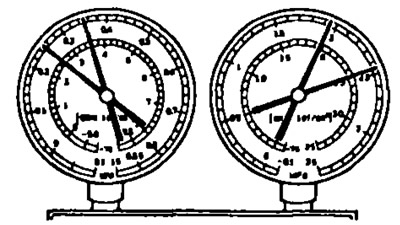
Reason: Air in the system (perhaps the system was not evacuated before charging).
Solution:
- a) Replace the receiver.
- b) Check for contamination and the amount of compressor oil.
- c) Evacuate and fill the system.
Incorrect installation of expansion valve/malfunction of temperature sensitive tube
Increased pressure throughout the system (insufficient cooling, frost or heavy condensation on the low pressure pipe).
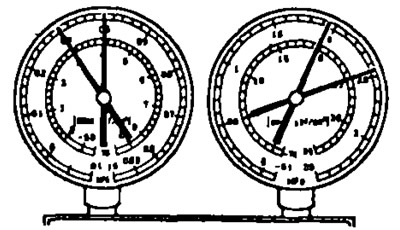
Reason: The temperature-sensitive tube is not adjusted, the expansion valve is not installed correctly.
Solution: Check the heat-sensitive tube; if it is working, then check the expansion valve. Remove the faulty parts.
Compressor failure
There is increased pressure in the low pressure line, decreased pressure in the high pressure line. No cooling.
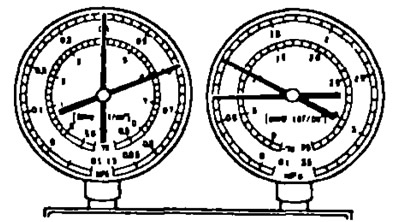
Reason: compressor is faulty (valve leaks or wear of parts).
Solution: Repair or replace the compressor.