



- Battery wiring and condition of terminal contacts.
- Check the battery status (see paragraph 3). Replace it if necessary.
- Check the condition of the generator's external wiring and its contacts.
- Check the condition and tension of the alternator belt (see chapter 1).
- Check the tightness of the generator mounting bolts.
- Check the fuses (if any in the engine compartment fuse box (see chapter 12). If there are any burnt-out ones, determine the cause and restore the circuit.
- Start the engine and check for any unusual noises from the generator. If the generator makes noticeable noise, first check the tightness of its mounting bolts. If the fastening is OK, check the belt. Make sure the belt installed matches the catalog data. If the condition of the belt is not in doubt, check the pulley, its fastening and wear. Noise may also be caused by worn bearings, a faulty diode or stator winding. If the noise cannot be eliminated by tightening the fasteners, the generator must be replaced: repairing the generator may be more expensive than a new unit.
- The battery emergency charging indicator on the instrument panel lights up when the ignition key is turned to the ON position and should go out immediately after the engine starts. If this is not the case, check its circuit.
- Check the charging circuit fuses. Depending on the model and year of manufacture, the location of these fuses may vary. Electrical diagrams are provided at the end chapter 12.
2. Turn the ignition key to the OFF position and measure the voltage at the battery terminals (in this case, all current consumers must be disconnected). It should be approximately 12.5V. The voltage may be slightly higher if the engine has been running for the last hour.
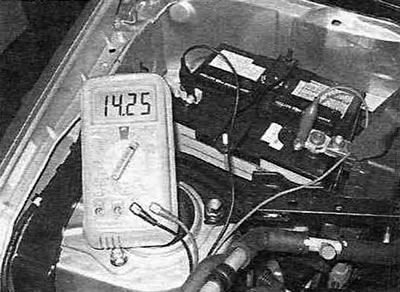
Figure 11.2. Connect a voltmeter to the battery terminals and check the voltage with the engine off and then with the engine running.
3. Start the engine and measure the voltage at the battery terminals again. It should be less than 12.5 V, but at the same time should not exceed 14.5 V. Turn on all possible current consumers (air conditioning, rear window defroster, heater, etc.) and increase the engine speed to 2000 rpm - the voltage should not drop below 12.5 V.
4. If the voltage when the engine is running is noticeably higher than specified Specifications, replace the voltage regulator.
Note: It is recommended to replace the entire generator at once, and this can be either a new or refurbished generator.
5. If the voltage is less than prescribed Specifications, perhaps the reason is in the generator. Take your vehicle to a dealership or other workshop with the necessary equipment to have the charging system checked.
Note: Many auto repair shops can perform a bench test on an alternator removed from a vehicle. Check the dealer's commitment to this item - some dealers will do this for free.