
Company Honda Company Ford Company Skoda Company Kia Company Mazda Company Mercedes Company Renault
English Русский
Български
Беларускі
Український
Српски
Hrvatski
Română
Polski
Slovenský
Magyar
Bookmark Articles Sitemap Contacts
ToyotaMan.ru


Camry Corolla Corona Carina Land Cruiser Highlander 4Runner RAV4 Others
RAV 4 XA20 (2000-2005) RAV 4 XA10 (1994-2000)

Electronic fuel injection system — check [Toyota RAV4 XA20]

  • Main
  • RAV4
  • XA20 (2000-2005)
  • Power unit
  • Fuel system (petrol)
  • Electronic fuel injection system — check
0
Caution! Gasoline is extremely flammable, so exercise extreme caution when working around the fuel system (see paragraph 2).


1. Check the condition of all wiring connectors related to the system. Check the condition of the intake manifold ground wire contacts. Poor ground connection conductivity is the main reason for malfunction of all electrical equipment in vehicles.

2. Check the battery charge status, as the engine control module (ECM) and sensors require a certain voltage in the vehicle's electrical system to operate properly.

3. Check the condition of the air filter element (see Chapter 1A) - a filter clogged with dirt creates additional air resistance at the intake, acting as an air damper ("suction"), reducing the engine's efficiency and impairing its fuel economy.

4. Check the operation of the fuel pump (see paragraph 3). If the fuel pump power supply circuit fuse has blown and the new fuse installed to replace the blown one has also blown, you should stop replacing the fuses and look for the cause, which lies solely in a short circuit in the circuit that this fuse protects (see chapter 12 and electrical connection diagrams).

5. Check the condition of the vacuum hoses and ensure that there are no air leaks in the intake tract, especially after the throttle body, through the vacuum hoses. Air leakage is often accompanied by a whistling sound.

6. Remove the intake air duct from the throttle body and check for dirt, carbon, varnish or other deposits inside the body, especially in the throttle valve area. How to remove the above mentioned deposits, described in paragraph. 2 paragraphs 14. The main sources of dirt and other deposits are faults in the crankcase ventilation and exhaust gas recirculation systems (see Chapter 6A).

7. After starting the engine, place the stethoscope next to each injector (see Figure 13.7).
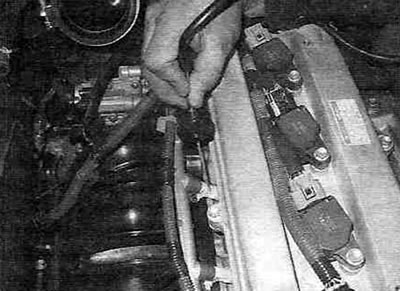


Figure 13.7. To check the operation of the injectors, use an automotive stethoscope or a screwdriver.


An operating injector produces a steady chirping sound that increases or decreases with changes in crankshaft speed. If a stethoscope is not available, you can use a long screwdriver or even a wooden stick, rest one end against the nozzle and "listen" to its operation with your hand. If all injectors are working properly and the engine runs unevenly (misfires), it can be concluded that the injector power supply circuits are in good working order, but the injectors are clogged with dirt or carbon deposits. Chemical cleaners may help, otherwise the injectors will need to be replaced.

8. If the injector is not heard to operate, turn off the engine and disconnect the wiring connectors from the injectors one by one, measuring their resistance (see Figure 13.8).
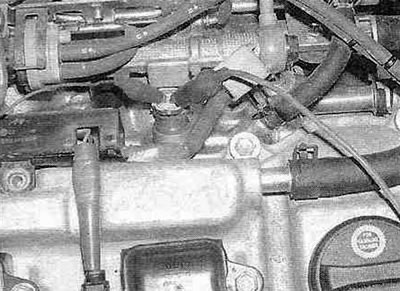


Figure 13.8. Measure the resistance at the injector terminals with an ohmmeter.


The prescribed resistance value is given in Specifications. If the injector resistance is too high or too low, replace the injector - it is faulty.

9. If the injector does not work, but its resistance is within the prescribed limits, the cause must be sought in the ECM module or the injector power supply circuit.
This article is available at: russian, bulgarian, belarusian, ukrainian, serbian, croatian, romanian, polish, slovak, hungarian
The article material has been checked: Kondratyeva Ulyana
Share information:
◀ Previous
RAV 4 XA20: Fuel system (petrol)
Next ▶

Electronically controlled fuel injection system — general information
Accelerator cable — removal, installation and adjustment
Air filter housing — removal and installation
Fuel tank — removal and installation
Fuel level sensor assembly — removal and installation
Throttle body — inspection, removal and installation
Fuel pulsation damper (models produced since 2001) — removal and…
Fuel rail and injectors — removal and installation
Exhaust System Maintenance — General Information
Similar articles on other Toyota models

➥ Electronic Fuel Injection System — Check Toyota Camry XV20 (1996-2001)
➥ Checking the electronic fuel injection system Toyota Cruiser 60/80 (1980-1997, petrol)
➥ Electronic Sequential Fuel Injection (SFI) System — General… Toyota Highlander 1 (2000-2007, petrol)
➥ Electronic Fuel Injection System (EFI system) Toyota 4Runner N120 (1989-1995)
➥ EFI Fuel Injection System Schematic Toyota Corolla E80 (1983-1990)
➥ Fuel injection diagnostic system Toyota Corona T190 (1992-1997)
Link in different formats to this article
Comments and feedback from visitors
No comments yet


Add two numbers 16 + 22


RAV 4 XA20 (2000-2005) 
  • General information
  • Introduction to manual
  • User manual
  • Daily care
  • Maintenance (petrol)
  • Maintenance (diesel)
  • Troubleshooting
  • Power unit
  • Gasoline engines (before 2000)
  • Petrol engines (since 2001)
  • Diesel engines
  • Engine overhaul
  • Cooling and heating
  • Fuel system (petrol)
  • Fuel system (diesel)
  • Engine electrical equipment
  • Control system (petrol)
  • Control system (diesel)
  • Transmission
  • Manual gearbox
  • Automatic gearbox
  • Clutch and drive shafts
  • Chassis, running gear
  • Brake system
  • Front suspension
  • Rear suspension
  • Steering system
  • Body and interior
  • Exterior (external elements)
  • Interior (internal elements)
  • Doors, locks and windows
  • Electrical equipment
  • Equipment and devices
  • Electrical circuits
RAV 4 XA10 (1994-2000) 
  • General information
  • User manual
  • Maintenance
  • Power unit
  • Petrol engine 3S-FE
  • Petrol engine 1AZ-FE
  • Engine overhaul
  • Cooling and air conditioning
  • Fuel and exhaust system
  • Ignition system
  • Toxicity reduction system
  • Transmission
  • Clutch
  • Mechanical gearbox
  • Automatic gearbox
  • Cardan and drive shafts
  • Chassis, running gear
  • Brake system
  • Car suspension
  • Steering
  • Body and interior
  • Exterior (external elements)
  • Interior (internal elements)
  • Doors, locks and windows
  • Electrical equipment
  • Equipment and devices
  • Power devices
  • Electrical circuits
ToyotaMan.ru © 2018–2026 • Mobile version • Interesting about Toyota • Administration • Sitemap: EN BG BY UA RS HR RO PL SK HU • Search system • Bookmark
Camry Vista-V40 • Camry XV10 • Camry XV20 • Camry XV30 • Corolla Verso-AR10 • Corolla E80 • Corona T190 • Carina T170 • Carina T190 • Land Cruiser J70 (diesel) • Land Cruiser J60 (petrol) • Land Cruiser J100 • Highlander XU20 (petrol) • 4Runner N120 • RAV4 XA10 • RAV4 XA20 • Duet M100 • Dyna Y50 •
We require cookies to enable some interactive features. Is that ok with you?