



Caution: Wait for the engine to cool down before starting this procedure.
Warning! Do not allow antifreeze to come into contact with your skin or the vehicle's paintwork. Splashes should be washed off immediately with plenty of water. Antifreeze is highly toxic if swallowed. Never leave antifreeze in an open container or in puddles near your home or in the garage. Antifreeze should be disposed of properly in accordance with local regulations and rules in designated areas.
1. The cooling system should be periodically drained, flushed and refilled to the proper level with the proper mixture of antifreeze and water to prevent rust and corrosion, which can degrade the cooling system and cause engine damage. When servicing the cooling system, all hoses and the radiator cap should be inspected and replaced if necessary.
Drain
2. Apply the parking brake and chock the wheels. If the vehicle has just been driven, wait a few hours for the engine to cool before beginning this procedure.
3. Once the engine has cooled completely, remove the radiator cap.
4. Place a large container under the radiator drain cock to catch any coolant that runs out. Connect a 9.5mm ID hose to the drain cock to direct the coolant into the container (some models are already equipped with a hose), then open the drain cock (pliers may be required to turn the tap) (Fig. 26.4).
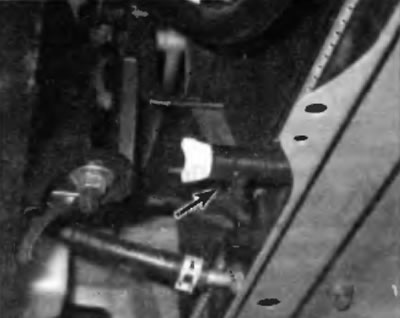
Fig. 26.4. On most models, you will need to remove the splash guard to access the drain cock at the bottom of the radiator
5. After coolant stops flowing from the radiator, move the container under the cylinder block drain plug. Release the plugs and allow the coolant contained in the cylinder block to drain. On four-cylinder models, the block drain plug is located on the front side of the cylinder block. On V6 models, there is one plug on each side of the block (Figure 26.5).
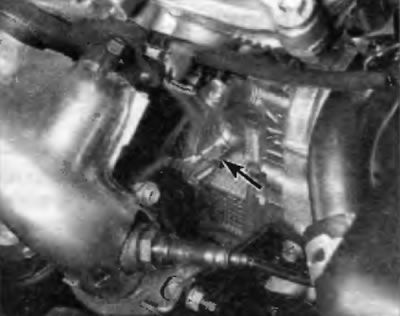
Row 26.5. The V6 engine has a coolant drain lip similar to the one shown; it is located on the front and back sides of the cylinder block
6. While the coolant is draining, check the condition of the radiator hoses, heater hoses and clamps (consult your paragraph 11).
7. Replace damaged clamps or hoses (see chapter 3).
Flushing
8. After the system has been completely drained, remove the thermostat from the engine (see chapter 3). Then reinstall the thermostat housing without the thermostat. This will flush the system.
9. Replace the cylinder block drain plug and tighten the radiator drain plug. Set the heating system controls to the maximum heat position so that the heater core is flushed at the same time as the rest of the cooling system.
10. Disconnect the upper radiator hose from the radiator. Insert a garden hose into the upper radiator inlet, turn on the water supply and flush the system. Flushing should be done until clear water comes out of the upper radiator hose (fig. 26.10).
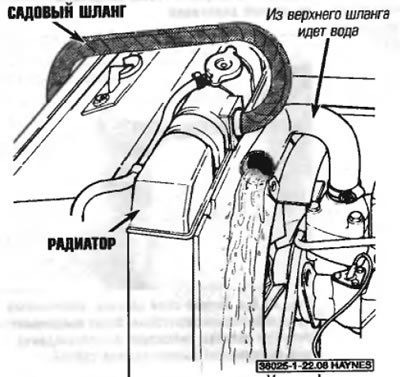
Row. 10.26. With the thermostat removed, disconnect the upper radiator hose and flush the radiator and cylinder block with a mixture of a garden hose
11. In severe cases of radiator contamination or blockage, remove the radiator (see chapter 3) and take it to the appropriate organization for cleaning and any necessary repairs. Most deposits can be removed by chemical action of special cleaning agents that can be purchased at an auto parts store. Follow the procedure specified in the manufacturer's instructions.
Note: If the coolant is drained regularly and the system is refilled with the proper antifreeze/water mixture, there should be no need to use chemicals to clean or descale.
12. After flushing, drain the radiator and remove the cylinder block drain plugs again to drain the water from the system.
Refueling
13. Close and tighten the radiator drain cock. Screw in and tighten the cylinder block drain plug.
(The material is republished from an online website: toyotaman)
14. Set the heater temperature control to the maximum heat position.
15. Slowly pour new coolant into the radiator until it is full. Fill the coolant reservoir to the bottom mark.
16. Leave the radiator cap off and allow the engine to run in a well-ventilated area until the thermostat opens (coolant will not start flowing through the radiator and the upper radiator hose will become hot).
17. Turn off the engine and allow it to cool. Add more coolant to bring the level back up to the lip on the radiator filler neck.
18. Squeeze the upper radiator hose to remove air, then add additional coolant if necessary. Install the radiator cap.
19. Start the engine and allow it to reach normal operating temperature. Then check for leaks.