



2. The cooling system should be checked with a cold engine. Do this before or after driving the car, keeping the engine off for at least 3 hours.
Warning! Never remove the radiator sealing cap while the engine is running or immediately after it has been turned off - the cooling system will be very hot in this case. Scalding from escaping steam or liquid may result in serious injury.
3. Remove the radiator cap by turning it to the left until it stops. If you hear a hissing sound (indicating that there is still pressure in the system), wait until it stops. Now press the cap with your palm and continue turning it to the left until you can remove the cap completely. Rinse the cap thoroughly inside and out with clean water, clean the filler neck on the radiator. All traces of corrosion should be removed. The coolant inside the radiator should be relatively clear. If it is rusty, the system should be drained and refilled (see paragraph 26). If the coolant level does not reach the top, add a mixture of antifreeze and water/coolant (see paragraph 4).
4. Carefully inspect the large upper and lower radiator hoses along with the smaller diameter heater hoses that run from the engine to the bulkhead. Inspect each hose along its entire length. Replace any hoses that are cracked, swollen, or showing signs of deterioration. Cracks will be more noticeable if the hose is compressed (Fig. 11.4). Regardless of condition, it is recommended that the hoses be replaced with new ones every two years.
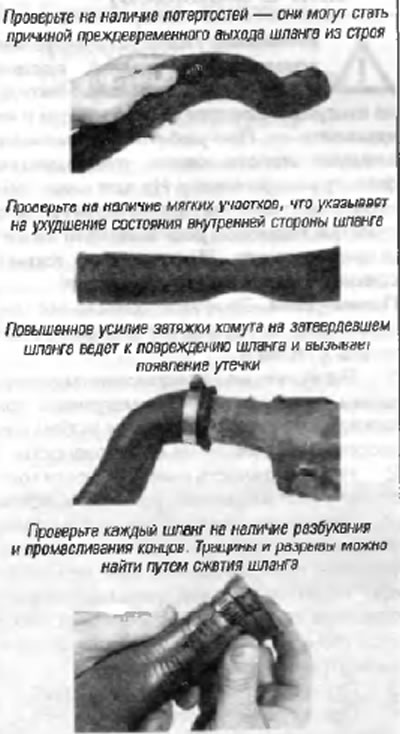
Fig. 11.4. Hoses, like drive belts, have a tendency to fail at the most inconvenient times. To avoid a burnt-out radiator or heater hose, they need to be carefully inspected, as shown here.
5. Make sure all hose connections are tight. A leak in the cooling system will usually show up as white or rusty deposits in areas near the leak. If wire clamps are used at the ends of the hoses, it is recommended to replace them with more reliable worm (screw) clamps.
6. Using compressed air or a soft brush, remove insects, leaves, etc. from the front of the radiator or air conditioner condenser. Be careful not to damage or cut yourself on the fragile cooling fins/plates.
7. At every other inspection or at the first sign of a problem with the cooling system, check the cap and the pressure in the system. If you do not have a pressure tester, most service stations can do this inexpensively.