



Examination
1. The drive belt is located on the right side of the engine compartment. Good condition and correct adjustment of the belts are the key to reliable engine operation. Due to their structure and the high stresses that occur during operation, the belts stretch with effort and their condition deteriorates. Therefore, they should be inspected periodically.
2. On four-cylinder models, a single belt drives the alternator, air conditioning, and power steering. On V6 models, one belt transmits power from the crankshaft to the alternator and air conditioning, and the other belt drives the power steering pump.
3. With the engine off, open the hood and locate the drive belts on the right side of the engine compartment. Using a flashlight, inspect each belt for rubber separation on both sides of the core, separation of the core from the belt sides, core delamination, rib separation from the base, cracks or delamination of the ribs, and breaks or wear on the ribs or cracks on the inside surfaces of the ribs (Figure 21.3). Also check for fraying and glazing, which give the belt a shiny appearance. Both sides of the belt must be inspected, which means you will need to twist the belt to check the back side. If you cannot see the back side of the belt, perform a feel test with your fingers. If any of the above conditions are present, replace the belt (see, item 8 or item 16).
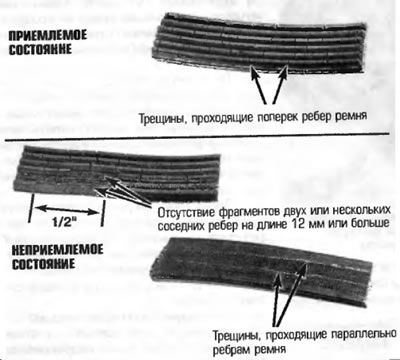
Fig. 21.3. Check the poly V-belt for signs similar to those shown. If the belt appears worn, replace it
4. The tension of each belt is checked by pressing the belt in the middle of the section between the pulleys. Press firmly on the belt with your thumb and see how much the belt moves (bends) (Fig. 21.5) As a rule, the belt should deflect approximately 6 mm.
Adjustment (v6 engine only)
5. If the alternator/air conditioner compressor belt requires adjustment, loosen the alternator pivot bolt located on the left front corner of the cylinder block. Loosen the clamp bolt and turn the adjusting bolt (Fig. 21.5). Measure the belt tension using the method described above. Repeat this procedure until the air conditioner compressor drive belt is adjusted.
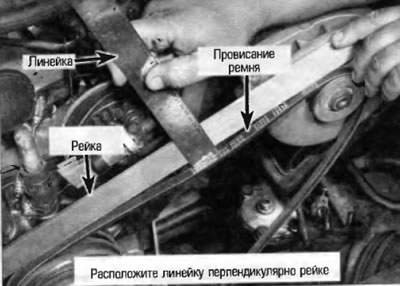
Fig. 21.5. Measuring the sag of the right belt using a straight rod and ruler
6. Adjust the power steering pump belt, loosen the adjusting bolt that holds the pump to the bracket and turn the pump (away from the engine to tighten the belt and towards the engine to loosen it). Repeat the procedure until the correct drive belt tension is achieved and tighten the bolt.
Replacement
Four-cylinder engine
7. Remove the right front wheel.
8. Remove the right wing apron seal.
9. Remove the right engine cover assembly.
10. Remove the upper engine jet mount and bracket (see paragraph 17 of chapter 2A).
[The official source is on the portal: ToyotaMan.ru]
11. Slowly turn the drive belt tensioner clockwise and remove the belt from the pulleys.
12. When purchasing a new belt, use the old one for direct comparison of belts by length, width and construction.
13. After replacing the drive belt, make sure it is correctly positioned in the pulley grooves. Correct belt alignment is very important.
V6 Engine
14. When replacing the belt, follow the V6 drive belt adjustment procedure, but remove the belt from the crankshaft pulley and out of the engine compartment. If you are replacing the power steering pump belt, due to the location of the belts on the crankshaft pulley, you must remove the A/C compressor belt first. For this reason, and because the belts tend to wear at about the same rate, it is recommended that both belts be replaced at the same time. Mark each belt and its position on the pulley so that replacement belts can be installed correctly.
15. When purchasing new belts, use old ones for direct comparison of belts by length, width and construction.
16. After replacing the drive belt, make sure it is correctly positioned in the pulley grooves. Correct belt alignment is very important.
17. Adjust the belt according to the procedure described above in this paragraph.