



Main units of the air cooling system
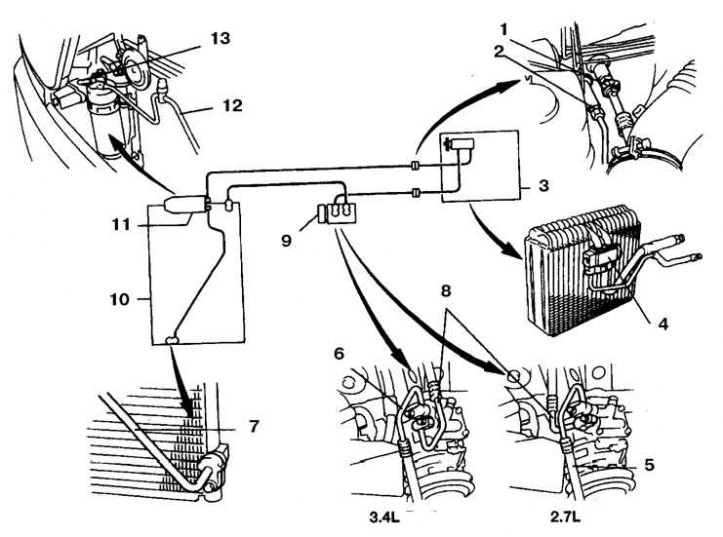
1, 8. Suction hose; 2. Tube with liquid refrigerant; 3. Evaporator; 4. Expansion valve; 5. Outlet hose (2.7L engine); 6. Outlet hose (3.4L engine); 7, 12, 13. Tube with liquefied refrigerant; 9. Compressor; 10. Capacitor; 11. Moisture separator
1. Warm up the engine.
2. Move the temperature control lever to the position corresponding to the lowest temperature, set the fan speed to the highest. Open the doors.
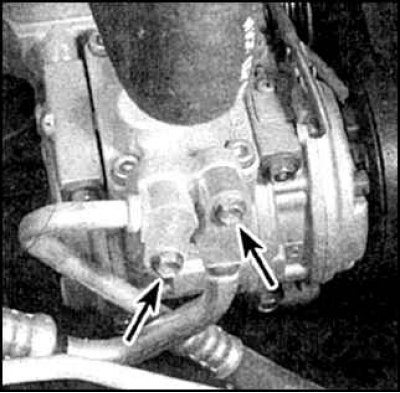
3. Check the compressor activation, when the electromagnetic clutch clicks and the central part of the clutch starts to rotate. After the system reaches operating mode, compare the temperature of the two compressor tubes (arrows indicate the tube fastenings). If the temperature to the touch is slightly different, then refilling is necessary.
(The original article is on the portal: ToyotaMan)
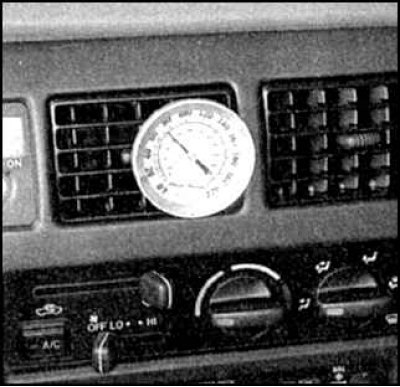
4. With the air conditioner running, place the thermometer near the central part of the air outlet duct. The air temperature at the outlet of the duct should be 17–20°C lower than the ambient temperature. If the ambient temperature is very high, for example 45°C, the air temperature at the outlet of the air conditioner can reach 15°C, although as a rule the temperature of the cooled air is 17–20°C lower than the ambient temperature. If the temperature of the cooled air is higher than the generally accepted value, the air conditioner must be refilled with refrigerant.
5. Further work on the air conditioner is beyond the scope of this manual and must be performed by trained personnel.
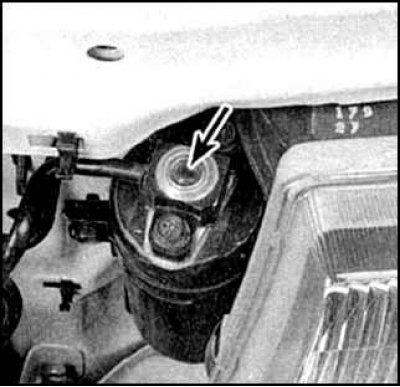
6. Check the condition of the refrigerant through the sight glass (indicated by the arrow). If foaming is observed in the glass when the air conditioner is running, the amount of refrigerant is insufficient. At high ambient temperatures, bubbles may be observed in the sight glass, even with normal refrigerant charging. When the air conditioner is turned off and the amount of refrigerant is normal, a slight foaming is observed in the sight glass, which subsequently disappears.