



Contents: Elements ↓ Wheel speed sensor - removal and…↓
1. The anti-lock braking system (ABS) is designed to maintain control of the vehicle and provide directional stability and optimum deceleration under heavy braking on most types of road surfaces. This is achieved by monitoring the rotational speed of each wheel and controlling the brake pressure supplied to each wheel during braking. This helps prevent the wheels from locking. The ABS system is primarily designed to prevent the wheels from locking under heavy braking, but the information supplied by the wheel speed sensors to the ABS system is also used by several other additional systems that use the data to ensure vehicle control. The Electronic Brakeforce Distribution (EBD) system varies the balance of braking forces between the front-rear and left-right wheels depending on the load on the vehicle. The TRAC traction control system controls only the front (driven) wheels and is designed to automatically adjust the speed of the front wheels when starting off or accelerating on slippery surfaces. Vehicle Stability Control (VSC) improves vehicle handling when cornering using information from the ABS and yaw rate sensors (which senses the vehicle's roll angle from side to side). When the VSC electronic control unit senses oversteer or understeer, it reduces engine power and selectively applies the brakes.
Elements
Actuator assembly
2. The actuator assembly is installed in the engine compartment and consists of an electro-hydraulic pump and electromagnetic valves (Fig. 2.2).
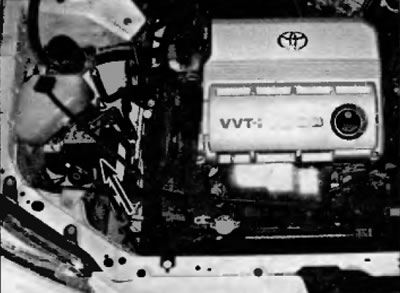
Fig. 2.2. ABS actuator (installed in the right front part of the engine compartment or below the brake booster, depending on the model)
- a) The electric pump creates hydraulic pressure to fill the reservoirs in the actuator, which supplies pressure to the brake system. The pump and reservoirs are located in the actuator.
- b) Solenoid valves modulate the pressure in the brake line when the ABS is operating.
Speed sensors
3. These sensors are located on each wheel and when the sensor wheels rotate, they generate weak electrical pulses and send a signal to the electronic control unit corresponding to the wheel speed.
4. The front speed sensors are mounted on the front steering knuckles near the sensor pulse wheels, which, in turn, are connected to the outer constant velocity joints of the front axle shafts.
5. The rear wheel sensors are bolted to the rear hub supports. The sensor pulse wheels are integrated with the rear hubs
ABS control unit
6. The ABS control unit is installed together with the actuator and is the brain of the ABS system. The control unit must receive and process information from the wheel speed sensors to control the hydraulic pressure to prevent the wheels from locking. In addition, the control unit constantly monitors the system, even during normal driving, to detect any malfunctions that occur in the system.
Diagnostics and repair
7. If the indicator light on the dash comes on and stays on while driving, the ABS system requires attention. Although special electronic testers are required to properly diagnose the ABS system, you can perform a few preliminary welds yourself before contacting your dealer's service department.
- a) Check the brake fluid level in the reservoir.
- b) Check the reliability of the electrical connectors of the electronic control unit.
- c) Check the electrical connectors in the hydraulic control unit.
- d) Check the fuses.
- d) Trace the wiring harness to each wheel and ensure that all connections are secure and that the wiring is not damaged.
8. If the above preliminary checks do not resolve the problem, the vehicle should be taken to the dealer's service department or other qualified service station for diagnosis. Due to the complexity of this system, all actual repair work should be performed by a qualified mechanic.
Caution: Do not attempt to repair the ABS wiring harness. The ABS system is sensitive to even the slightest changes in resistance. Repairing the wiring harness may cause a change in resistance values and lead to system malfunctions. If the ABS wiring harness is damaged, it must be replaced.
Caution: Turn off the ignition before disconnecting or repairing any electrical connections.
Wheel speed sensor - removal and installation
9. Loosen the wheel nuts. Raise the car and place reliable supports under it. Remove the wheel.
Caution: If the vehicle is equipped with electronically controlled air suspension, turn off the height control switch before raising the vehicle.
10. Turn the ignition switch to the OFF position.
11. Trace the wiring from the sensor. Note its routing and disconnect all brackets and clamps. Then disconnect the electrical connector.
12. When working on front wheel speed sensors on all models and rear wheel speed sensors on 4WD models, remove the bolt and carefully remove the sensor from the steering knuckle/hub support (fig. 2.12, a). The rear wheel speed sensor on 2WD models is built into the rear hub support and cannot be removed without removing the hub support (fig. 2.12, b). The procedure for removing the rear hub is described in chapter 10.
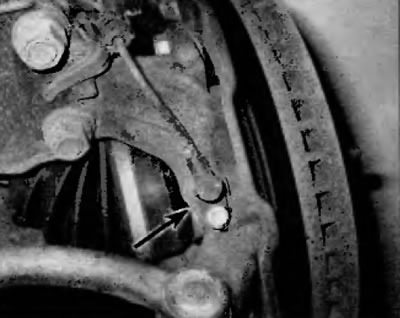
Fig. 2.12, a. Front wheel speed sensor (the rear wheel speed sensor on all-wheel drive models is similar)
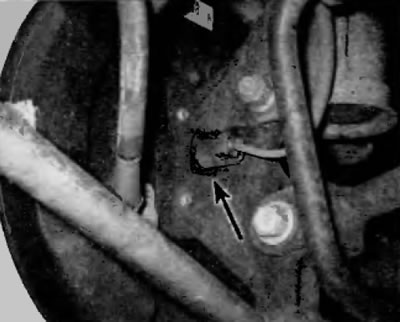
Fig. 2.12, b. Electrical connector for rear wheel speed sensor on 2WD models (the sensor itself is inserted into the rear hub support)
13. Installation is carried out in the reverse order of removal. Tighten the fastening element securely.
14. Install the wheel. Install the wheel nuts and tighten them securely. Lower the vehicle and tighten the wheel nuts to the specified torque as shown in the Specifications at the beginning of this chapter.