



Contents: Removal ↓ Installation ↓
Caution: If the vehicle is equipped with electronically controlled air suspension, turn off the height control switch before raising the vehicle.
Application: Please note that the painted markings on all rear suspension arms face the rear of the vehicle. If the markings are missing or not visible, mark the arms to allow the arms to be installed in their original positions.
Removal
1. Loosen the rear wheel mounting nuts, lift the rear of the car and place reliable supports underneath it. Remove the rear wheel.
Front wishbone (No. 1) (two wheel drive)
2. Remove the rear stabilizer (see paragraph 9).
3. Remove the lever fastening elements from the hub support and rear crossmember, and then remove the lever (Fig. 12.3).
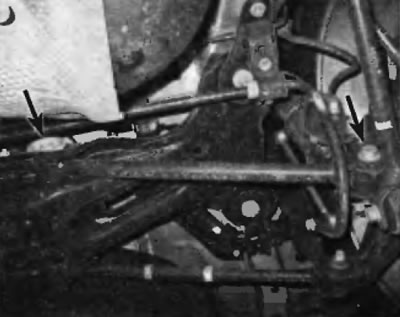
Fig. 12.3. Front wishbone mounting elements on 2WD and 2WD models
Front wishbone (N°1) (all wheel drive)
4. On all-wheel drive models, the rear crossmember must be lowered to access the bolt at the inner end of the front wishbone.
5. Disconnect the trailing arms from the hub support on both sides of the vehicle (see paragraph 11).
6. Remove the center section of the exhaust system and the rear exhaust pipe (see chapter 4).
7. Remove the propeller shaft assembly with the intermediate support (see chapter 8).
8. Remove both rear axle shafts (see chapter 8).
9. Disconnect the wishbones from the supports of both hubs.
10. Place a floor jack under the center of the crossmember (under differential), then release and remove the crossbar fastening elements from the body (fig. 12.10, a, b). Carefully lower the rear crossmember using a jack (do not crawl under a vehicle that is supported only by a jack) until you gain access to the wishbone bolts. Remove the bolts (fig. 12.10, a, b).
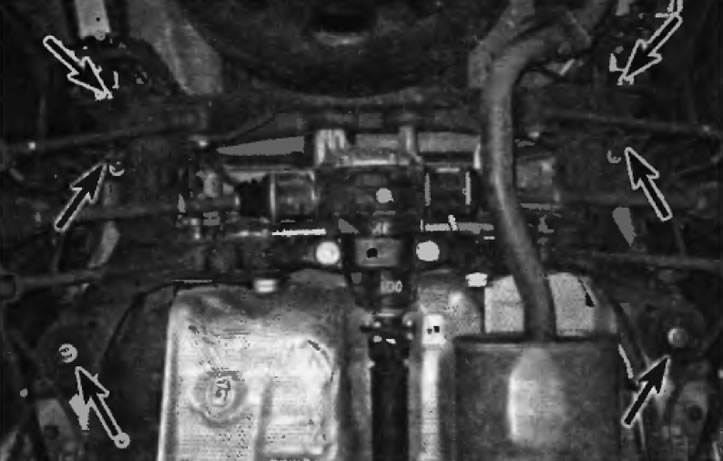
Fig. 12.10, a. Rear crossmember fastening elements on all-wheel drive models
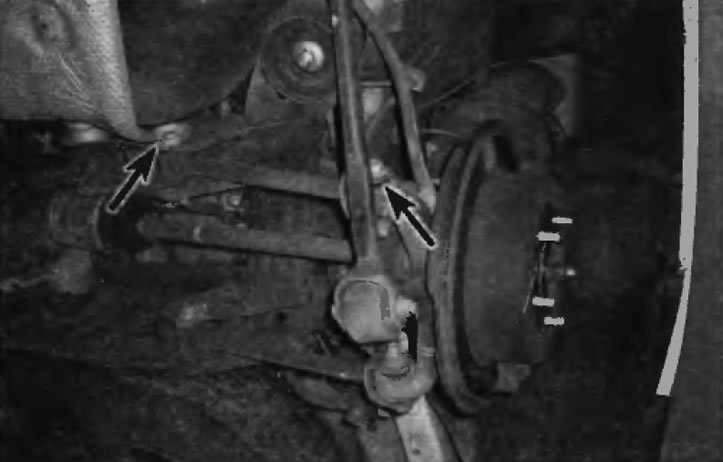
Fig. 12.10, b. Fastening elements of the front transverse arm on all-wheel drive models
Caution: It is recommended to use a floor jack with a transmission adapter head to perform this procedure to properly support the crossmember.
Rear wishbone (No. 2) (all wheel drive)
11. Remove the rear stabilizer (see paragraph 9).
12. On 2003 and earlier models, mark the position of the eccentric bolts (on both sides), to maintain the alignment (fig. 12.12).
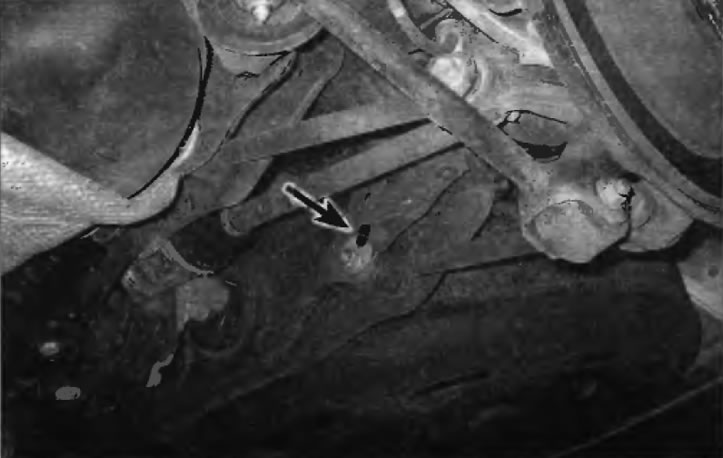
Fig. 12.12. Eccentric bolt with its position marked relative to the rear crossmember
13. Remove the lever mounting elements from the hub support and crossmember, then remove the lever (fig. 12.13).
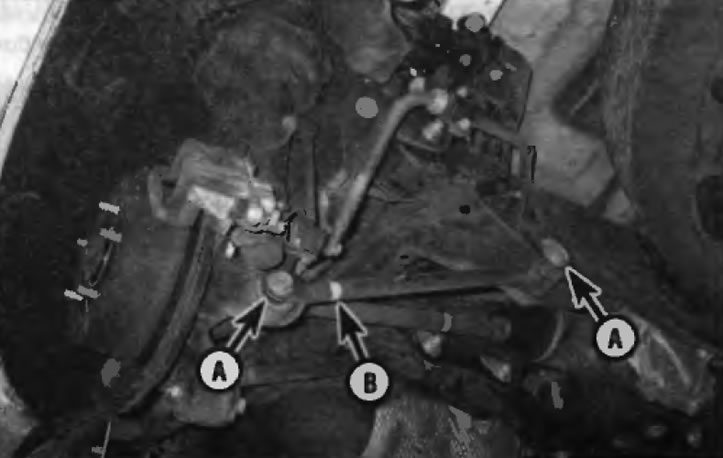
Fig. 12.13. Rear wishbone mounting hardware (A) on all-wheel drive models. Note the paint mark (B) facing the rear of the vehicle
Note: On Lexus vehicles with electronically controlled air suspension, disconnect the ride height sensor linkage from the control arm before removing the mounting hardware.
Installation
Application: When installing any rear suspension arms, loosely tighten all bolts, adjust to normal ground clearance, and then fully tighten the bolts.
14. Installation is carried out in the reverse order of removal. Tighten all bolts/nuts to the specified torque specified in Specifications at the beginning of this chapter.
Note: When reinstalling the control arms, the factory painted markings on the control arms must face the rear of the vehicle.
15. Install the wheel and tighten the wheel nuts. Lower the vehicle. Tighten the wheel nuts to the specified torque specified in Specifications at the beginning of this chapter. If you are working on a four-wheel drive model, tighten the axle/hub nut to the specified torque as shown in Specifications at the beginning of this chapter.
16. Check the rear wheel alignment angles, for which you should visit the dealer's service department or a specialized service station.