
Company Honda Company Ford Company Skoda Company Kia Company Mazda Company Mercedes Company Renault
English Русский
Български
Беларускі
Український
Српски
Hrvatski
Română
Polski
Slovenský
Magyar
Bookmark Articles Sitemap Contacts
ToyotaMan.ru


Camry Corolla Corona Carina Land Cruiser Highlander 4Runner RAV4 Others
Highlander 1 (2000-2007, petrol)

Rear suspension strut assembly — removal, inspection and installation [Toyota Highlander XU20]

  • Main
  • Highlander
  • XU20 (2000-2007)
  • Chassis, running gear
  • Car suspension
  • Rear suspension strut assembly — removal, inspection and installation
0
Contents: Removal ↓ Inspection ↓ Installation ↓

Removal


Caution: If the vehicle is equipped with electronically controlled air suspension, turn off the height control switch before raising the vehicle.


Application: When removing/replacing any rear suspension components, loosely tighten all bolts, adjust to normal ride height, and then fully tighten the bolts.


1. Remove the decorative panel covering the upper rack mounting elements (Fig. 10.1).
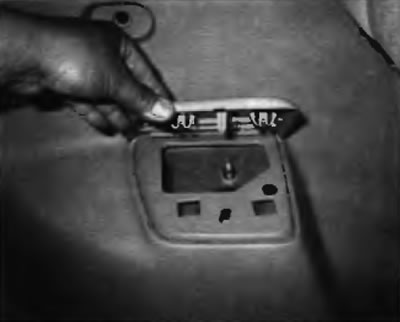


Fig. 10.1. To remove the plastic cover, pull it up


2. Loosen the rear wheel mounting nuts, lift the rear of the car and place reliable supports under it. Remove the wheel.

3. Disconnect the brake hose and wheel speed sensor wiring harness from the suspension strut (Fig. 10.3).
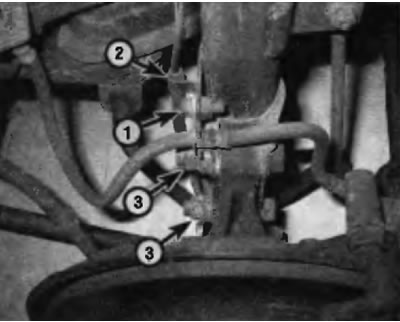


Fig. 10.3. Fastening the suspension strut to the lower bracket:
1 — Brake hose bracket bolt
2 — ABS wiring harness bracket
3 — Rack mounting elements


4. Disconnect the stabilizer bar from the suspension strut (see paragraph 9).


5. Support the hub support with a floor jack.

6. Loosen the nuts on the bolts securing the suspension strut to the hub support (Fig. 10.3).

7. On 2004 and later Lexus models equipped with electronic air suspension, disconnect the air hose going to the strut assembly.

Note: A special tool is required to disconnect the air hose from the suspension strut.


8. If the strut needs to be disassembled, loosen, but do not completely remove, the shock absorber rod nut (in the center).

9. Unscrew the three upper nuts securing the rack to the body.

10. Lower the hub support with a jack, unscrew the two bolts securing the suspension strut to the hub support, and then remove the strut assembly.

Inspection


11. Follow the inspection procedures described in paragraph 3. If you want to disassemble the suspension strut to replace the shock absorber or spring, please contact paragraph 4.

(The material is republished from an online website www.TOYOTAMAN.ru)

Application: On 2004 and later Lexus models with electronically controlled air suspension, if the strut is found to be faulty, it should be replaced.


Installation


12. Have an assistant position the strut into the engine compartment mudguard recess and thread the studs through the holes in the body. Screw on the nuts, but do not tighten them yet.

13. Insert the hub support into the lower strut bracket, insert the bolts and screw on the nuts, and then tighten them to the specified torque specified in Specifications at the beginning of this chapter.

14. Connect the stabilizer bar to the stabilizer bar bracket.


15. Secure the brake hose bracket and wheel speed sensor wiring harness to the strut.

16. Install the wheel and tighten the wheel nuts. Lower the vehicle and tighten the wheel nuts to the specified torque specified in Specifications at the beginning of this chapter.

17. Tighten the three upper strut mounting nuts to the specified torque shown in Specifications at the beginning of this chapter, and replace the decorative cover that covers the fasteners.
This article is available at: russian, bulgarian, belarusian, ukrainian, serbian, croatian, romanian, polish, slovak, hungarian
The article material has been checked: Kondratyeva Ulyana
Share information:
◀ Previous
Highlander 1: Car suspension
Next ▶

Rear Anti-Roll Bar and Bushings — Removal and Installation
Front hub assembly with bearing — removal and installation
Steering knuckle and hub — removal and installation
Ball joints — replacement
Strut assembly with spring — replacement
Rear Suspension Trailing Arm — Removal and Installation
Rear suspension wishbones — removal and installation
Rear hub assembly with bearing — removal and installation
Rear hub support — removal and installation
Similar articles on other Toyota models

➥ Rear suspension strut — removal, inspection and installation Toyota Camry XV20 (1996-2001)
➥ Rear suspension strut — design description Toyota Corona T190 (1992-1997)
➥ Rear suspension strut device Toyota Carina T190 (1992-1996)
➥ Rear wheel hub and suspension bracket Toyota Corolla E80 (1983-1990)
➥ Removal and installation the rear suspension coil spring Toyota Cruiser 100 (1998-2007)
➥ Front suspension strut — removal, inspection and… Toyota RAV 4 XA10 (1994-2000)
Link in different formats to this article
Comments and feedback from visitors
No comments yet


Add two numbers 33 + 30


Highlander 1 (2000-2007, petrol) 
  • General information
  • Introduction to the guide
  • Troubleshooting
  • Maintenance
  • Power unit
  • 4-cylinder engine
  • 6-cylinder engine
  • Overhaul of engines
  • Cooling and heating
  • Supply and exhaust system
  • Engine electrical equipment
  • Control system
  • Transmission
  • Automatic gearbox
  • Drive shafts and cardan
  • Chassis, running gear
  • Brake system
  • Car suspension
  • Steering
  • Body and interior
  • Exterior (external elements)
  • Interior (internal elements)
  • Doors, locks and windows
  • Electrical equipment
  • Equipment and devices
  • Electrical circuits
ToyotaMan.ru © 2018–2026 • Mobile version • Interesting about Toyota • Administration • Sitemap: EN BG BY UA RS HR RO PL SK HU • Search system • Bookmark
Camry Vista-V40 • Camry XV10 • Camry XV20 • Camry XV30 • Corolla Verso-AR10 • Corolla E80 • Corona T190 • Carina T170 • Carina T190 • Land Cruiser J70 (diesel) • Land Cruiser J60 (petrol) • Land Cruiser J100 • Highlander XU20 (petrol) • 4Runner N120 • RAV4 XA10 • RAV4 XA20 • Duet M100 • Dyna Y50 •
We require cookies to enable some interactive features. Is that ok with you?