



The FJ60 cars, which were produced from 1980 to 1987, were equipped with the 2F engine. The 3F-E engines were installed in the FJ62 cars (1988-1990.). The FJ80 series cars were produced from 1989 to 1997 and were equipped with twin-shaft overhead valve engines 1FZ-FE.
The 2F engine is a carburetor, the valve drive is provided by rods connected to pushers ("pushrod" - engine). The 3F-E and 1FZ-FE engines are injection engines, the valve drive is the same as in the 2F engine. All cars are all-wheel drive, the main driving axle is rear. The drive to the front (rear) wheels is provided through a transfer case and a gearbox. The cars have dependent suspensions, the front and rear axles are made in the form of bridges. The elastic elements of both suspensions are springs (FJ60, FJ62) or springs with shock absorbers (FJ80).
The steering gear is mounted to the left of the engine and is connected to the wheels by levers and rods. All cars are equipped with power steering.
Disc or drum brakes, equipped with a vacuum booster.
Vehicle identification numbers
When compiling operating manuals and spare parts catalogs, numerical vehicle codes are used, so when selecting and installing the necessary parts, it is necessary to know the identification code (identification) car number.
Identification number
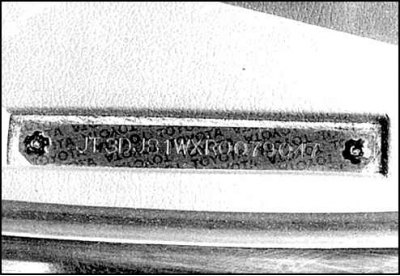
The identification number is used when registering a vehicle.
Car number plate (VIN number) is fixed to the windshield frame on the driver's side. The plate indicates the date of manufacture, the year of the given model and the body type.
Engine number
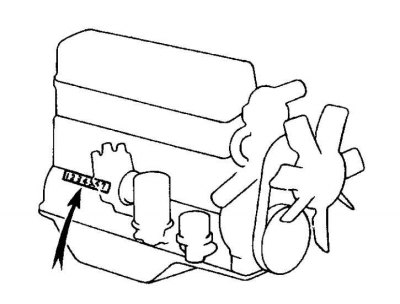
On 2F and 3F-E engines the number is stamped on the right side of the cylinder block.
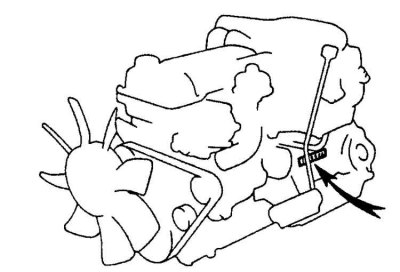
On 1FZ-FE engines the number is stamped on the left side of the block.
Factory certificate
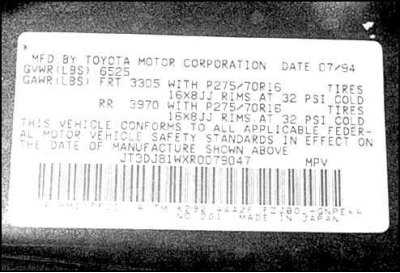
(The original source is located on the website www.ToyotaMAN.ru)
The certificate plate is located on the front door pillar. The plate indicates the month and year of manufacture, manufacturer, bar codes, a conclusion on the vehicle's suitability for operation, and the vehicle's gross vehicle weight.
Emission control system and vacuum hose routing diagram sign (VECI-label)
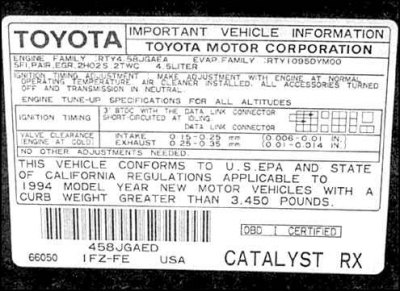
Reinforced on the inside of the hood. Contains emission control system data and adjustment data.
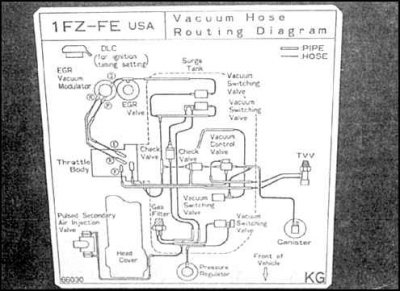
Vacuum hose routing diagram
Numbers on transmission units
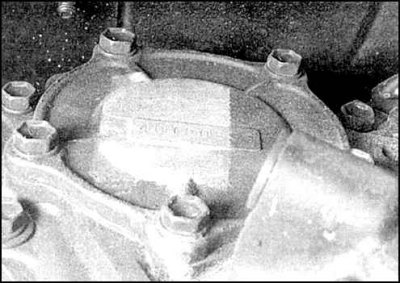
The transfer case number is stamped on the side of the crankcase.
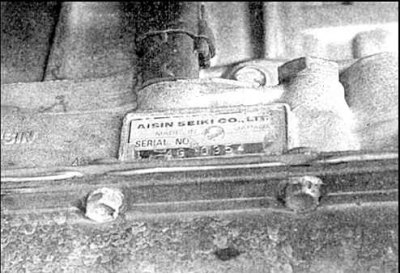
The transmission number is contained on a plate attached to the side of the crankcase.