Share information:

Vehicle Maintenance Toyota Land Cruiser 100

Top and bottom view of the engine compartment
Typical bottom view of the front of a 4WD car 1 - Drive shafts; 2 - Helical spring; 3 - Drain plug of the oil pan; 4 - Filler plug of the front differential; 5 - Drain plug of the front differential; 6 - Front propeller...
Typical bottom view of the front of a 4WD car 1 - Drive shafts; 2 - Helical spring; 3 - Drain plug of the oil pan; 4 - Filler plug of the front differential; 5 - Drain plug of the front differential; 6 - Front propeller...

Maintenance Specifications
Recommended lubricants and fluids Note. The lubricants and fluids recommended by the vehicle manufacturer at the time of writing this manual are listed below. For more up-to-date information, contact Toyota Authorized...
Recommended lubricants and fluids Note. The lubricants and fluids recommended by the vehicle manufacturer at the time of writing this manual are listed below. For more up-to-date information, contact Toyota Authorized...

Schedule of ongoing maintenance
The intervals of routine maintenance of the vehicle specified in this Section are designed for the independent performance by the owner of the vehicle of all necessary procedures. The duration of the intervals was...
The intervals of routine maintenance of the vehicle specified in this Section are designed for the independent performance by the owner of the vehicle of all necessary procedures. The duration of the intervals was...
General information about settings and adjustments
Entitled «settings» this Manual does not imply a single procedure for adjusting any of the parameters of the car's systems, but a whole range of adjustments to achieve maximum engine efficiency. If the owner of a new...
Entitled «settings» this Manual does not imply a single procedure for adjusting any of the parameters of the car's systems, but a whole range of adjustments to achieve maximum engine efficiency. If the owner of a new...

Checking fluid levels
Note. Some special maintenance procedures that require additional fluid level checks are also described below. Check under the vehicle regularly for signs of fluid leaks. Various fluids play the role of working fluids...
Note. Some special maintenance procedures that require additional fluid level checks are also described below. Check under the vehicle regularly for signs of fluid leaks. Various fluids play the role of working fluids...

Checking the condition of tires and their inflation pressure
A conscientious attitude to regularly checking the condition of the tires will allow the driver to avoid annoying delays associated with the failure of the wheel while driving. In addition, by the nature of the wear of...
A conscientious attitude to regularly checking the condition of the tires will allow the driver to avoid annoying delays associated with the failure of the wheel while driving. In addition, by the nature of the wear of...

Checking the level of the working fluid of the automatic transmission
Correct ATF level is one of the critical performance parameters for AT equipped models. Too much ATF can cause torque converter slip, while too much fluid foams, leaks and can damage the transmission. Checking the ATF...
Correct ATF level is one of the critical performance parameters for AT equipped models. Too much ATF can cause torque converter slip, while too much fluid foams, leaks and can damage the transmission. Checking the ATF...

Checking the power steering fluid level
Unlike a conventional type steering gear, a power-assisted rack and pinion uses a working fluid, which over time begins to need to be replaced. The location of the power steering fluid reservoir is shown in the...
Unlike a conventional type steering gear, a power-assisted rack and pinion uses a working fluid, which over time begins to need to be replaced. The location of the power steering fluid reservoir is shown in the...

Changing the engine oil and oil filter
Regular and fairly frequent replacement of engine oil is one of the main preventive maintenance procedures for a car that lies within the skill of the average amateur mechanic. Over time, motor oil is subject to aging,...
Regular and fairly frequent replacement of engine oil is one of the main preventive maintenance procedures for a car that lies within the skill of the average amateur mechanic. Over time, motor oil is subject to aging,...

Checking, maintaining and charging the battery
Warning! Performing battery health checks and maintaining the battery requires some special precautions. Remember that the hydrogen released by the electrolyte is a highly explosive gas. Do not smoke, and do not...
Warning! Performing battery health checks and maintaining the battery requires some special precautions. Remember that the hydrogen released by the electrolyte is a highly explosive gas. Do not smoke, and do not...
Checking the Condition of the Cooling System Components
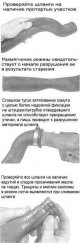
A wide range of engine failures is associated with malfunctioning of the cooling system. On models equipped with AT, this system also provides ATF cooling, thereby maintaining the most favorable conditions for the...
A wide range of engine failures is associated with malfunctioning of the cooling system. On models equipped with AT, this system also provides ATF cooling, thereby maintaining the most favorable conditions for the...
Check of a condition and replacement of the hoses located in an impellent compartment
Attention! The replacement of A/C refrigeration line hoses should be left to a car service workshop with the necessary equipment and qualifications to safely discharge the system. Never disconnect any refrigeration...
Attention! The replacement of A/C refrigeration line hoses should be left to a car service workshop with the necessary equipment and qualifications to safely discharge the system. Never disconnect any refrigeration...

Checking the condition and replacing the wiper blades
The condition of the windshield wiper assemblies should be checked regularly. Brushes are inspected for mechanical damage, signs of loosening of components and wear of rubber working elements. Over time, a road film...
The condition of the windshield wiper assemblies should be checked regularly. Brushes are inspected for mechanical damage, signs of loosening of components and wear of rubber working elements. Over time, a road film...

Rotation (permutation) wheels
Wheel rotation should be performed regularly in accordance with the vehicle's routine maintenance schedule, as well as when signs of uneven tread wear are detected. When rotating, the car must be raised off the ground -...
Wheel rotation should be performed regularly in accordance with the vehicle's routine maintenance schedule, as well as when signs of uneven tread wear are detected. When rotating, the car must be raised off the ground -...

Checking the Condition of Suspension and Steering Components
Note. Suspension and steering components should be checked regularly as wear or damage can shorten tire life, reduce vehicle handling and increase fuel consumption. Detailed illustrative material is also presented in...
Note. Suspension and steering components should be checked regularly as wear or damage can shorten tire life, reduce vehicle handling and increase fuel consumption. Detailed illustrative material is also presented in...

Lubrication of chassis components
Lubrication points for propeller shafts 1. Prepare the necessary supply of grease of the required grade (see Specifications ) and grease gun for stuffing hollow components (refer to accompanying illustration): 1 -...
Lubrication points for propeller shafts 1. Prepare the necessary supply of grease of the required grade (see Specifications ) and grease gun for stuffing hollow components (refer to accompanying illustration): 1 -...

Check of a condition of components of system of release of the fulfilled gases
1. After waiting for the complete cooling of the exhaust system (at least three hours after stopping the engine), carefully inspect all its components, starting from the flange of the intake pipe to the exhaust...
1. After waiting for the complete cooling of the exhaust system (at least three hours after stopping the engine), carefully inspect all its components, starting from the flange of the intake pipe to the exhaust...

Checking the lubricant level in the transfer case
1. The level of lubricant in the transfer case must be at least 5 mm from the lower cut of the control / filler hole on the back of its crankcase (refer to accompanying illustration). Insert your finger into the hole to...
1. The level of lubricant in the transfer case must be at least 5 mm from the lower cut of the control / filler hole on the back of its crankcase (refer to accompanying illustration). Insert your finger into the hole to...
Checking the differential lubrication level
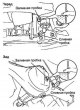
Note. Four-wheel drive vehicles use two differentials, the lubrication level must be checked in each of them. 1. The lubricant level in the differential must be at least 5 mm from the lower cut of the control / filler...
Note. Four-wheel drive vehicles use two differentials, the lubrication level must be checked in each of them. 1. The lubricant level in the differential must be at least 5 mm from the lower cut of the control / filler...
Checking the condition of the seat belts
1. Estimate a condition of tapes of seat belts, their buckles, locks and directing loops. 2. Pay attention to the inclusion of a warning lamp for seat belts when the ignition key is turned to the RUN or START position,...
1. Estimate a condition of tapes of seat belts, their buckles, locks and directing loops. 2. Pay attention to the inclusion of a warning lamp for seat belts when the ignition key is turned to the RUN or START position,...

Checking and adjusting idle speed
Idle speed is the speed of the crankshaft when the accelerator pedal is released. This parameter is one of the critical ones that determine both the operation of the engine in general and the correct functioning of its...
Idle speed is the speed of the crankshaft when the accelerator pedal is released. This parameter is one of the critical ones that determine both the operation of the engine in general and the correct functioning of its...

Check of a condition of protective covers of power shafts
Protective covers are used to prevent dirt from entering the constant velocity joints (CV joints) drive shafts of the car, and also keep grease stuffed into the joints. The ingress of grease and oil on the outer...
Protective covers are used to prevent dirt from entering the constant velocity joints (CV joints) drive shafts of the car, and also keep grease stuffed into the joints. The ingress of grease and oil on the outer...
Checking and replacing the valve of the controlled crankcase ventilation system (PCV)
Note. The operating principle of the PCV system is detailed in Chapter Engine management and emission control systems . The PCV system ensures that crankcase gases are led through a special valve through a hose back...
Note. The operating principle of the PCV system is detailed in Chapter Engine management and emission control systems . The PCV system ensures that crankcase gases are led through a special valve through a hose back...

Replacing the air cleaner element
The filter element is replaced regularly in accordance with the car's routine maintenance schedule. During the operation of the vehicle, the condition of the filter should be checked quite often, especially in very...
The filter element is replaced regularly in accordance with the car's routine maintenance schedule. During the operation of the vehicle, the condition of the filter should be checked quite often, especially in very...
Checking, adjusting tension and replacing drive belts
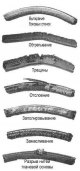
Examination Drive belts play an important role in the functioning of the engine and many other vehicle systems. Belts wear out over time and should be regularly inspected in accordance with the vehicle's routine...
Examination Drive belts play an important role in the functioning of the engine and many other vehicle systems. Belts wear out over time and should be regularly inspected in accordance with the vehicle's routine...
Checking the status of power system components
Warning! Do not forget that gasoline is a highly flammable liquid! Observe all applicable fire safety precautions when servicing power system components. Do not smoke, do not approach the work area with an open flame or...
Warning! Do not forget that gasoline is a highly flammable liquid! Observe all applicable fire safety precautions when servicing power system components. Do not smoke, do not approach the work area with an open flame or...

Checking the brake system
Warning! Remember that the dust generated during the operation of the brake mechanisms may contain asbestos, which is extremely harmful to human health. Never blow off dust with compressed air or inhale it; when...
Warning! Remember that the dust generated during the operation of the brake mechanisms may contain asbestos, which is extremely harmful to human health. Never blow off dust with compressed air or inhale it; when...

Adjusting the height of the position and free travel of the brake pedal
Pedal Height The height of the pedal position is the amount of removal of its pad from the floor (refer to accompanying illustration). If the parameter in question is out of range (see Specifications ), must be adjusted...
Pedal Height The height of the pedal position is the amount of removal of its pad from the floor (refer to accompanying illustration). If the parameter in question is out of range (see Specifications ), must be adjusted...

Checking the condition and replacing spark plugs
Note. If the original spark plugs are re-installed on the engine after checking the condition, they must be screwed strictly into the previous cylinders - make the appropriate marking. Tools needed when changing spark...
Note. If the original spark plugs are re-installed on the engine after checking the condition, they must be screwed strictly into the previous cylinders - make the appropriate marking. Tools needed when changing spark...

Checking and adjusting valve clearances
Attention! Adjustment of valve clearances is carried out on a cold engine! Gas engine Note. To perform this procedure, you will need special tools that can be purchased from Toyota service centers, original auto...
Attention! Adjustment of valve clearances is carried out on a cold engine! Gas engine Note. To perform this procedure, you will need special tools that can be purchased from Toyota service centers, original auto...

Fuel filter replacement
Warning! When servicing power system components, remember that gasoline is a highly flammable liquid. Do not smoke near the place of work, do not approach it with an open flame! Immediately collect all traces of spilled...
Warning! When servicing power system components, remember that gasoline is a highly flammable liquid. Do not smoke near the place of work, do not approach it with an open flame! Immediately collect all traces of spilled...
Checking and servicing the air conditioner
1. Although self-maintenance of the A/C is not recommended, some preventive measures can be taken to prolong its performance. 2. Turn on the A/C once a month to ensure internal components are lubricated and seals are...
1. Although self-maintenance of the A/C is not recommended, some preventive measures can be taken to prolong its performance. 2. Turn on the A/C once a month to ensure internal components are lubricated and seals are...
Maintenance of the cooling system
Attention! Do not allow antifreeze to come into contact with exposed areas of the body and painted surfaces of the car. Wash off accidental splashes with plenty of water without delay. Remember that antifreeze is a...
Attention! Do not allow antifreeze to come into contact with exposed areas of the body and painted surfaces of the car. Wash off accidental splashes with plenty of water without delay. Remember that antifreeze is a...
Checking the condition, packing with grease and adjusting the front hubs and wheel bearings
Note. Sealed type bearings are installed on the vehicles in question, which are packed with grease at the factory. Such wheel bearings are discussed in Chapter Suspension and steering . Do not attempt to disassemble...
Note. Sealed type bearings are installed on the vehicles in question, which are packed with grease at the factory. Such wheel bearings are discussed in Chapter Suspension and steering . Do not attempt to disassemble...

Replacement of ATF automatic transmission and final drive
ATF replacement should be carried out on a regular basis, in accordance with the vehicle's routine maintenance schedule (see Section Schedule of ongoing maintenance ). Since the transmission fluid remains hot long after...
ATF replacement should be carried out on a regular basis, in accordance with the vehicle's routine maintenance schedule (see Section Schedule of ongoing maintenance ). Since the transmission fluid remains hot long after...

Transfer case lubricant change
1. Take a short car ride (about 15 minutes long) a trip to warm up the oil in the transfer case, if possible, turn on the all-wheel drive mode, try to drive the car at all possible speeds, including reversing. 2. Jack...
1. Take a short car ride (about 15 minutes long) a trip to warm up the oil in the transfer case, if possible, turn on the all-wheel drive mode, try to drive the car at all possible speeds, including reversing. 2. Jack...
Replacing differential grease
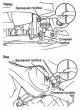
1. Take a short car ride (about 15 minutes long) trip to warm up the oil in the differential. Jack up the car and place it on jack stands. 2. Place a drain container of a suitable volume under the differential. 3....
1. Take a short car ride (about 15 minutes long) trip to warm up the oil in the differential. Jack up the car and place it on jack stands. 2. Place a drain container of a suitable volume under the differential. 3....

Inspection of evaporative emission control system components
The task of the fuel vapor recovery system (EVAP) is the removal of fuel vapors that are chipped in the fuel tank and the cavities of the power system tract during parking to a special coal adsorber, from which, after...
The task of the fuel vapor recovery system (EVAP) is the removal of fuel vapors that are chipped in the fuel tank and the cavities of the power system tract during parking to a special coal adsorber, from which, after...

Checking the components of the exhaust gas recirculation system (EGR)
The EGR valve is usually placed on the intake manifold. Most recirculation system failures are due to sticking or damage to this valve. 1. Stop the engine and wait for it to cool completely. Reaching through the hole in...
The EGR valve is usually placed on the intake manifold. Most recirculation system failures are due to sticking or damage to this valve. 1. Stop the engine and wait for it to cool completely. Reaching through the hole in...
This section is available on: russian, bulgarian, belarusian, ukrainian, serbian, croatian, romanian, polish, slovak, hungarian
Similar sections for other Toyota models
➥ General information: Maintenance Toyota Camry XV10 (1991-1996)
➥ General information: Maintenance Toyota Corolla E80 (1983-1990)
➥ General information: Maintenance Toyota Corona T190 (1992-1997)
➥ General information: Maintenance Toyota Carina T190 (1992-1996)
➥ General information: Maintenance Toyota Highlander 1 (2000-2007, petrol)
➥ General information: Maintenance Toyota 4Runner N120 (1989-1995)
➥ General information: Maintenance Toyota RAV 4 XA10 (1994-2000)
➥ General information: Maintenance Toyota Duet (1998-2004)
Link in different formats to this article
TEXTHTMLBB Code
- General information
- Introduction to the guide
- Controls and instruments
- Maintenance
- Power unit
- Petrol engines
- Diesel engines
- Cooling and heating
- Power and exhaust systems
- Engine electrical equipment
- Engine management systems
- Transmission
- Automatic gearbox
- Transmission line
- Chassis, running gear
- Brake system
- Car suspension
- Steering
- Body and interior
- Exterior (external elements)
- Interior (internal elements)
- Doors, locks and windows
- Electrical equipment
- Equipment and devices
- Electrical circuits
- General information
- User manual
- Maintenance
- Power unit
- Petrol engines 2F and 3F-E
- Petrol engines 1FZ-FE
- Engine overhaul
- Engine electrical equipment
- Cooling and heating
- Fuel system (carburetor)
- Fuel system (injector)
- Toxicity reduction system
- Transmission
- Car gearbox
- Clutch
- Transfer case
- Drive shafts and axles
- Chassis, running gear
- Brake system
- Car suspension
- Steering
- Body and interior
- Exterior and interior
- Doors, locks and windows
- Electrical equipment
- Equipment and devices
- Electrical circuits
- General information
- User manual
- Maintenance
- Power unit
- Engine adjustment
- Engine repair
- Fuel system
- Control system
- Turbocharging system
- Cooling and lubrication system
- Charge and start system
- Transmission
- Clutch
- Mechanical gearbox
- Automatic gearbox
- Transfer case
- Chassis, running gear
- Car suspension
- Brake system
- Steering
- Body and interior
- Body elements
- Heating and air conditioning
- Electrical equipment
- Equipment and devices
- Electrical circuits