Note: For information on operating the automatic transmission, see the chapter "Automatic transmission".
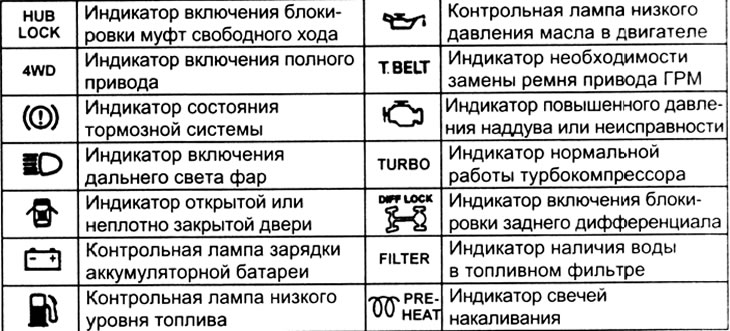
1. Brake system status indicator.
a) The indicator lights up if:
- parking brake on;
- the brake fluid level is low or the vacuum booster of the brake drive is not properly sealed;
- the electrical circuit of the indicator is faulty.
b) If the indicator lights up while driving, slow down, pull off the road and stop the vehicle carefully.
- Check the parking brake, it may be on. If the parking brake is off or the indicator lights up after it is off, there is a problem with the brake system.
- Check the brake fluid level in the reservoir.
- If the brake fluid level is low, check the vehicle's braking efficiency in a safe location. If you think the brakes are still working well, carefully drive the vehicle to the nearest repair facility. If the brakes do not work, the vehicle must be towed or removed for repair.
Warning: Driving a vehicle with low brake fluid is dangerous.
- If the brake fluid level is normal, then the brake booster may not be working effectively or the indicator electrical circuit may be faulty.
2. Battery charging indicator lamp.
a) The indicator lights up when the battery is discharged.
b) If the indicator lights up while driving, the charging system is faulty or the alternator belt is loose. However, the engine will continue to run until the battery is completely discharged. Turn off additional equipment (air conditioner, fan, radio, etc.) and move to the repair site.
3. Low oil pressure indicator lamp.
a) The indicator lights up if the engine oil pressure is too low.
(The original text is posted on: Toyotaman.ru)
b) If the indicator flashes or remains on while driving, pull off the road to a safe place and stop the engine immediately.
- The indicator may flash after sudden braking or when the engine is idling. There is no malfunction if the indicator goes out with a slight increase in engine speed.
- The indicator may come on when the engine oil level is too low.
4. Low fuel level indicator lamp.
The indicator turns on when the fuel level in the tank approaches zero. Fill the tank with fuel as soon as possible.
5. Timing belt replacement indicator.
a) The indicator lights up every 100,000 km to remind you of the need to replace the timing belt.
b) If the indicator lights up, you must immediately replace the belt and turn off the indicator (see chapter "Body electrical equipment").
Caution: Operating the vehicle without replacing the timing belt may result in belt breakage and engine damage.
6. Air filter status indicator (modifications).
The indicator lights up when the air filter is clogged. If the indicator lights up while driving, clean or replace the filter.
7. Indicator of the presence of water in the fuel filter.
a) The indicator lights up to warn that the amount of moisture accumulated in the fuel filter has reached a certain level.
b) If the indicator lights up, you should immediately drain the water from the fuel filter.
Caution: Operating the vehicle with water in the fuel filter may damage the high-pressure fuel pump.
8. High boost pressure indicator or engine management system malfunction indicator.
a) The indicator lights up when the turbocharger pressure is abnormally high. If the indicator lights up while driving, slow down until the indicator goes out and have the car checked at a service center.
Caution: After the indicator goes out, do not drive the vehicle at high speed or at high engine speeds under any circumstances.
b) 2L-TE and 1KZ-TE engines: This indicator warns of a malfunction in the electronic engine management system.
9. Indicator of open or not tightly closed door.
The indicator remains on until all doors, including the tailgate, are completely closed.
10. Indicator of normal operation of the turbocharger.
The green indicator lights up when the turbocharger is turned on and goes out after it reaches normal operating mode.
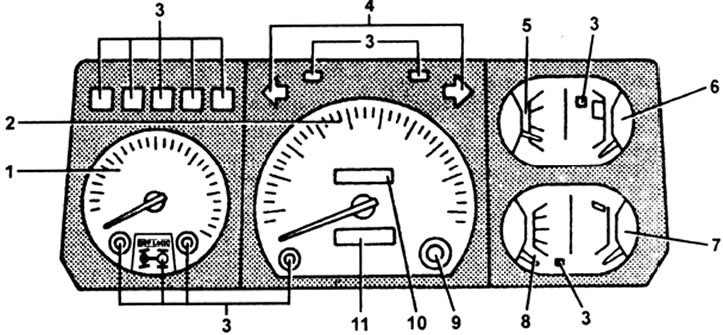
General view of the instrument cluster. 1 - tachometer, 2 - speedometer, 3 - service indicators and control lamps, 4 - turn signal indicators. 5 - oil pressure gauge, 6 - voltmeter, 7 - engine coolant temperature gauge, 8 - fuel gauge, 9 - trip meter reset button, 10 - odometer, 11 - trip meter.