



Contents: Engine 3.4 l ↓ Engine 3.0 l ↓
Attention! Before performing the work, prepare two bolts with a 6x1 mm thread and a length of 16–20 mm, which will be used as auxiliary ones during disassembly (see below).
Engine 3.4 l
Cylinder head and timing components of the 3.4L engine
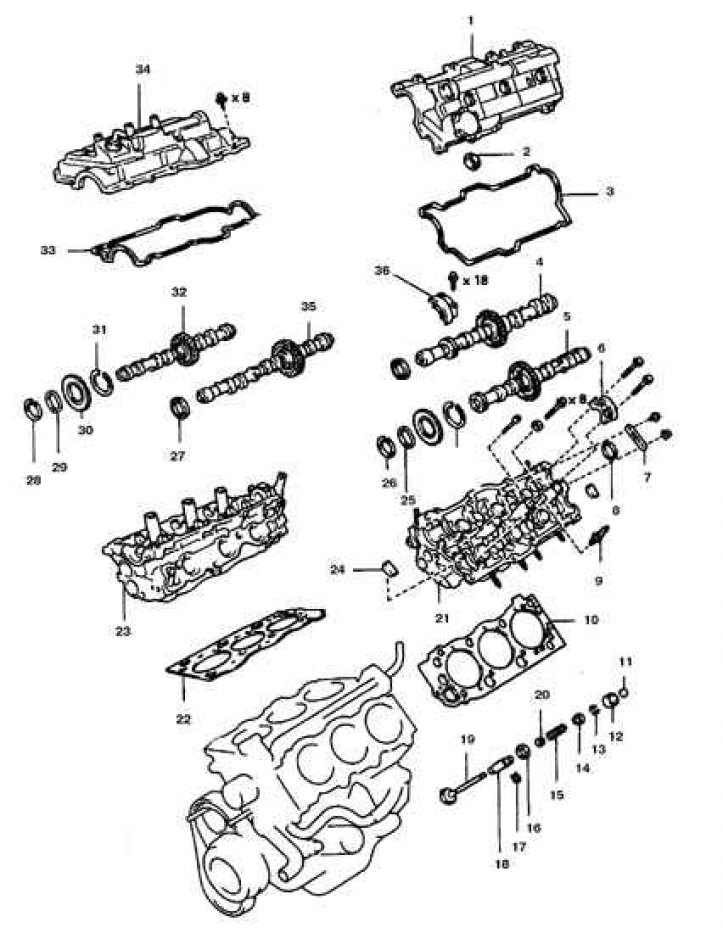
1. Left head cover; 2. Spark plug housing seals; 3. Gasket; 4. Left intake camshaft; 5. Left exhaust camshaft; 6. Lid; 7. Back plate; 8. Plug; 9. Candle; 10. Left gasket; 11. Adjusting washer; 12. Pusher; 13. Rusks; 14. Plate; 15. Spring; 16. Support washer; 17. Retaining ring; 18. Guide bushing; 19. Valve; 20. Oil seal; 21. Left head; 22. Right gasket; 23. Right head; 24. Plug; 25, 29. Spring washer; 26, 28. Retaining ring; 27. Seal; 30. Auxiliary gear; 31. Spring; 32. Right exhaust camshaft; 33. Gasket; 34. Head cover right; 35. Right intake camshaft; 36. Bearing journal cover
Fixing the driven gear
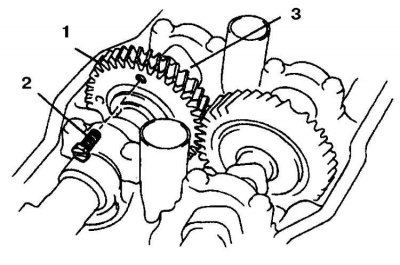
1. Auxiliary gear
2. Bolt
3. Driven gear
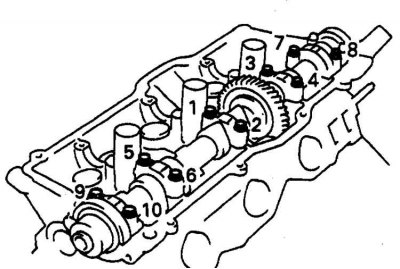
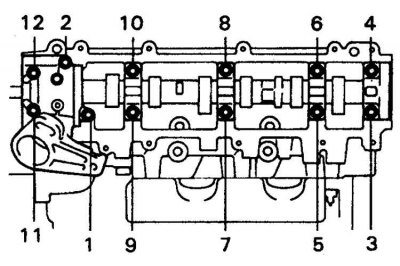
Intake Camshaft Cover Bolt Tightening Sequence
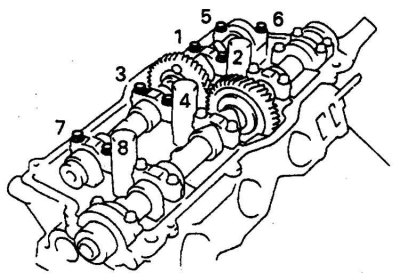
Exhaust camshaft cover bolt tightening sequence
Removal
1. Remove the engine cylinder head covers.
2. Set the piston of the 1st cylinder to TDC of the compression stroke.
3. Removal order: fix the gear spring, remove the exhaust, then the intake camshafts.
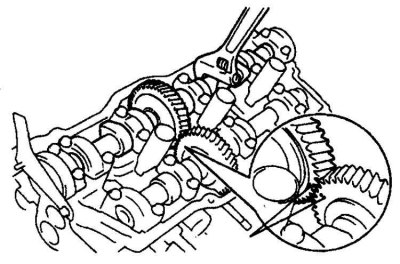
4. Align the marks, if necessary, tighten the camshaft. Keep in mind that the outer camshaft is the exhaust camshaft. The left and right parts are indicated along the direction of the car.
5. Attach the auxiliary gear of the exhaust camshaft to the main gear with a pre-prepared bolt with an M6 thread and a length of 15-20 mm (see fig. Fixing the driven gear).
Attention! Remove the camshafts keeping them parallel to the cylinder head plane, as the axial clearance is very small and the slightest tilt of the shaft can lead to breakage.
6. Gradually loosen the exhaust camshaft cover bolts in the reverse order shown (see Fig. Exhaust camshaft cover bolt tightening sequence).
7. Carefully remove the covers, keeping them horizontal, and remove the exhaust camshaft.
8. Similarly, loosen the intake camshaft cover bolts in the reverse order to that shown (see Fig. Intake camshaft cover bolt tightening sequence).
9. Carefully remove the covers and take out the intake camshaft.
10. Repeat the same steps for the left cylinder head.
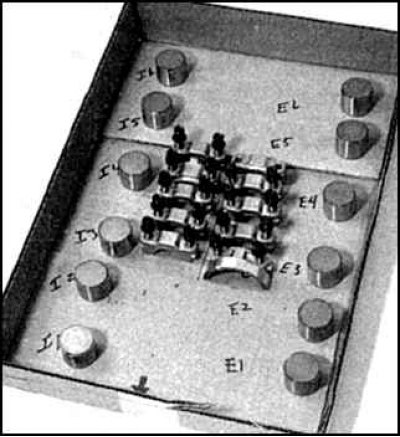
11. If necessary, carefully remove the tappets and washers. Store all removed parts in the order of their original installation, in a special box.
12. Disassemble the exhaust camshaft by clamping it in a vice with soft jaws by the hexagonal neck.
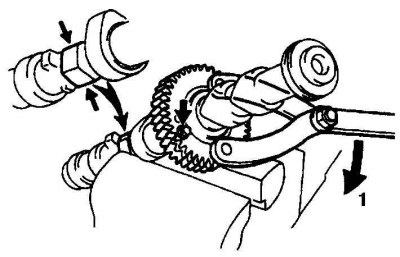
13. Using a double-pin wrench, turn the auxiliary gear clockwise (1), then loosen the auxiliary bolt securing the main and auxiliary gears and carefully release the force, allowing the auxiliary gear to turn counterclockwise until the spring is completely released.
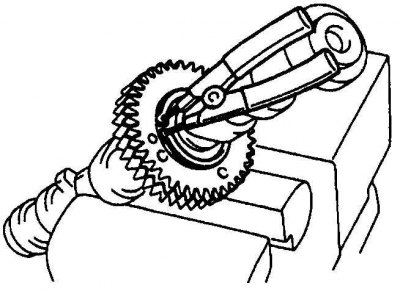
14. Remove the retaining ring.
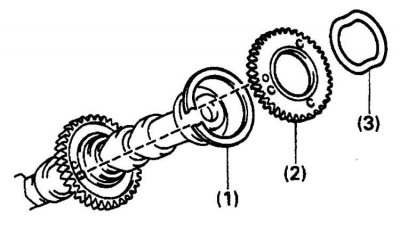
15. Remove the spring washer (1), auxiliary gear (2) and auxiliary gear spring (3).
Examination
The method for checking camshafts and tappets is no different from that described in subsection 3.1.7 for 4-cylinder engines.
Installation
1. Assemble the exhaust camshaft.
2. Clamp the exhaust camshaft in a vice.
3. Turn the auxiliary gear with a key with two pins and secure it with a bolt.
4. Lubricate the tappets and adjusting washers with molybdenum grease and install them in their original places.
Installing the right head intake camshaft
5. Lubricate the rubbing surfaces of the camshaft with molybdenum grease.
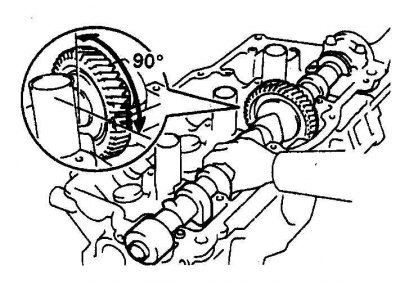
6. Install the camshaft into the head so that the 2 dot marks are facing 3 o'clock (towards the exhaust camshaft).
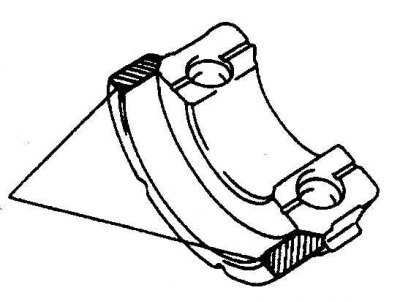
7. Lubricate the front cover bearing surfaces with sealant.
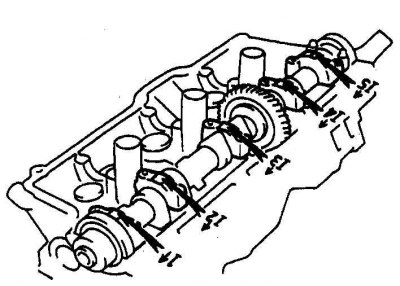
8. Install the covers with the arrows pointing towards the belt.
9. Tighten the cover bolts in the sequence shown to the specified torque (see Fig. Intake camshaft cover bolt tightening sequence).
10. Install a new seal (see subsection 3.2.9).
Installing the right head exhaust camshaft
11. Lubricate the rubbing surfaces of the camshaft with molybdenum grease.
12. Install the camshaft into the head so that the 2 dot marks face the intake camshaft.
13. Install the covers with the arrows pointing towards the belt.
14. Tighten the cover bolts in the sequence shown to the specified torque (see Fig. Exhaust camshaft cover bolt tightening sequence).
15. Remove the auxiliary bolt.
16. Perform steps 1–15 for the left-hand head camshafts.
17. Install the timing belt.
18. Install the remaining parts in reverse order.
16. Install the cylinder head covers.
20. Then assembly is carried out in reverse order.
21. Start the engine and check for leaks.
Engine 3.0 l
Cylinder head and timing components of the 3.0L engine
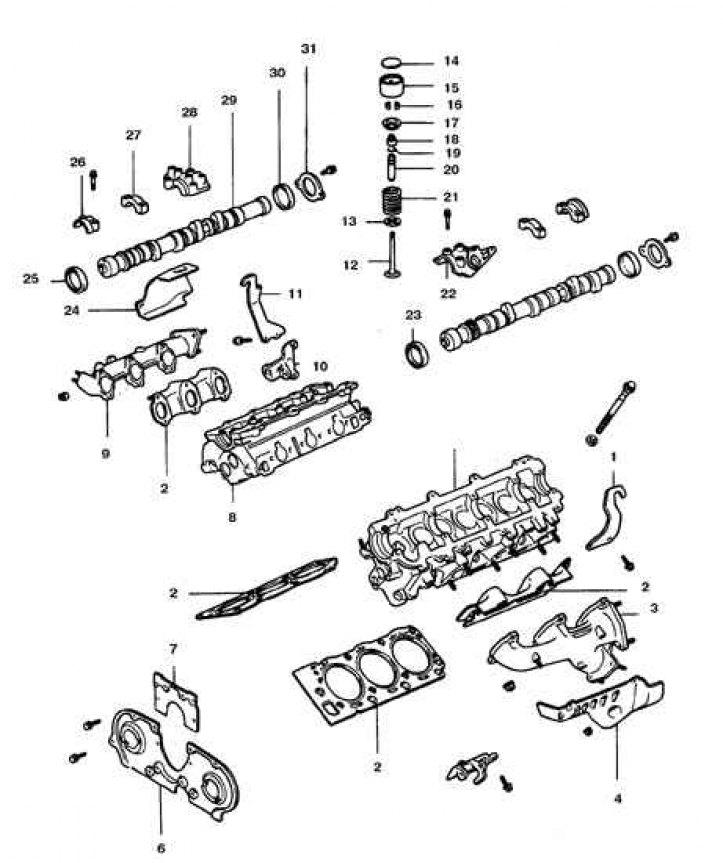
1, 11. Hook; 2. Gasket; 3. Left exhaust manifold; 4, 24. Heat shield; 5. Generator bracket; 6. Belt cover N3; 7. Belt cover N4; 8. Left head; 9. Right exhaust manifold; 10. Power steering pump bracket; 12. Valve; 13. Thrust washer; 14. Adjusting washer; 15. Pusher 16. Crackers; 17. Plate; 18. Oil seal; 19. Retaining ring; 20. Guide bushing; 21. Spring; 22. N4 bearing cap; 23, 25. Seal; 26. N1 bearing cap; 27. N₂ bearing cap; 28. N3 bearing cap; 29. Camshaft; 30. Plug; 31. Back cover
Storage procedure for removed parts
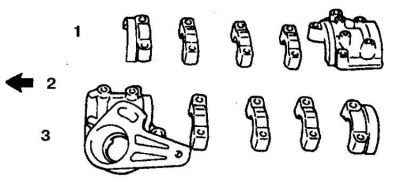
1. Right head parts
2. To the front
3. Details of the left head
Removal
1. Remove the engine cylinder head covers.
2. Remove the belt cover N3.
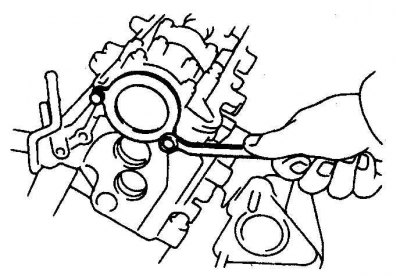
3. Remove the rear camshaft covers of the right head.
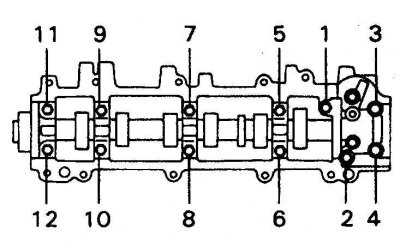
4. Evenly unscrew the bolts of the bearing journal covers of the right head.
5. Carefully remove the lids.
6. Evenly unscrew the bolts of the bearing journal covers of the left head.
7. Carefully remove the lids.
8. If necessary, carefully remove the tappets and washers. Store all removed parts in the order they were originally installed (see fig. Storage procedure for removed parts).
Examination
The method for checking camshafts and tappets is no different from that described in subsection 3.1.7 for 4-cylinder engines.
Installation
1. Lubricate the tappets and adjusting washers with molybdenum grease and install them in their original places.
2. Lubricate the rubbing surfaces of the camshaft with molybdenum grease.
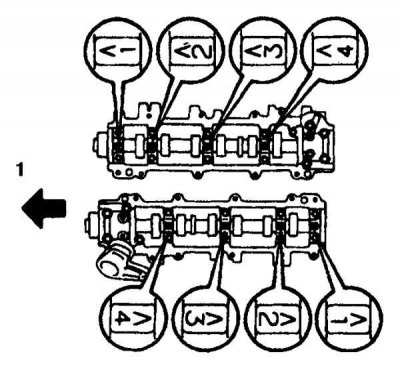
3. Install the camshafts into the head, install the covers with the arrows pointing towards the belt (arrow 1 in the figure points towards the front of the engine).
4. Lubricate the outer edges of camshaft covers No.1 and 4 of the left head and 1 and 3 of the right head with sealant.
The original can be found on this resource [Toyotaman.ru]
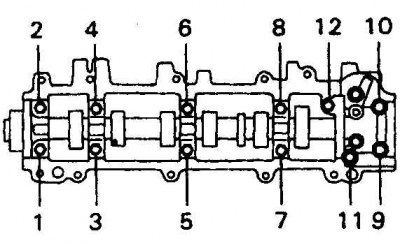
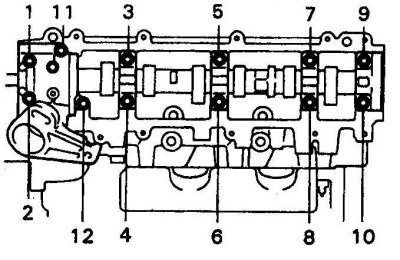
5. Gradually tighten the cover bolts in the specified sequence to the specified torque (left - left head, right - right head).
6. Install a new seal (see subsection 3.2.9).
7. Install the remaining parts in reverse order.
8. Install the cylinder head covers, cleaning and lubricating the sealing areas with sealant.
9. Then assembly is carried out in reverse order.
10. Start the engine and check for leaks.