



Contents: Cleaning ↓ Checking the status ↓
Cleaning
Attention! The cooling system channel plugs are tightly pressed into the cylinder block.
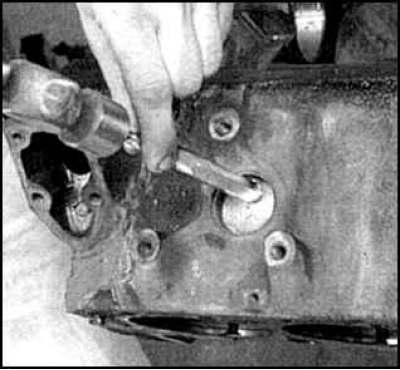 | 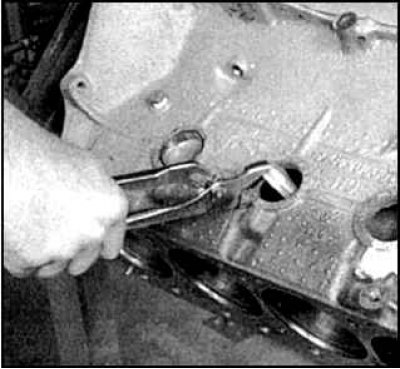 |
1. Turn the plugs by hitting the blunt part of the core (photo on the left) and take it out with pliers (photo on the right).
2. Carefully clean the block from any remaining sealant.
3. Remove the main bearing caps and take the bearings out of the cylinder block and caps. Label all parts and store them so that they do not get mixed up.
4. Clean all channels with a jet of steam and compressed air (it is recommended to perform it in a car service center), wash the outside of the unit with detergent.
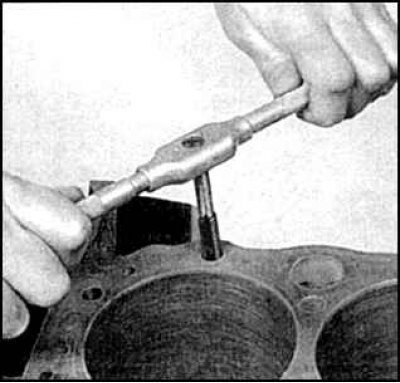
5. Run through all threaded holes, clean and blow out with compressed air.
6. Dry the block and lubricate the treated surfaces with low-viscosity oil. To clean, unscrew the plugs of the oil channels.
7. Install the main bearing caps and tighten the bolts by hand.
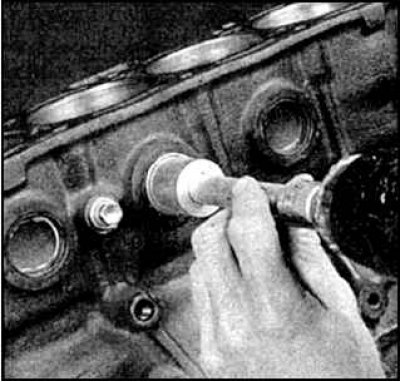
8. Press in new plugs without distortions, having previously lubricated them with Permatex N₂ sealant.
9. Wrap the oil channel plugs with the same sealant.
Checking the status
1. If external defects are detected (cracks and chips), repair the block or replace it. It is recommended to check for internal defects in the cylinder block, for which you need to hand the block over to a car service workshop.
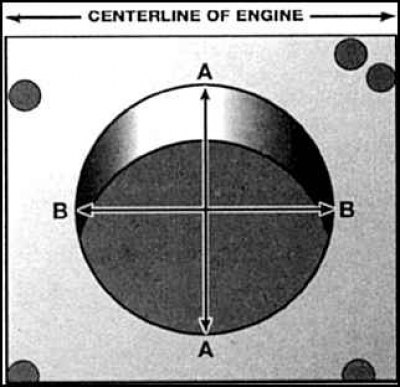
2. Check the surface condition, ovality and taper of the cylinders by measuring the diameter in three planes, the cylinder under the flange, in the center and at the very bottom, in directions parallel and perpendicular to the block axis.
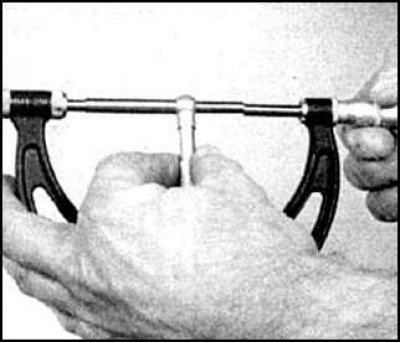
3. Take measurements using a telescopic bore gauge.
4. If the results differ from the standard, the block should be sent for repair. After the block is restored, pistons and rings of repair sizes will be needed.
The article is taken from a web resource (ToyotaMan)
5. If the condition of the cylinders is acceptable, the cylinder wear and the clearance between the cylinder and the piston do not exceed the established standards, then the cylinders need to be honed (see subsection 3.3.11).
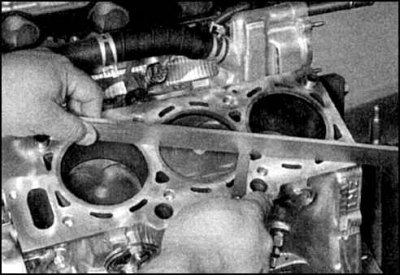
6. Check the deformation of the cylinder block split plane. If the deviation from the plane exceeds the norm, the block should be ground in a car service.