



Contents: Cleaning ↓ Examination ↓
Cleaning
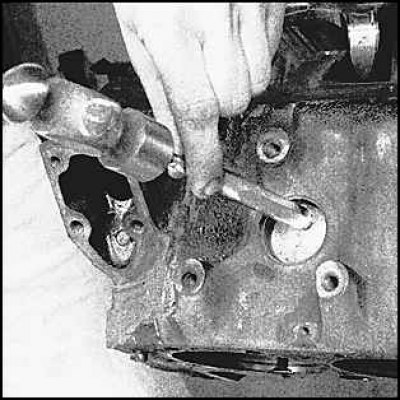
1. Turn the plugs into the holes by hitting the side of each plug with a blunt rod.
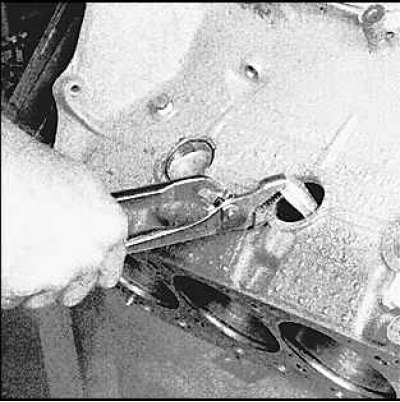
2. Remove the plastic plugs with pliers.
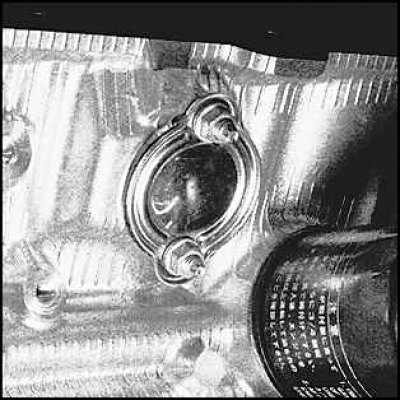
3. In the 6-cylinder engine, metal plates are installed instead of plastic plugs.
4. Using a plastic scraper, remove all traces of sealant from the mating surface of the cylinder block.
5. Unscrew or drill out the oil passage plugs from the cylinder block. Use new plugs during assembly.
6. If the block is too dirty, it must be cleaned in a specialized workshop.
7. Clean and flush the oil holes and channels with warm water. Dry the holes and channels by blowing them with compressed air. Lubricate the block with anti-corrosion oil.
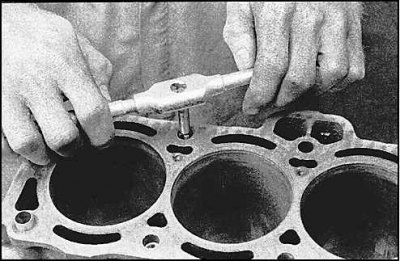
8. Clean the threads of the holes in the block using taps of the required size. Clean the cylinder head bolts and main bearing bolts.
9. Install the main bearing caps and tighten the bolts.
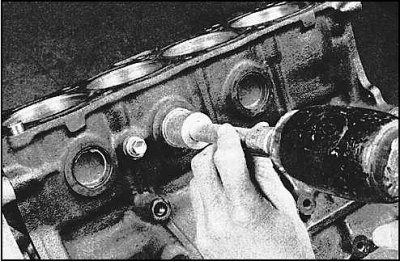
10. Using a special tool, drive new plugs, lubricated with sealant, into the holes in the block.
11. Apply sealant to the oil passage plugs and screw them into the block.
Examination
1. Inspect the block for cracks and traces of corrosion or rust. Inspect the threads of the block holes. If defects are found, the block must be repaired or replaced if possible.
2. Inspect the cylinders and check them for taper and out-of-roundness.
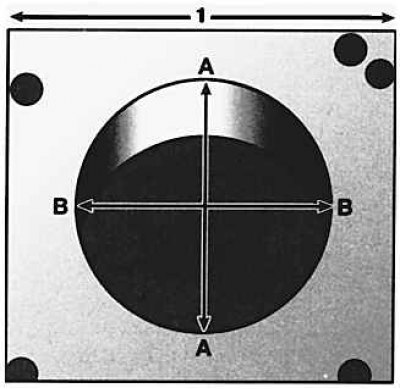
3. Measure the diameter of each cylinder perpendicular to the center line (A) and parallel to the center line (B) (1 - engine center line).
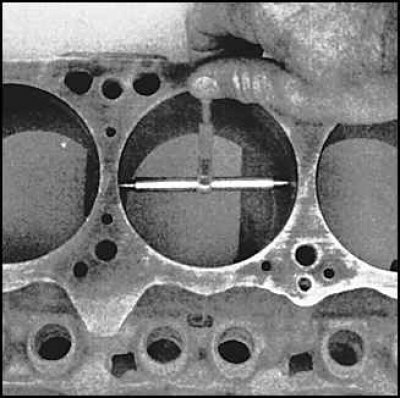
4. Measure the cylinder diameter using a telescopic gauge.
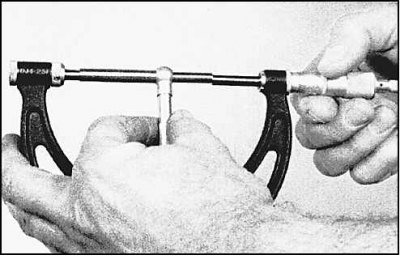
5. Measure the length of the telescopic gauge using a micrometer.
6. Measure the diameter of each cylinder at the top, middle and bottom, perpendicular to the crankshaft axis.
7. The taper of a cylinder is calculated as the difference between the upper and lower diameters. The ovality is the difference between parallel and perpendicular measurements.
8. If the results obtained do not match the technical requirements, the cylinders must be processed in a specialized workshop.
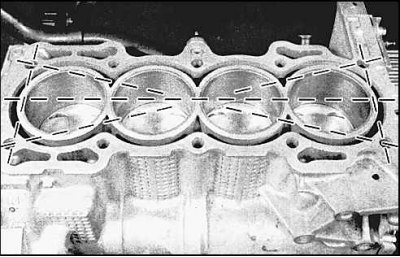
9. Using a ruler and feeler gauges, check whether the surface of the block that meets the head is deformed.
10. Check the wear of the pistons and cylinders using feeler gauges. If wear or damage is found during inspection of the block, contact specialists.