



Share information:
Vehicle Maintenance Toyota Corolla 5 (E80)

Special tool
The range of tools for the TOYOTA vehicle corresponds to the volume and nature of the work performed during repair and maintenance of the vehicle. In addition to the specified tool, it is recommended to have a torque...
The range of tools for the TOYOTA vehicle corresponds to the volume and nature of the work performed during repair and maintenance of the vehicle. In addition to the specified tool, it is recommended to have a torque...

Technical inspection
Technical inspection is performed for diesel vehicles every 7,500 km, and for petrol vehicles every 10,000 km or every six months, depending on which condition is met first. Under severe vehicle operating conditions, in...
Technical inspection is performed for diesel vehicles every 7,500 km, and for petrol vehicles every 10,000 km or every six months, depending on which condition is met first. Under severe vehicle operating conditions, in...
Technical support
Maintenance is performed at the intervals specified below. The maintenance interval is determined by either the mileage or the vehicle's operating time, whichever occurs first. Maintenance must be performed every 12...
Maintenance is performed at the intervals specified below. The maintenance interval is determined by either the mileage or the vehicle's operating time, whichever occurs first. Maintenance must be performed every 12...
Carrying out maintenance work
This describes the technology for performing maintenance work on individual vehicle components in accordance with the maintenance plan. In the case of using spare parts and special tools, appropriate instructions are...
This describes the technology for performing maintenance work on individual vehicle components in accordance with the maintenance plan. In the case of using spare parts and special tools, appropriate instructions are...
Engine and exhaust system
According to the maintenance plan, the following work must be carried out: Engine: Check oil level. Engine: change oil and filter. Engine: visual inspection of the lubrication system for leaks. Engine: check the valve...
According to the maintenance plan, the following work must be carried out: Engine: Check oil level. Engine: change oil and filter. Engine: visual inspection of the lubrication system for leaks. Engine: check the valve...
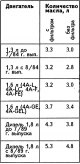
Engine oil change
To change the engine oil, you will need the following tools: Inspection pit or hydraulic jack with supports. Special tool for opening the oil filter (filter pliers, strap wrench or HAZET-2172). A key for unscrewing the...
To change the engine oil, you will need the following tools: Inspection pit or hydraulic jack with supports. Special tool for opening the oil filter (filter pliers, strap wrench or HAZET-2172). A key for unscrewing the...
Visual inspection of oil leaks
If oil consumption is too high, it is necessary to check for leaks. The following places are checked: Open the oil filler cap and check the sealing gasket. Check the reliability of the connection of the ventilation hose...
If oil consumption is too high, it is necessary to check for leaks. The following places are checked: Open the oil filler cap and check the sealing gasket. Check the reliability of the connection of the ventilation hose...
Checking the oil level
Approximately every 1000 km of run, it is necessary to check the oil level in the engine and top up if necessary. Over 1000 km of run, the engine should consume no more than 1 liter of oil. Greater oil consumption is a...
Approximately every 1000 km of run, it is necessary to check the oil level in the engine and top up if necessary. Over 1000 km of run, the engine should consume no more than 1 liter of oil. Greater oil consumption is a...
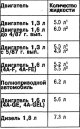
Checking the coolant level
The coolant level should be checked regularly every four weeks or at least before each long trip. The system must be filled with a mixture (also in the warm season) from antifreeze and distilled water. Note: The system...
The coolant level should be checked regularly every four weeks or at least before each long trip. The system must be filled with a mixture (also in the warm season) from antifreeze and distilled water. Note: The system...
Replacing the coolant
The coolant should be drained every 2 years or 40,000 km and new coolant should be added. Description of this process look here .
The coolant should be drained every 2 years or 40,000 km and new coolant should be added. Description of this process look here .
Visual inspection of the cooling system for leaks
Check coolant hoses by removing and bending. Replace hardened hoses. The connection of the hoses to the fittings must be reliable. Check the reliability of the hose clamps. If the fastening is not reliable, replace the...
Check coolant hoses by removing and bending. Replace hardened hoses. The connection of the hoses to the fittings must be reliable. Check the reliability of the hose clamps. If the fastening is not reliable, replace the...
Antifreeze check
To check antifreeze you will need the following tool: A hydrometer, available commercially or at gas stations. Before the winter season begins, it is necessary to check the concentration of antifreeze. Especially in the...
To check antifreeze you will need the following tool: A hydrometer, available commercially or at gas stations. Before the winter season begins, it is necessary to check the concentration of antifreeze. Especially in the...
Adjusting valve clearances in the valve timing mechanism
valve timing is of great importance for the correct operation of the engine. Adjusting the gaps is described in the section " Engine ".
valve timing is of great importance for the correct operation of the engine. Adjusting the gaps is described in the section " Engine ".
Checking the angle of the closed state of contacts
This adjustment is only carried out in ignition systems with a mechanical interrupter. The following special tools are required: A device for measuring the angle of the closed state of contacts. The following wearing...
This adjustment is only carried out in ignition systems with a mechanical interrupter. The following special tools are required: A device for measuring the angle of the closed state of contacts. The following wearing...
Checking the ignition timing
The following special tool is required: Tachometer. Stroboscope. There are no wearing parts. Instructions for performing the work are given in the section " Ignition system ".
The following special tool is required: Tachometer. Stroboscope. There are no wearing parts. Instructions for performing the work are given in the section " Ignition system ".

Replacing spark plugs. Checking electrical connections
The following special tool is required: Spark plug wrench. It is recommended to purchase special pliers, such as HAZET 1849, to facilitate disconnection of the spark plug connector. The following wearing parts are...
The following special tool is required: Spark plug wrench. It is recommended to purchase special pliers, such as HAZET 1849, to facilitate disconnection of the spark plug connector. The following wearing parts are...

Replacing the air filter element
This does not require the use of special tools. The following wearing parts are required: Filter element. When purchasing an element, make sure it matches the engine power. Removal Carburetor engine Release the wing...
This does not require the use of special tools. The following wearing parts are required: Filter element. When purchasing an element, make sure it matches the engine power. Removal Carburetor engine Release the wing...

Draining sediment from the fuel filter and replacing it
No special tool required. The following wearing parts are required: Fuel injected engine: two copper gaskets. Filter for the corresponding engine. When buying a filter, keep in mind the year of manufacture and model of...
No special tool required. The following wearing parts are required: Fuel injected engine: two copper gaskets. Filter for the corresponding engine. When buying a filter, keep in mind the year of manufacture and model of...
Checking and replacing the V-belt. Tensioning and replacing the toothed belt
Checking the V-belt No special tool is required for this. The following wearing parts are required: One V-belt. Its length depends on the engine type. Too little tension on the V-belt leads to increased wear and tear...
Checking the V-belt No special tool is required for this. The following wearing parts are required: One V-belt. Its length depends on the engine type. Too little tension on the V-belt leads to increased wear and tear...
Visual inspection of the exhaust system
No special tool is required to perform this work. There is also no need for quickly wearing parts. Place the car on a lift. Check the reliability of the clamps. Inspect the system with a lamp. Identify any holes, rusted...
No special tool is required to perform this work. There is also no need for quickly wearing parts. Place the car on a lift. Check the reliability of the clamps. Inspect the system with a lamp. Identify any holes, rusted...
Gearbox and wheel drive
Manual gearbox: carry out a visual inspection for leaks. Manual transmission: check the oil level. Top up if necessary. Manual transmission: fill with oil. Wheel drives: check the protective covers for leaks and...
Manual gearbox: carry out a visual inspection for leaks. Manual transmission: check the oil level. Top up if necessary. Manual transmission: fill with oil. Wheel drives: check the protective covers for leaks and...
Visual inspection for tightness
Possible leak locations include: The junction of the cylinder block and gearbox. The junction of the halves of the gearbox housing. Oil filler and drain plugs. Contact planes of drive shafts with gearbox. When searching...
Possible leak locations include: The junction of the cylinder block and gearbox. The junction of the halves of the gearbox housing. Oil filler and drain plugs. Contact planes of drive shafts with gearbox. When searching...

Manual transmission: checking the oil level
Wear parts: Transmission oil specification AP1 GL-5 SAE 75W-90 or 80W-90 (petrol engines), ATF Dexron-II (diesel engines). Examination Place the car horizontally on the lift. If there are engine and gearbox covers,...
Wear parts: Transmission oil specification AP1 GL-5 SAE 75W-90 or 80W-90 (petrol engines), ATF Dexron-II (diesel engines). Examination Place the car horizontally on the lift. If there are engine and gearbox covers,...

Manual transmission: oil change
Gear oil specification API GL-5 SAE 75W-90 or 80W-90 (gasoline engine), ATF Dexron-II (diesel). Oil change Place the car horizontally on the lift. If there are engine and gearbox covers, remove them. Check the gearbox...
Gear oil specification API GL-5 SAE 75W-90 or 80W-90 (gasoline engine), ATF Dexron-II (diesel). Oil change Place the car horizontally on the lift. If there are engine and gearbox covers, remove them. Check the gearbox...

Automatic transmission: checking the oil level
Wearing parts: ATF Dexron-II oil. Examination Drive the car for about 20 km. During this time, the oil in the gearbox should heat up to a temperature of +80-90°C. Place the car on a level surface. Start the engine at...
Wearing parts: ATF Dexron-II oil. Examination Drive the car for about 20 km. During this time, the oil in the gearbox should heat up to a temperature of +80-90°C. Place the car on a level surface. Start the engine at...

Automatic transmission: oil change
Oil used: ATF Dexron-II oil. Oil change The oil change must be done when the gearbox is cold. Place the vehicle horizontally on a lift. Remove the engine and gearbox covers, if present. Visually check the gearbox for...
Oil used: ATF Dexron-II oil. Oil change The oil change must be done when the gearbox is cold. Place the vehicle horizontally on a lift. Remove the engine and gearbox covers, if present. Visually check the gearbox for...

Differential: Checking the oil level
The oil level in the rear axle differential is monitored in vehicles with automatic transmission and in all-wheel drive vehicles. Applicable oil: Automatic transmission oil ATF Dexron-II. For all-wheel drive vehicles...
The oil level in the rear axle differential is monitored in vehicles with automatic transmission and in all-wheel drive vehicles. Applicable oil: Automatic transmission oil ATF Dexron-II. For all-wheel drive vehicles...
Differential: Oil change
The oil in the rear axle differential is replaced in vehicles with automatic transmission and in all-wheel drive vehicles. Oil used: Automatic transmission: ATF Dexron-II. All-wheel drive vehicle: APIGL-5 Hypoid: 1 SAE...
The oil in the rear axle differential is replaced in vehicles with automatic transmission and in all-wheel drive vehicles. Oil used: Automatic transmission: ATF Dexron-II. All-wheel drive vehicle: APIGL-5 Hypoid: 1 SAE...

Checking the drive shaft protective covers
Place the car on a lift. Check for traces of oil on and near the protective covers. Check the reliability of the clamps. Check the rubber of the protective covers with a lamp for pores and mechanical damage. Replace...
Place the car on a lift. Check for traces of oil on and near the protective covers. Check the reliability of the clamps. Check the rubber of the protective covers with a lamp for pores and mechanical damage. Replace...

Checking the clutch fluid level
The clutch fluid reservoir is located in the engine compartment near the brake booster. The reservoir cap has a threaded hole that should always be open. The tank with liquid is transparent. Thus, the liquid level in it...
The clutch fluid reservoir is located in the engine compartment near the brake booster. The reservoir cap has a threaded hole that should always be open. The tank with liquid is transparent. Thus, the liquid level in it...
Brakes, tires and wheels
Brake system: check lines, hoses, brake cylinder and connections for leaks. Brake system: check the brake fluid level and the thickness of the brake linings. Disc brake: check the thickness of the brake pads. Drum...
Brake system: check lines, hoses, brake cylinder and connections for leaks. Brake system: check the brake fluid level and the thickness of the brake linings. Disc brake: check the thickness of the brake pads. Drum...
Checking the brake fluid level
The brake fluid reservoir is located in the engine compartment. It has two chambers: for each of its own brake circuits. The reservoir is transparent, which allows you to visually control the fluid level in it. It is...
The brake fluid reservoir is located in the engine compartment. It has two chambers: for each of its own brake circuits. The reservoir is transparent, which allows you to visually control the fluid level in it. It is...

Checking the thickness of brake pads
Disc brake Mark the position of the wheel disk relative to the hub so that when reassembling, the balanced wheel can be installed in its original place. Remove the wheel mounting nuts. Place the car on a lift. Remove...
Disc brake Mark the position of the wheel disk relative to the hub so that when reassembling, the balanced wheel can be installed in its original place. Remove the wheel mounting nuts. Place the car on a lift. Remove...

Visual inspection of brake lines and hoses
Place the car on a lift. Clean the brake lines. Caution: The brake lines are coated with plastic to protect against corrosion. If the protective layer is damaged, this may lead to corrosion of the lines. For this...
Place the car on a lift. Clean the brake lines. Caution: The brake lines are coated with plastic to protect against corrosion. If the protective layer is damaged, this may lead to corrosion of the lines. For this...
Checking the parking brake
The parking brake acts on the rear wheels. Cars with drum brakes: Pull the handbrake lever with a force of 200 N (about 20 kg). The lever should move a maximum of 4-7 clicks. Cars with rear disc brakes: Pull the...
The parking brake acts on the rear wheels. Cars with drum brakes: Pull the handbrake lever with a force of 200 N (about 20 kg). The lever should move a maximum of 4-7 clicks. Cars with rear disc brakes: Pull the...
Replacing brake fluid
Special tool required: Ring spanner for removing the air bleed plug. Required Brake Fluid: SAE J 1703 or DOT4 specifications. Brake fluid sucks moisture from the air through the pores in the brake hoses or the air bleed...
Special tool required: Ring spanner for removing the air bleed plug. Required Brake Fluid: SAE J 1703 or DOT4 specifications. Brake fluid sucks moisture from the air through the pores in the brake hoses or the air bleed...
Checking the internal pressure in tires
Check the internal pressure in the tires only when the tires are cold. Check the pressure once a month and during maintenance. Pressure table look here . Additionally, the pressure is checked before long trips, since...
Check the internal pressure in the tires only when the tires are cold. Check the pressure once a month and during maintenance. Pressure table look here . Additionally, the pressure is checked before long trips, since...
Checking the tire profile
Tires of well-balanced wheels, with the established internal pressure, with the correct wheel position adjustment and the correct functioning of the shock absorbers, wear evenly over the entire surface. In case of...
Tires of well-balanced wheels, with the established internal pressure, with the correct wheel position adjustment and the correct functioning of the shock absorbers, wear evenly over the entire surface. In case of...
Checking the tire valve
Fold back the protective cap of the nipple. Apply soapy water to the nipple. If a bubble forms, screw the nipple with the protective cap upside down. Caution: Only the protective cap may be used to tighten the nipple....
Fold back the protective cap of the nipple. Apply soapy water to the nipple. If a bubble forms, screw the nipple with the protective cap upside down. Caution: Only the protective cap may be used to tighten the nipple....
Steering and front suspension
Tie rod ends: check for play and dust boots. Drive shafts: check the dust boots. Steering: Check protective covers for leaks and damage. Power Steering: Check fluid level. Top up if necessary. Tighten the bolts. Check...
Tie rod ends: check for play and dust boots. Drive shafts: check the dust boots. Steering: Check protective covers for leaks and damage. Power Steering: Check fluid level. Top up if necessary. Tighten the bolts. Check...

Checking the steering rod boots. Checking the drive shafts
Raise the front of the car. Shine a light on the dust boots on the left and right and check for damage. Pay attention to the presence of traces of grease on the protective covers. If the boot is damaged, it is better to...
Raise the front of the car. Shine a light on the dust boots on the left and right and check for damage. Pay attention to the presence of traces of grease on the protective covers. If the boot is damaged, it is better to...
Checking the steering wheel play
Set the steering wheel to the center position. Turn the steering wheel in different directions, observing the front wheels. The steering wheel may have a play of no more than 30 mm. If there is more play in the steering...
Set the steering wheel to the center position. Turn the steering wheel in different directions, observing the front wheels. The steering wheel may have a play of no more than 30 mm. If there is more play in the steering...

Checking the Power Steering Oil Level
Wear parts: ATF Dexron-II oil. Check the power steering fluid level with the engine not running. Remove the tank cap. Wipe the dipstick with a clean cloth. Put the cover back in place without fastening it with screws....
Wear parts: ATF Dexron-II oil. Check the power steering fluid level with the engine not running. Remove the tank cap. Wipe the dipstick with a clean cloth. Put the cover back in place without fastening it with screws....
Maintenance of electrical equipment
Lighting system: check all headlights, turn signals, rear light. Adjust headlights if necessary. Check the functionality of all electrical consumers. Sound signal: check. Windscreen wipers: check the wear of the blades....
Lighting system: check all headlights, turn signals, rear light. Adjust headlights if necessary. Check the functionality of all electrical consumers. Sound signal: check. Windscreen wipers: check the wear of the blades....

Checking the battery
Special tool required: Acid-resistant lubricant, such as that from BOSCH. Steel brush (for cleaning poles and terminals). Hydrometer. Necessary wearing parts: Distilled water. Cleaning the battery terminals Clean the...
Special tool required: Acid-resistant lubricant, such as that from BOSCH. Steel brush (for cleaning poles and terminals). Hydrometer. Necessary wearing parts: Distilled water. Cleaning the battery terminals Clean the...
Body and interior equipment
Door hinges and locks: lubricate. Lock cylinder: lubricate with general purpose grease. Anti-corrosion coating of the bottom and hidden cavities: check. Seat belt: check for damage. Visual inspection of the bottom and...
Door hinges and locks: lubricate. Lock cylinder: lubricate with general purpose grease. Anti-corrosion coating of the bottom and hidden cavities: check. Seat belt: check for damage. Visual inspection of the bottom and...
This section is available on: russian, bulgarian, belarusian, ukrainian, serbian, croatian, romanian, polish, slovak, hungarian
Similar sections for other Toyota models
➥ Maintenance Toyota Duet (1998-2004)
➥ Maintenance Toyota Cruiser 100 (1998-2007)
➥ Maintenance Toyota Camry Vista V40 (1994-1998)
➥ Maintenance Toyota Corona T190 (1992-1997)
➥ Maintenance Toyota Carina T190 (1992-1996)
➥ Maintenance Toyota Highlander 1 (2000-2007, petrol)
Link in different formats to this article
TEXTHTMLBB Code
- General information
- User manual
- Start of movement
- Faults en route
- Maintenance
- Power unit
- Engine repair
- Lubrication system
- Cooling system
- Ignition system
- Supply system
- Fuel supply (carburetor)
- Fuel supply (injector)
- Diesel engine
- Exhaust system
- Transmission
- Clutch
- Manual gearbox
- Automatic gearbox
- Chassis, running gear
- Front suspension
- Rear suspension
- Steering
- Brake system
- Wheels and tires
- Body and interior
- Exterior (external elements)
- Interior (internal elements)
- Interior heating
- Electrical equipment
- Equipment and devices
- Power devices
- Lighting system
- Glass cleaners and washers
- General information
- User manual
- Power unit
- Petrol engines 1ZZ, 3ZZ
- Diesel engines 1СD-FTV
- Cooling system
- Lubrication system
- Fuel system
- Control system
- Exhaust system
- Transmission
- Clutch and drive shafts
- Mechanical gearbox
- Chassis, running gear
- Car suspension
- Steering
- Brake system
- Body and interior
- Exterior (external elements)
- Electrical equipment
- Power devices
- Electrical circuits