



General information
1. The self-diagnosis function is built into the electronic control unit of the automatic transmission. Using the overdrive mode off indicator, the system can warn the driver about a malfunction in the automatic transmission. In addition, using this indicator, you can determine the code of the malfunction that has occurred.
Note: Warning signals and reading of fault codes are possible only when the overdrive switch is in the "ON" position. If the switch is in the "OFF" position, the indicator lamp lights without flashing.
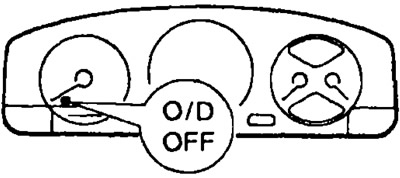
- a) If a malfunction occurs in the speed sensor, throttle position sensor or electromagnetic valves, the indicator will flash to alert the driver of the malfunction. However, if a malfunction occurs in the lock control electromagnetic valve and the lock quality control electromagnetic valve, there will be no warning of the malfunction.
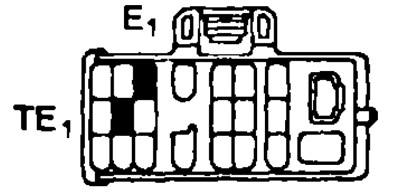
- b) Error codes can be read by the number of flashes of the upshift indicator; to do this, short-circuit the "TE₁" and "E₁" terminals of the diagnostic connector.
- c) The diagnostic system does not detect the failure of the throttle position sensor and the brake light switch, but they can be checked by checking the voltage at contact " Tt" diagnostic connector.
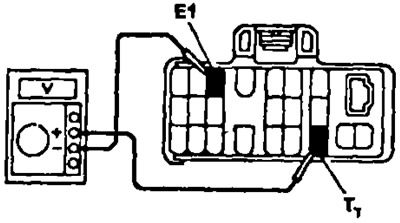
Models before 1996. | 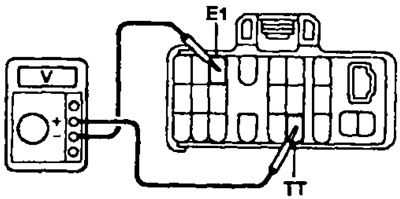
Models since 1996. |
- d) The signals in each gear can be checked by measuring the voltage at the pin "Tt" in the process of movement.
2. The fault code is stored in the control unit memory even after the engine is turned off. Clearing the unit memory (reset codes after repairs) is done either by turning off the ignition and disconnecting the "EFI" fuse, or by disconnecting the automatic transmission and engine control unit connector.
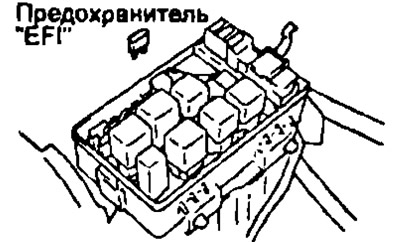
A240E, A241E, A241L | 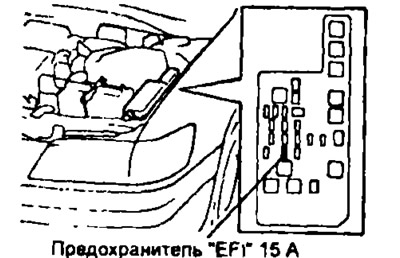
Models since 1996. |
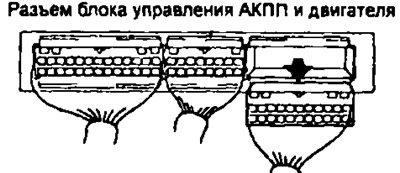
Attention:
- Low battery voltage may cause diagnostic failure, so please check the battery before starting diagnostics.
- Use a voltmeter or ohmmeter that has a scale limit of at least 10 kOhm/V.