Contents: General information ↓ Reading fault codes ↓
General information
1. The self-diagnosis function is built into the electronic control unit of the automatic transmission. Using the overdrive mode off indicator, the system can warn the driver about a malfunction in the automatic transmission. The code of the malfunction can be determined using the same indicator.
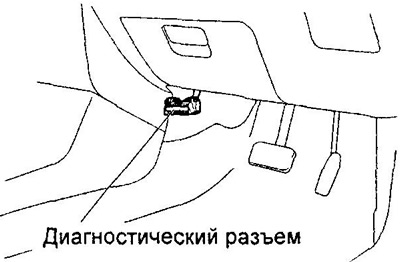
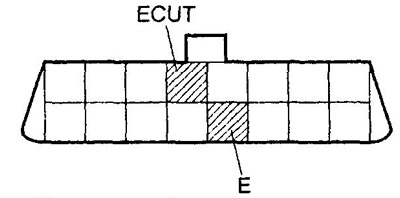
a) Fault codes can be read by the number of flashes of the "D4" indicator; to do this, you need to short-circuit the "ECUT" and "E" terminals.
 |  |
2. The fault code remains in the control unit memory even after the engine is turned off. Clearing the control unit memory (reset codes after repairs) is performed by turning off the ignition and disconnecting the connector of the automatic transmission control unit and the engine for at least 10 seconds.
Warning: Low battery voltage may cause diagnostic failure. Therefore, check the battery before starting diagnostics.
Reading fault codes
1. Turn on the ignition and set the overdrive switch to the "ON" position.
Caution: Do not start the engine.
2. Short-circuit the "ECUT" and "E" terminals of the diagnostic connector.
[The full article is posted on the website toyotaman.ru]
Caution: Do not make a mistake in closing the connector.
3. Read and determine the fault code by the number of indicator blinks.
a) If two flashes occur per second, the system is working normally.
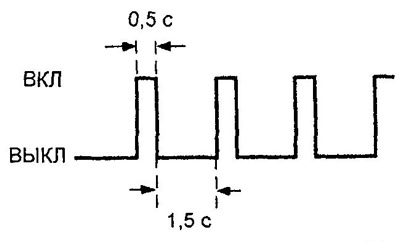
b) If there is a malfunction, the indicator will start flashing after 4 seconds. Count the number of flashes.
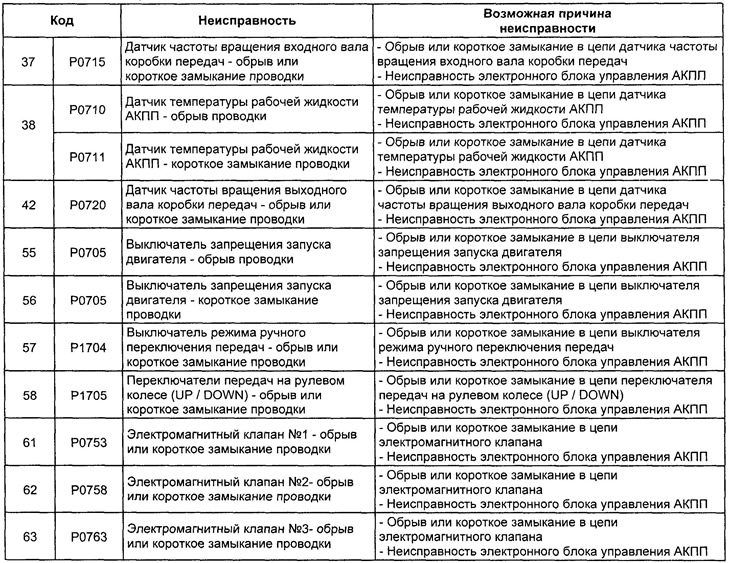
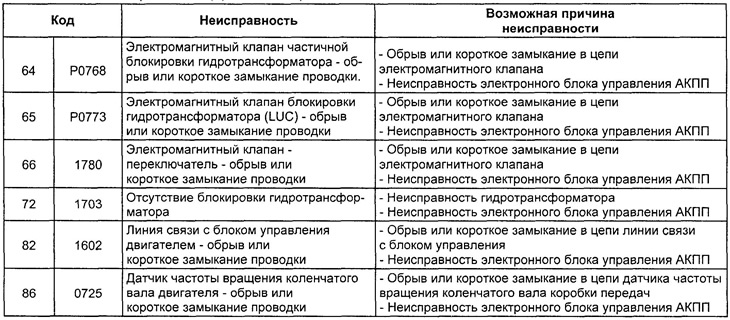
The fault code consists of two digits: the first digit is determined by the initial series of flashes, then after a pause of 1.5 seconds there follows a second series of flashes, which corresponds to the second digit of the code (see the table "Fault codes").
If there are two or more fault codes, the lowest code will be displayed first, followed by the remaining codes in ascending order. There will be a 2.5 second pause between codes.
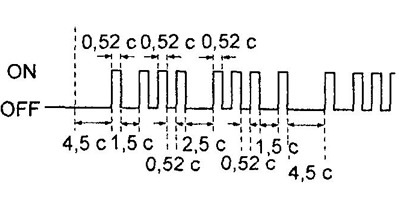
Table. Error codes.